
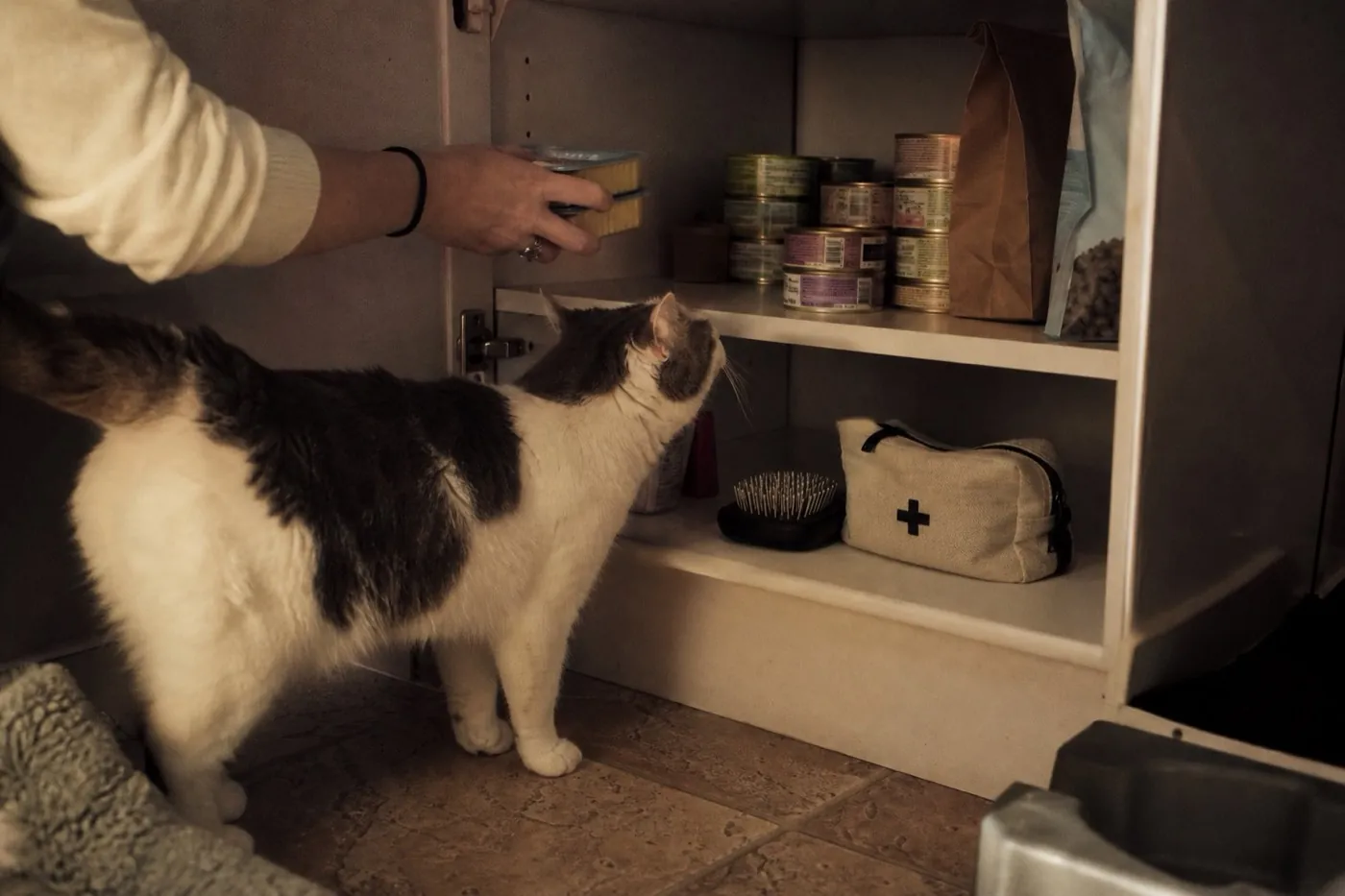
Pet supplies checklist: where do you start?
A pet supplies checklist starts with three things: one spare bag of the food your pet already eats, a spare pack of litter or poo bags, and regular medicines with a few days more than the calendar says you need. After that come grooming basics, the microchip details, your vet's number and a tidy cupboard for cleaning products.
Below you'll find two separate lists, one for dogs and one for cats, because their needs differ. A dog needs walk gear; a cat needs a steady supply for the litter tray. If you have both, use both lists and cross out the doubles, such as a second towel or tick remover.
The simplest rule: when you open the spare bag of food or the last pack of litter, a new one goes straight on the shopping list. That way you always have one full pack in reserve, and you're never hunting for an open pet shop on a Sunday evening.
What should you keep at home for a dog?
This part of the list assumes one adult dog that already has bowls, a bed and a collar. If your dog is new to the family, start with the new dog checklist and come back here once the first shop is done.
- Dry food: one spare bag of the same brand and recipe your dog eats every day
- Wet food: a few tins or pouches, if your dog has them
- Treats for rewards on walks and during grooming
- Poo bags: a spare roll in the drawer by the door
- Spare lead and ID tag with a phone number you actually answer
- Reflective tag or clip-on light for walks after dark
- Dog towel and absorbent pads for muddy paws
- Brush suited to the coat, plus a tick remover
- Enzyme stain cleaner that removes smells rather than masking them
- Flea and tick treatment recommended by your vet for your dog's weight
Chew toys wear out too. If your dog gets through them quickly, keep a new one in the cupboard so you're not grabbing whatever is by the till.
A spare lead comes in handy more often than you'd think: clips snap, and leads get left in the car or at a friend's house. Keep it with the poo bags so everyone at home knows where to find it.
What should you keep at home for a cat?
A cat needs less for going out and more for everyday life indoors. The list assumes one cat; with two, plan on twice the litter and food. For the full starter kit, with a scratching post and litter tray, see the new cat checklist.
- Dry food: a spare bag of the one your cat knows
- Wet food: a few pouches or tins
- Litter: a spare pack of the same type, as some cats don't take well to a change in the tray
- Scoop and bags for cleaning the tray
- Brush and a towel
- Enzyme stain cleaner for accidents outside the tray
- Carrier somewhere you can grab it in a minute
- Flea and tick treatment made for cats and recommended by your vet
Never give your cat a parasite treatment bought for a dog. These products are matched to species and body weight, so ask your vet about each one.
Don't store the carrier in the loft behind the suitcases. A cat that sees it once a year rarely walks in on its own, and in an emergency every minute counts. Leave it in a corner with a blanket inside and it becomes part of the furniture.
How much food and litter should you keep in stock?
One full pack in reserve, on top of the one that's open, is enough. It gives you time to shop calmly, and the food doesn't sit in the cupboard for months.
You can work out how long a bag lasts: divide its weight by the daily portion on the manufacturer's feeding table for your pet's weight. Note the result next to the item on your list and you'll know when to buy the next one.
Plan regular medicines with a few days' extra beyond the next vet appointment, so a bank holiday or a closed practice doesn't leave you without a dose. Your vet decides the amount; you keep an eye on the repeat prescription.
The table below shows when to add something to the list. It suits a home with one dog or cat; with several pets, check more often.
| When | What to check | What to do |
|---|---|---|
| You open the spare bag of food | Whether a new bag is already on the list | Add food to the shopping list |
| The last pack of litter is in use | How long one pack usually lasts | Buy the next one on your next shop |
| A pack of medicine is running low | How many doses are left before the next visit | Ring the practice for a repeat prescription |
| Once a month | Use-by dates on food, medicines and tick treatments | Use the oldest first, bin anything out of date |
| Before a longer trip | Whether stock will last the whole time | Buy food and litter with a few days to spare |
Don't buy the biggest bag just because it's cheaper per kilo. Once opened, dry food slowly loses freshness, so choose a size your pet will finish in a reasonable time. The pack or the manufacturer will tell you how long it keeps after opening.
How do you store pet food so it stays fresh?
The US Food and Drug Administration (FDA) advises keeping dry pet food in its original bag with the top tightly folded down, in a cool, dry place below 80°F (about 27°C). Heat and moisture break down nutrients, so the cupboard next to the oven or a radiator is out.
The bag carries the batch number and best-before date. You'll need them if a manufacturer recalls a product and you want to check whether your pack is affected.
If you prefer a storage bin, do it in three steps:
- Put the whole bag inside the bin rather than tipping the food in loose.
- Fold the top of the bag down and close the lid.
- Take a photo of the batch number and date in case the bag tears.
Leftover tinned or pouched food should be covered and put in the fridge straight away, set to 40°F (about 4°C) or below, or thrown out. The label tells you how many days an opened tin keeps.
Use a clean scoop kept only for pet food rather than your pet's bowl. Wash bowls and scoops in hot soapy water after each use, and wash your hands before and after feeding.
The FDA also suggests storing food where your pet can't reach it. A dog that gets into the bag can eat several days' supply in one go.
FDA: Tips for Safe Handling of Pet Food and TreatsWhat should you keep out of your pet's reach?
The FDA lists chocolate, grapes and raisins, onions, garlic, macadamia nuts, xylitol, alcohol and human medicines among items that can be dangerous for pets. The same list includes cleaning products, rat and mouse bait, insecticides, antifreeze and de-icers.
You probably have some of these at home anyway, so this is about where they live, not getting rid of them. Use this list to go round the house room by room:
- Human medicines in a closed cupboard, not on the bedside table or in a handbag
- Cleaning products on a high shelf or in a cupboard with a catch
- Sweets and xylitol gum out of reach, including in coat pockets and rucksacks
- Rodent bait and insecticides only where your pet can't get in
- Antifreeze and de-icer shut away in the garage or shed
- Kitchen bin with a lid
If your pet eats something it shouldn't, ring your vet straight away and say what it ate and roughly how much. Take the packaging with you, as the ingredients help the vet decide on treatment. Don't try to make your pet sick yourself.
FDA: Potentially Dangerous Items for Your PetWhich documents and contacts should you keep handy?
Keep the paperwork in one folder: your pet's vaccination record or passport, the microchip number with the name of the database it's registered on, and a recent photo. The photo and chip number matter most if your pet goes missing and you need to put up posters quickly.
In the UK, GOV.UK says all dogs must be microchipped and registered by the time they're 8 weeks old. In England, cats must be microchipped and registered by 20 weeks, indoor cats included, and you can be fined up to £500 if a pet isn't chipped when it should be. Keep the database details up to date whenever you move or change number.
Save your vet's number and the nearest out-of-hours vet in your phone and on a note by the door. The note helps everyone at home and anyone looking after your pet while you're away; the pet sitter checklist covers what else to leave them.
If you're taking your pet abroad, the rules on rabies jabs and travel documents have their own timeline. See travelling with a dog or cat before you book.
GOV.UK: Get your dog or cat microchippedHow do you get this list into BuyNest?
Open the ready pet supplies list in BuyNest with the button or scan the QR code with your phone. It has 31 items in six groups: food, hygiene, health, walks and travel, documents, and things to put away. Delete anything you don't need right after importing it.
Share the list with everyone at home. Whoever opens the spare bag of food or the last pack of litter adds a new one, and the others see it straight away, so nobody buys a second bag.
Assign items to shops: food and litter to the pet shop, kitchen roll and bin bags to the supermarket. In each shop you see only what you can buy there. Add your pet's exact food with the barcode scanner, straight from the pack, so nobody gets the wrong flavour or bag size.
Set reminders for the next booster, worming or tick treatment, using the dates from your vet. Save the list as your own template and check the cupboard against it once a month. You'll find more lists in lists for pets.
Pet supplies at home
- Food
- Spare bag of dry food spare1 pack
- Wet food6 pcs
- Treats1 pack
- Lid for opened tins1 pcs
- Bag clip for dry food1 pcs
- Separate food scoop1 pcs
- Spare bowl1 pcs
- Hygiene
- Cat litter spare pack1 pack
- Poo bags2 pack
- Enzyme stain cleaner1 pcs
- Kitchen roll2 pcs
- Pet towel2 pcs
- Absorbent pads1 pack
- Brush1 pcs
- Health
- Regular medicines plus spare as prescribed
- Flea and tick treatment as advised by vet
- Tick remover1 pcs
- Bandage and gauze1 pack
- Medicine list from your vet
- Walks and travel
- Spare lead1 pcs
- Spare ID tag1 pcs
- Carrier within easy reach1 pcs
- Reflective tag or light1 pcs
- Papers and contacts
- Health record or passport
- Microchip number and database
- Vet and out-of-hours numbers
- Recent photo of your pet
- Keep out of reach
- Human medicines locked away
- Cleaners stored high up
- Rat bait and insecticides out of reach
- Sweets and xylitol gum out of reach
Frequently asked questions
How much pet food should I keep in stock?
One full pack on top of the open one is usually enough. Buy the next one as soon as you open the spare. Keep more only before a long trip or if your food takes a while to arrive.
Can I tip dry food into a storage bin?
It's better to put the whole bag inside the bin. The FDA recommends keeping dry food in its original packaging, which carries the batch number and date. If you do decant it, photograph those details first.
What should I do if my dog eats chocolate or grapes?
Ring your vet straight away, without waiting for symptoms. Tell them what your dog ate and roughly how much, and bring the packaging. Don't give anything at home unless the vet tells you to.
Can dogs and cats share the same food?
Not as a regular diet, as pet food is made for a specific species. Buy separate food for each and feed them where they can't raid each other's bowls. If you're unsure about diet, ask your vet.
Does my cat need to be microchipped?
In England, yes: GOV.UK says cats must be microchipped and registered by 20 weeks old. In Scotland, Wales and Northern Ireland it's optional for cats, though it improves the chance of getting a lost cat back. Dogs must be chipped across the UK.
Open the list, delete what you don't need and add the brand of food your pets eat. Work through your pet supplies checklist when you open the last pack, not when the bowl is already empty.
Open the ready list in BuyNestSources
Take the shopping into BuyNest
BuyNest is on iPhone and Android. The app has no ads, including on the free plan.