
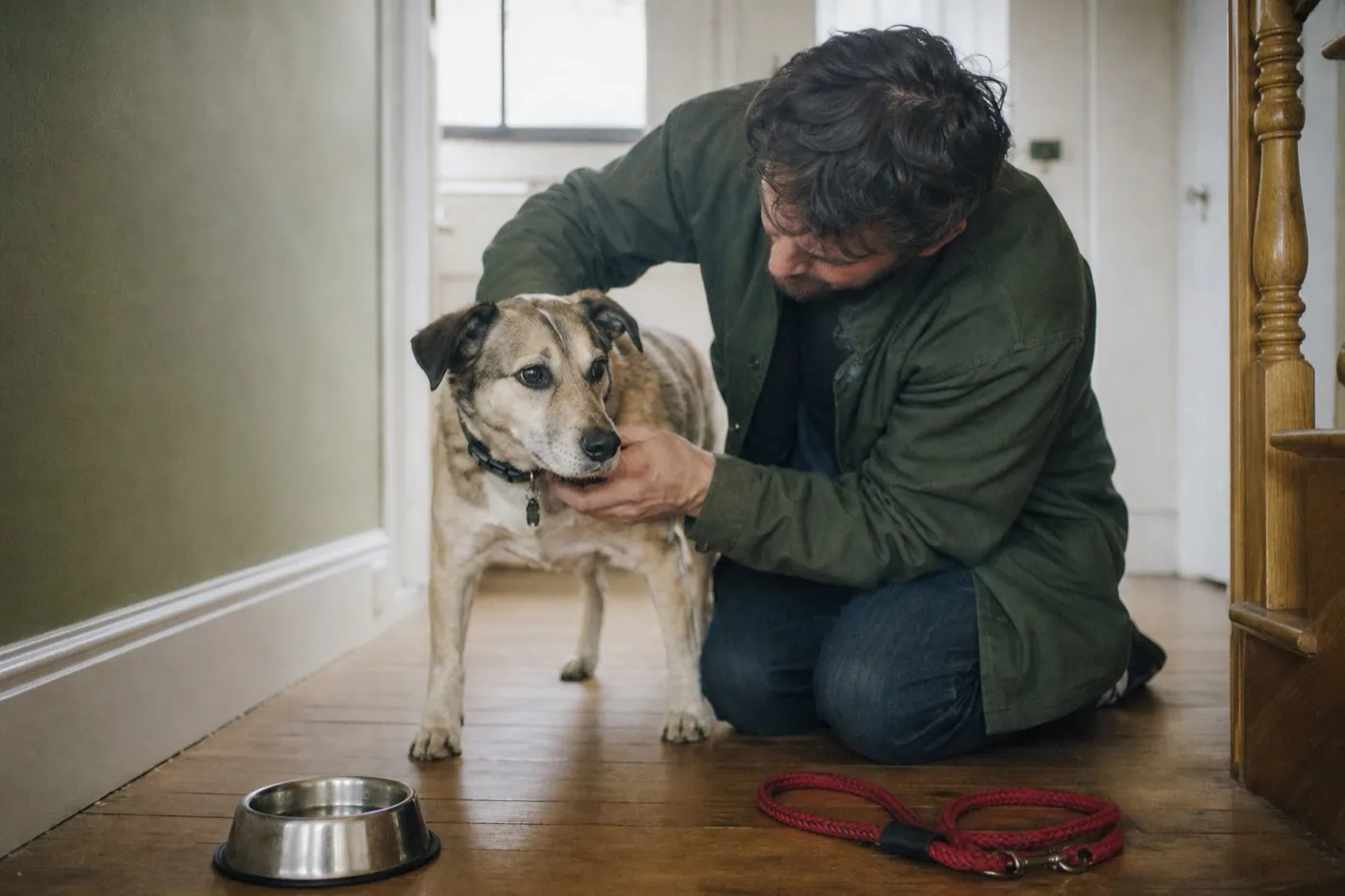
A starter kit for a puppy or an adult dog should cover feeding, rest, walks, grooming, play and safe transport. You don't need to buy everything the pet shop sells in one go. Your dog's age, size, health, coat type and previous experience all affect what it will really need. Start with the basics for the first few days, then choose the rest once you know your dog and have talked to the person you are collecting it from.
New dog checklist: what you need on the first day
The list below includes both essential equipment and products needed only in certain situations. Before you shop, remove anything that doesn't apply to your dog.
New dog checklist: first-day essentials (part 1 of 2)
- Food and feeding gear
- supply of the food your dog currently eats
- water bowl
- food bowl
- mat for under the bowls
- airtight food container
- scoop for measuring portions
- small supply of dog-safe treats
- slow-feeder bowl, if your dog eats too fast
- lick mat or food toy, if you will use one
- Lead, collar or harness?
- well-fitted collar
- ID tag with phone number
- properly fitted harness
- standard walking lead
- longer training line, if needed
- spare poo bags
- poo bag dispenser
- reflective item or light for evening walks
- basket muzzle, if needed
- Which dog bed to choose?
- bed or comfortable mat
- easy-to-wash cover
- blanket
- extra mat where the family spends time
- baby gate, if needed
- crate or pen, if you plan to use one deliberately
- Toys and chews
- safe chew toy
- toy for playing together
- treat or food-dispensing toy
- simple sniffing toy
- chew suited to your dog's age and size
- toy box
- Hygiene and cleaning
- towel just for the dog
- brush or comb to suit the coat type
- mild shampoo made for dogs
- cleaner for urine and poo stains
- poo bags
- puppy pads, if really needed
- toothbrush and toothpaste made for dogs
- ear care product recommended for your dog
- nail clippers or file, if you know how to use them
- mat protecting the car or furniture
- lint roller for hair, if needed
New dog checklist: first-day essentials (part 2 of 2)
- Transport and the journey home
- carrier, travel crate or suitable restraint system
- car mat or seat cover
- blanket with a familiar smell, if you can get one
- travel bowl
- bottle of water
- poo bags
- towel or pad for the journey
- spare lead
- dog's documents
- small amount of food for a long journey
- Documents and health information
- health book or pet passport
- vaccination and worming records
- microchip number and registration details
- adoption papers or purchase agreement
- records of earlier treatment
- list of current medication
- feeding recommendations
- details of the previous vet, if available
- contact for your chosen vet clinic
- contact for a 24-hour clinic nearby
For the first few days, buy the food your dog knows from the shelter, foster home, breeder or previous home. Don't go straight for the biggest bag of a new product. Your dog may not tolerate a particular recipe, and any change in feeding is best discussed with a vet.
The food should be complete and suited to your dog's life stage. A puppy, a healthy adult dog and a senior can have different needs. If your dog has allergies, a chronic illness, or is underweight or overweight, agree on the feeding plan with a vet. When choosing, look at whether the food is complete, how quality is controlled and who is qualified to formulate the recipe, not just the marketing claims on the bag.
Don't buy a dozen kinds of treats. At first, one product is enough, as long as it is easy to break into small pieces and use for teaching calm behaviour and basic exercises.
Before you buy, ask for your dog's current measurements. Knowing only the weight or the breed is usually not enough to fit a harness properly. Depending on the product, you may need the neck and chest circumference and the length of the back.
A harness and collar must not pinch your dog or let it slip its head or paws free. This matters most for a nervous dog, a newly adopted one, or one whose behaviour on walks you don't yet know. When you collect your dog, make sure the restraint has been checked and won't slip off on the way home.
To begin with, a standard lead that gives predictable control works best. You can add a long training line once you know how your dog behaves and where you will use it. It is not meant for leaving a dog unattended.
A muzzle should let your dog open its mouth freely, pant and drink. Don't buy a random size, or a model that clamps the mouth shut, for extended wear. Your dog has to be introduced to a muzzle gradually and calmly.
A bed should let your dog lie down comfortably and change position. It doesn't have to be expensive. At first, the right size, stability and a cover that is easy to wash matter more.
Not every dog will want to use the bed you have prepared from day one. An adopted dog may need time to feel safe, while a puppy may try to chew the soft filling. So before you get to know your dog, it isn't worth buying an expensive bed that you can't return or easily clean.
A crate is not a compulsory part of the kit. It can serve as an open, quiet place to rest or help with safe transport, but your dog needs to get used to it gradually. It should never be used as punishment or to shut a dog away for many hours. If you choose one, your dog must be able to stand, turn round, lie down and stretch out comfortably.
Two or three different toys are enough to begin with. You don't need a big set of random products, because you don't yet know whether your dog prefers chewing, tugging, fetching, sniffing or calmly working food out of a toy.
Match the size of the toy to your dog's mouth and strength. Something too small can be swallowed, and a delicate toy is quickly destroyed by a dog that chews hard. Check toys regularly and throw away any that are coming apart.
A puppy may need products designed for milk teeth and the teething period. A strong adult dog may need tougher toys. The word “indestructible” on the packaging doesn't relieve you of checking the product while it is in use.
The grooming kit depends on your dog's coat, skin, age and health. A short-haired dog needs a different brush from a dog with an undercoat, and a dog with a long, tangle-prone coat needs yet another. Before you buy an expensive set, ask the previous owner, breeder, groomer or vet which tools will suit.
Use products made for animals when you wash your dog. Don't stock up on many preparations “just in case”, especially medicated products, ear solutions and supplements. Use them only when your dog really needs them.
A cleaner for urine stains is especially useful with a puppy, a senior, a dog after a move or an animal whose habits you don't know yet. Choose a product made for homes with pets and use it according to the manufacturer's instructions.
Choose how you transport your dog to suit its size, your vehicle and the length of the journey. A dog should not move freely around the car or travel on the driver's lap. The restraint system must be made for transporting animals and properly fastened.
If you are collecting your dog from a shelter, foster home or breeder, find out beforehand which restraint will be suitable. Also ask whether your dog copes well with car journeys and whether it may get travel sickness. Don't give sedatives or travel medication yourself without talking to a vet.
Documents aren't something you buy in a pet shop, but they belong on your starter list. When you collect your dog, check which vaccinations and treatments have been done, what medication it takes and whether it has any special health needs.
Don't put together an elaborate first aid kit from a random list online. Discuss basic emergency equipment and what to do with a vet. A human medicine may be unsuitable or dangerous for a dog, so don't give any preparation without proper advice.
Dog starter kit: where to begin
Before you start shopping, gather information about your particular dog. It will save you from buying food, a harness, a bed and accessories that don't suit its needs.
Ask the shelter, foster home, rescue charity, breeder or previous owner:
Dog starter kit: where to begin
- what food the dog currently gets
- how many times a day it eats
- whether it has allergies or intolerances
- whether it takes medication
- what its current measurements are
- what collar or harness it uses
- whether it can walk on a lead
- whether it tries to slip out of a harness
- how it reacts to car travel
- what it likes resting on most
- which toys it likes
- whether it destroys or swallows pieces of things
- whether it fears particular sounds, people or situations
- what equipment you will get with the dog
- what documents will be handed over on collection
Only then, based on those answers, put together your real shopping list.
What to buy for a puppy or dog before the first day
You don't need the full set of accessories before your dog arrives. What matters most is the equipment for safe transport, feeding, walks and rest.
The basic first-day set includes:
What to buy for a puppy or dog before the first day
- food your dog knows
- water bowl
- food bowl
- collar or harness that fits your dog
- lead
- ID tag with phone number
- poo bags
- carrier or car restraint
- bed, mat or blanket
- towel
- one safe toy
- one toy or chew for quiet occupation
- stain cleaner
- documents and health information
You can buy the rest after a few days. Watching your dog will show what kind of bed it chooses, which toys interest it, how fast it eats and what care its coat needs.
Puppy food: how to choose and how much to buy to start
In the first few days, it is best to keep to the feeding your dog already knows. The move itself is a change, so it isn't worth also introducing a randomly chosen food, new treats and lots of extras at the same time.
Before you buy, check:
Puppy food: how to choose and how much to buy to start
- whether the food is complete
- which life stage it is made for
- what the portion guidelines are
- whether the maker gives quality control information
- whether your dog has eaten it before
- whether there are confirmed health contraindications
- whether the pack can be sealed tightly
- whether the pack size lets you test tolerance first
Words such as “premium”, “natural” or “holistic” are not enough to judge a food. The World Small Animal Veterinary Association says that, among other things, the qualifications of the people who formulate the recipe, quality control and whether the product is a complete food all matter. You will find the detailed criteria in the WSAVA guidelines on selecting a pet food.
If you want to change the feeding, ask a vet about the right method and pace of the switch. This matters especially for a puppy, a senior, a dog with a chronic illness and an animal with digestive or skin symptoms.
Starter kit for a puppy, adult dog and senior: how it differs
A general list of things for a dog needs adjusting to the animal's age.
Puppy starter kit
A puppy explores its surroundings intensely, may chew things and cannot always signal when it needs the toilet. These may be useful:
Starter kit for a puppy, adult dog and senior: how it differs
- light harness fitted to the current size
- adjustable collar
- gentle chew toys
- mat or bed with an easy-to-wash cover
- stain cleaner
- baby gate
- puppy pads, if part of the agreed plan
- complete food made for the growth period
- an especially well-fitted harness
- extra walking restraint recommended by the carer
- quiet place to rest
- a toy your dog knows
- blanket from its previous place
- simple treats for calm training
- barrier limiting access to part of the home
- stable, easy-to-reach bed
- non-slip mat under the bowls
- mats for grip on slippery floors
- harness that helps you lead your dog safely
- ramp or steps, if properly chosen
- bowls placed as recommended for your dog
- equipment needed to give medication
- puppy pads, if there are hygiene problems
Don't buy several sets of harnesses and collars in one size. A puppy grows, so its equipment has to be checked and replaced regularly.
Starter kit for a shelter dog
With an adopted dog, the priorities are safety and the chance to observe it calmly. You don't always know how it reacts to traffic, people, other animals, being alone or toys.
These may be useful:
Don't surround your dog with lots of new things and people from the first day. Some purchases can wait until you know how it behaves.
Starter kit for a senior dog
An older dog may need equipment that makes resting and moving around easier. Buy to suit its state of health, though, not just its age.
Consider:
Talk to a vet or the specialist treating your dog about the feeding method, bowl height, supplements and walking aids.
What not to buy before you get to know your dog
The most common mistake is buying an elaborate kit based on how the products look rather than on the animal's needs.
Before your dog arrives, it isn't worth buying:
- a large stock of food your dog doesn't know,
- lots of packs of treats,
- several harnesses without exact measurements,
- an expensive bed that can't be washed,
- many toys of the same kind,
- random supplements,
- medicinal products without a recommendation,
- clothes without a real need,
- automatic devices whose use you don't yet know,
- grooming tools that don't suit the coat type,
- a crate without a plan for calmly getting your dog used to it.
Buy the basics first. Make later decisions based on observation and specialist advice, not on the complete list of products the shop shows you.
How to prepare your dog's starter kit without buying twice
Split your shopping into three groups:
Things you need before collecting your dog
These include food, bowls, a lead, a properly fitted walking restraint, an ID tag, a place to rest and transport equipment.
Things that need an exact fit
A harness, muzzle, some grooming accessories, protective clothing and a specialist bed are best chosen from exact measurements and your dog's real needs.
Things you can buy after watching your dog
Extra toys, a slow-feeding mat, training accessories, a second bed set or travel equipment can wait until you know your dog's behaviour and preferences.
Also check what comes with your dog. The shelter, foster home, rescue charity, breeder or previous owner may hand over food for the first days, a collar, harness, lead, blanket, a toy and paperwork. That way you won't needlessly buy a second one.
The starter kit is not the only cost of a dog
One-off purchases are only part of the budget. Before you decide, also count regular and unexpected costs:
- food,
- preventive and veterinary care,
- treatment,
- long-term medication,
- training or behaviour consultations,
- grooming,
- replacing harnesses, collars and beds,
- care for your dog when you travel,
- transport,
- cover for sudden treatment costs.
You don't need to choose the most expensive products, but the basic equipment should be safe, durable and suited to your dog. It is better to buy fewer proven things than an elaborate set of random accessories.
How to set up your dog checklist in BuyNest
Download the ready puppy checklist and adapt it in BuyNest to your dog's needs. If two of you are shopping, share the list and check what has been ticked off. In the same app you can keep a checklist for preparing your home. You can use both lists without ads.
Tick off products only once they have been bought, checked and are right for your particular dog. Simply having a harness, food or carrier at home isn't enough if the product is the wrong size or doesn't suit the animal's needs.
Preparing your home versus buying the starter kit
The starter kit answers the question of what to buy for your dog. Preparing a safe space is a separate task: securing cables, medicines, household chemicals, plants, rubbish, food and small objects your dog could swallow.
Do a basic check before your dog arrives, but don't replace dog-proofing the whole home with more shopping. A baby gate or a container can help, but first you need to decide which places your dog should not have access to. You will find a detailed plan in the article How to prepare your home for a dog: checklist before arrival.
FAQ: common questions about a dog starter kit
What matters most in a dog starter kit?
The most important things are food your dog knows, bowls, a properly fitted walking restraint, a lead, an ID tag, safe transport, a place to rest, poo bags and health documents. You can add the other products gradually.
How much does a dog starter kit cost?
The cost depends on the dog's size, the quality of the equipment, health needs and which things you get from the previous owner. There is no single amount that suits everyone. First set a budget for the basic products, and plan separately for the regular costs of food, prevention and treatment.
Does a dog need both a collar and a harness?
A collar can carry an ID tag, and a well-fitted harness can be used for walking your dog. The final choice depends on the animal's build, health and behaviour. For a nervous dog or one that tries to wriggle free, agree on the restraint with its previous owner or a competent specialist.
What bed should I buy for my dog?
Choose a size that lets your dog lie down freely and change position. The cover should be easy to remove and wash. For a puppy, a senior or a dog whose preferences you don't know yet, start with a simple, practical bed.
Do I need a crate?
It isn't compulsory. It can be a safe place to rest or help with transport, but it takes time to build good associations with it. It should not be used as punishment or to isolate a dog for long periods.
What food should I buy before my dog arrives?
For the first few days, buy a small supply of the food your dog currently eats. Get this information from the shelter, rescue charity, foster home, breeder or previous owner. Make any change to feeding after considering your dog's health and a vet's advice.
What should I buy for an adopted dog?
Beyond the basic starter kit, pay particular attention to a well-fitted walking restraint, a quiet place to rest, food it knows and items that smell familiar. Don't buy lots of toys and accessories straight away. Get to know your dog's reactions first.
When is the best time to put the starter kit together?
Prepare the basic equipment before you collect your dog. Do the shopping that needs you to know its preferences, an exact fit or an assessment of its health later. That reduces the risk of buying unsuitable products.
A good dog starter kit is a fitted one, not the longest
A dog starter kit should provide safe transport, feeding, rest, walks and basic grooming from the first day. It doesn't have to include every accessory the shop sells.
First gather information about your particular dog, prepare the basic products and save the list in BuyNest. Add the rest gradually, once you know the behaviour, health and real needs of your new family member.
Sources
Take the shopping into BuyNest
BuyNest is on iPhone and Android. The app has no ads, including on the free plan.