
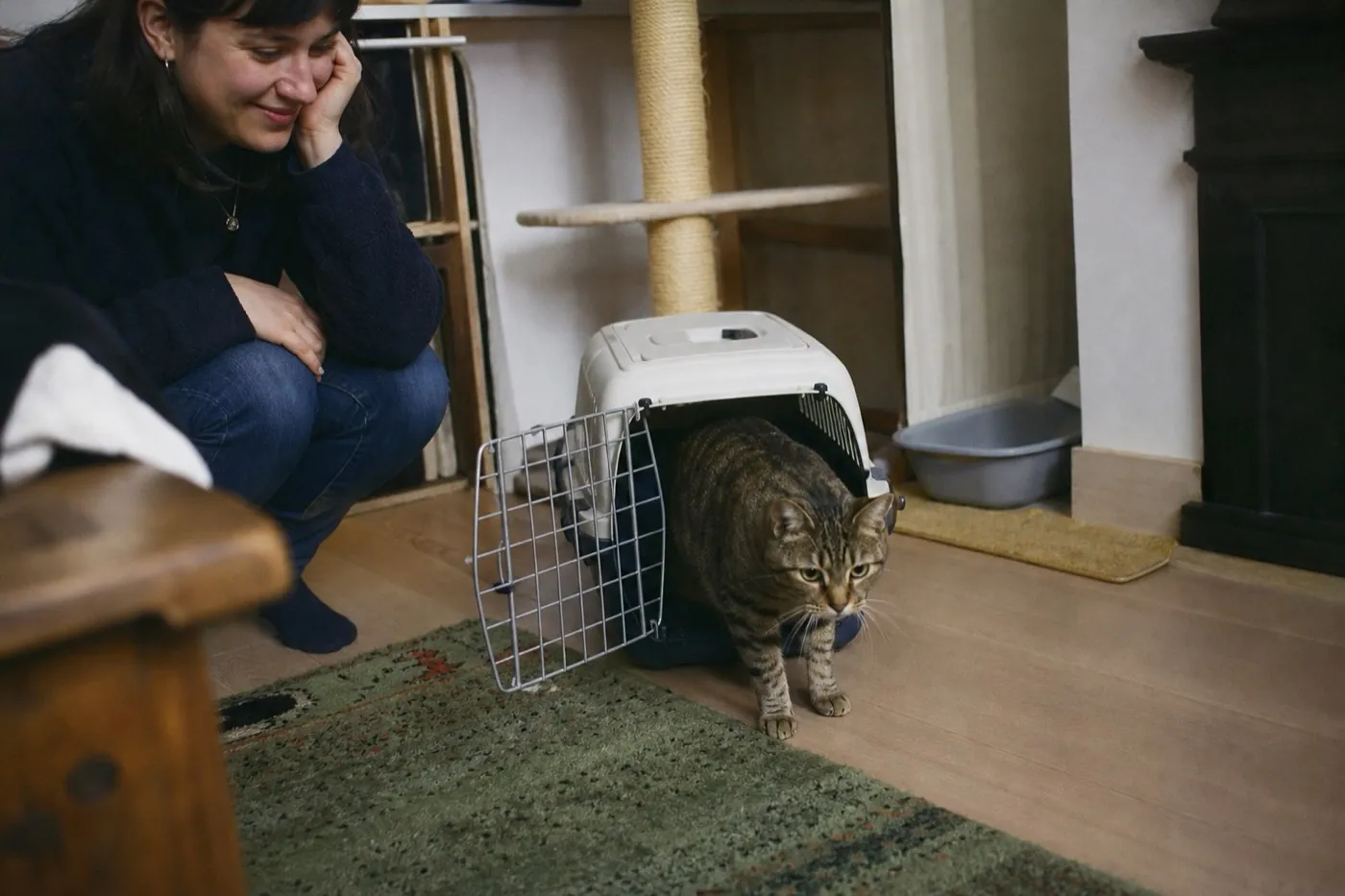
A good new cat checklist covers the equipment for feeding, using the litter tray, resting, scratching, play and safe transport. That does not mean buying everything the pet shop offers before your cat arrives. A kitten, an adult cat after adoption and a senior can all have different needs, and some accessories are best chosen once you know your cat's habits. Start with the essentials for the first few days, then top up the rest as you go.
Cat supplies checklist: what you need
The list below includes both the basics and items needed only in certain situations. Before you shop, remove anything that does not apply to your cat.
New cat checklist: what you need (part 1 of 2)
- Food and water
- stock of the food your cat eats now
- food bowl
- water bowl
- extra water bowl
- mat for under the bowls
- airtight food container
- scoop for measuring portions
- small stock of treats your cat knows
- fountain, if your cat likes using one optional
- simple food toy or feeding mat optional
- Litter tray and litter
- litter tray of the right size
- extra litter tray
- stock of litter your cat knows
- litter scoop
- mat under the litter tray
- waste container or bin
- bags for disposing of waste
- safe cleaner for the litter tray
- low-entry litter tray, if needed for a kitten, a senior or a cat with limited mobility
- Scratching post, shelves and high places
- stable vertical scratching post
- horizontal scratcher or scratching mat
- safe lookout spot
- shelf, windowsill or bed up high
- tall cat tree optional
- fixings to secure equipment firmly
- Beds and hiding places
- comfortable mat or simple bed
- blanket
- cardboard box or enclosed hideout
- resting place up high
- an item with a familiar smell, if you can get one from the previous carer
- easy-wash cover
- Cat carrier and travel
- sturdy carrier
- mat or blanket for the carrier
- absorbent pad
- light cover for the carrier
- label with the carer's details
- cleaner for the carrier after a journey
- Cat toys and daily activity
- fishing-rod toy for playing together
- balls or light toys for solo play
- food toy
- tunnel optional
- box for storing and rotating toys
New cat checklist: what you need (part 2 of 2)
- Grooming and cleaning
- brush or comb to suit the coat
- claw clippers, if you can use them safely
- toothbrush and toothpaste made for cats
- towel
- pet-safe cleaning product
- lint roller for pet hair
- lidded bin for litter tray waste
- medicines and products prescribed for your cat
- Documents and health information
- health book or pet passport
- vaccination and worming records
- microchip number and database details
- adoption agreement or breeder's papers
- test results and treatment history
- list of medicines with doses
- details of the current food
- details of the tray and litter
- contact for your chosen vet
- contact for the nearest 24-hour vet
For the first few days, buy the food your cat already knows from the shelter, foster home, breeder or previous home. A sudden change of diet during a move can put extra strain on the digestive system. Do not buy the biggest bag of a new food straight away. If you want to change the diet, do it gradually and, especially with illness, allergies, underweight or overweight, after talking to a vet.
Food should be complete and suited to your cat's life stage and health. A kitten, a healthy adult and a senior may need different products. Put the water bowl some distance from the food and the litter tray. In a larger home it is worth setting up more than one water point. A fountain is not essential. Buy one if you know your cat likes it or prefers moving water.
A practical rule is one litter tray per cat, plus one extra. For a single cat that means two trays, in separate, quiet and easy-to-reach places. Two trays standing right next to each other may be seen by your cat as a single resource.
Before buying, ask which tray and litter your cat uses now. Many cats accept large, uncovered trays and fine, unscented litter, but there are exceptions. The safest approach is to start with what they know and make changes only after the first settling-in period. Do not put the tray near food, water, a noisy appliance or anywhere another pet could block your cat in.
Scratching is a natural need for a cat, not a behaviour to be stamped out. A vertical scratching post should be tall enough for your cat to stretch its whole body and stable enough not to wobble. Put it where your cat actually spends time: by the bed, at the room entrance or next to a piece of furniture they like to scratch.
Not every cat prefers the same surface or direction of scratching. One will choose a sisal post, another a cardboard scratcher laid flat. To begin with, prepare two different types and choose further accessories after watching your cat. Shelves and tall scratching posts must be fixed securely.
Your cat should be able to choose between resting out of sight, in the open and up high. They may not accept the bed you bought straight away. Often a plain cardboard box, a quiet corner and a blanket that smells of the previous home matter more. For that reason it is not worth buying several expensive beds before you know your cat.
A hiding place should feel safe without making it hard to keep an eye on your cat. Block off dangerous gaps behind furniture and appliances, and offer a box, a cat house or a carrier left open in a quiet spot instead.
A carrier should be sturdy, well ventilated, easy to clean and secure against accidental opening. A model that opens at the front and the top, or one with a removable lid, is convenient. Your cat must be able to lie down and turn around comfortably, but the carrier should not be so large that it is unstable.
After arrival, leave the carrier open in your cat's room. A blanket and treats inside can help turn it into a familiar hideout. On every journey your cat should be in a closed, properly secured carrier, not in your arms or loose in the car.
Two or three different toys are enough to start with. Only observation will show whether your cat prefers chasing, stalking, catching things, exploring tunnels or working for food. Rotating a few toys is usually more practical than leaving them all on the floor all the time.
Strings, ribbons, elastic bands, feathers and fishing-rod toys can be swallowed or tangle around the body. Use them only under supervision and put them away in a closed place when play is over. Do not encourage your cat to attack your hands and feet.
The kind of grooming depends on coat length, age, health and how well your cat tolerates handling. Do not buy lots of random tools before you know what your cat needs. For dental care, use only toothpaste made for animals.
Parasite treatments are chosen by a vet according to the animal's species, age, weight and health. Never use a product made for dogs on a cat without a vet's clear advice. Do not buy supplements "just in case" either.
Check that the details linked to the microchip are up to date and who should change them. Book the first vet check at a time that suits your cat's age, health and the information you received from the previous carer.
New cat checklist: where to start
Before you start shopping, contact the shelter, foster home, breeder or current carer. Ask:
New cat checklist: where to start
- what food they eat and at what times
- which litter they know
- whether they use an open or covered tray
- whether they have ever gone outside the tray
- which surfaces they choose to scratch
- where they like to rest most
- whether they like high places
- how they react to the carrier and travel
- whether they take any medication
- whether they have allergies or chronic illness
- how they react to children, dogs and other cats
- whether they have been outdoors before
- what items you will get with your cat
The answers will let you split your shopping into three groups: things you must have before arrival, products that need matching to your cat, and extras that can wait.
What to buy for a cat to start with
Before your cat arrives, prepare the minimum:
What to buy for a cat to start with
- the food they eat now
- food and water bowls
- at least one ready-made litter tray
- litter your cat knows
- litter scoop
- safe carrier
- quiet place to rest
- hiding place
- stable scratching post
- one toy for playing together
- window and balcony safety
- safe cleaning product
- documents and health information
A fountain, an automatic feeder, an elaborate cat tree, a tunnel and extra toys can wait. What matters most is that the basic resources are available from the first moment and placed in the right spots.
Cat litter tray: which one to choose
A litter tray should let your cat walk in easily, turn around, dig a hole and cover the waste. A kitten, a senior or a cat with mobility problems may need a lower entrance. A large cat needs a correspondingly bigger tray, even if trays labelled as standard seem big enough.
When choosing and placing the tray, check:
Cat litter tray: which one to choose
- whether your cat knows the type
- whether the entrance is comfortable
- whether they can turn around freely
- whether the spot is quiet but easy to reach
- whether no noisy appliance runs nearby
- whether another pet can block the way
- whether it is away from food and water
- whether it is easy to clean every day
A move is not a good moment to change the food, the type of tray and the litter all at once. If you eventually want to use a different litter, introduce it gradually and leave your cat access to the familiar tray.
Cat scratching post: which one to choose
A good scratching post should suit the way your cat scratches. Before buying, look at:
- the direction of scratching: vertical, horizontal or angled;
- a height that allows a full body stretch;
- a stable base or the option to fix it in place;
- a surface your cat accepts;
- where it goes, especially by the bed or a favourite piece of furniture.
If your cat starts scratching the sofa, do not punish them. Put a suitable scratching post right next to that spot, reward your cat for using it and only move it once the new habit is firmly established.
Cat carrier: which one to choose
When choosing a carrier, check:
Cat carrier: which one to choose
- a stable structure
- strong fastenings
- good ventilation
- room to lie down and turn around
- easy to clean
- a comfortable, secure handle
- opens at the front and top, or has a removable lid
Before the journey, put an absorbent pad and a familiar blanket inside. When carrying it, support the bottom of the carrier to stop it swinging. Never transport a cat in a cardboard box, in your arms or loose in the car.
Checklist for a kitten, an adult cat and a senior cat
Kitten checklist
A kitten needs equipment that is safe for a small, lively animal:
Checklist for a kitten, an adult cat and a senior cat
- complete kitten food
- low-entry litter tray
- safe toys with no parts that can be swallowed
- stable scratching post that is not too hard to climb
- warm place to rest
- cables, gaps, windows and balcony thoroughly secured
- familiar food
- familiar type of litter and tray
- carrier for a safe pick-up
- hiding place and a quiet settling-in room
- scratching post that matches their habits
- copy of medical records
- medication, if they take any
- low-entry litter tray
- extra tray close to where they rest
- easy-to-reach water
- soft, warm bed
- stable steps or low platforms
- non-slip mats
- carrier with easy top access
- grooming items suited to their health
Do not buy accessories only in the smallest size. Some of them should still be usable when your cat has grown.
Checklist for an adult cat after adoption
An adult cat may have settled preferences, so information from the previous home is especially important:
Do not assume your cat will use everything you have prepared straight away. After a move they may hide for a while, stay less active and need more distance.
Checklist for a senior cat
An older cat may need aids that reduce effort and the risk of pain:
Problems with moving, using the litter tray or grooming should not automatically be written off as a natural part of ageing. They need to be assessed by a vet.
What not to buy before you know your cat
Before your cat arrives, it is usually not worth buying:
- a large stock of a new food;
- a large stock of an unfamiliar litter;
- an automatic litter tray as the only toilet;
- several costly beds;
- an elaborate cat tree without checking your cat's preferences;
- lots of toys of the same kind;
- supplements without a reason;
- random grooming products;
- a collar whose safety and fit you have not checked;
- parasite treatments made for dogs.
Buying less does not mean being less prepared. It lets you match the equipment to a particular cat and avoid piling up things your cat will not use.
The cost of the starter kit is not the only expense
When planning your budget, include not just the first purchases but also ongoing and unexpected costs:
- food and litter;
- vet visits;
- preventive care agreed with your vet;
- treatment and medication;
- replacing worn scratching posts and toys;
- care for your cat while you are away;
- securing windows and the balcony;
- emergencies.
An expensive gadget can wait, but a safe carrier, a litter tray, the right food and veterinary care are not extras.
How to set up your new cat checklist in BuyNest
In BuyNest you can create separate lists for shopping and preparation. Here is an example split.
- To buy before arrival: food, litter, trays, bowls, carrier, scratching post and basic equipment.
- To confirm with the current carer: type of food, litter and tray, any medication and known preferences.
- To choose after observation: more scratching posts, beds, a fountain, toys and grooming accessories.
- Admin: vet check, updating microchip details and securing windows.
Share the shopping list with someone in your household. When one of you ticks off an item, the other sees the up-to-date list straight away.
Preparing your home and the new cat checklist
If you are planning your cat's first days in a new place, use the checklist for preparing your home for a cat's arrival.
New cat checklist: frequently asked questions
What matters most on a new cat checklist?
The most important things are familiar food, water, a litter tray with familiar litter, a carrier, a hiding place, a stable scratching post and a safe place to rest. Extra toys, a fountain and elaborate furniture can be bought once you know your cat.
How many litter trays does one cat need?
The usual recommendation is as many trays as you have cats, plus one extra. So for one cat, prepare two trays in separate places.
Is an open or a covered litter tray better?
No single model suits every cat. The safest approach is to start with the type your cat already knows. The tray should be large, easy to reach, cleaned regularly and placed in a quiet spot.
Does a cat need a bed?
A cat needs comfortable, safe places to rest, but does not have to use a classic bed. They often pick a blanket, a box, a shelf, a windowsill or an open carrier.
Which scratching post should I buy for a cat?
A scratching post should be stable and match the direction your cat prefers to scratch. A vertical model must allow a full body stretch. It is also worth offering a horizontal surface and watching what your cat chooses.
Is a cat fountain necessary?
No. A cat should always have fresh water, but can drink from well-placed bowls. A fountain is useful if your cat prefers moving water and the device is cleaned regularly.
What food should I buy before my cat arrives?
To start with, buy the food your cat is eating now. Introduce any new feeding approach gradually. For kittens, seniors, allergies or illness, discuss the choice with a vet.
A good new cat checklist matches your cat's needs
The best starter kit is not the biggest, but the one that fits your particular cat. Before arrival, prepare the essentials, learn your cat's existing habits and leave some decisions until after adoption. That way you avoid purchases that miss the mark, and your cat gets what they really need from day one. In BuyNest you can keep urgent purchases and things to buy later on separate lists. Share the list with someone in your household. On a shared list you can see at once what is already bought and what is still missing.
Sources
- Ministerstwo Rolnictwa i Rozwoju Wsi: Czipowanie psów obowiązkowe w całej Polsce, Sejm przyjął ustawę o KROPiK
- WSSE w Warszawie: Obowiązek szczepienia kotów przeciwko wściekliźnie
- GOV.UK: Get your dog or cat microchipped
- Defra: Code of practice for the welfare of cats
- FDA: Tips for Safe Handling of Pet Food and Treats
- CDC: About Toxoplasmosis
- Gov.pl: Prezydent podpisał ustawę o Krajowym Rejestrze Oznakowanych Psów i Kotów
Take the shopping into BuyNest
BuyNest is on iPhone and Android. The app has no ads, including on the free plan.