
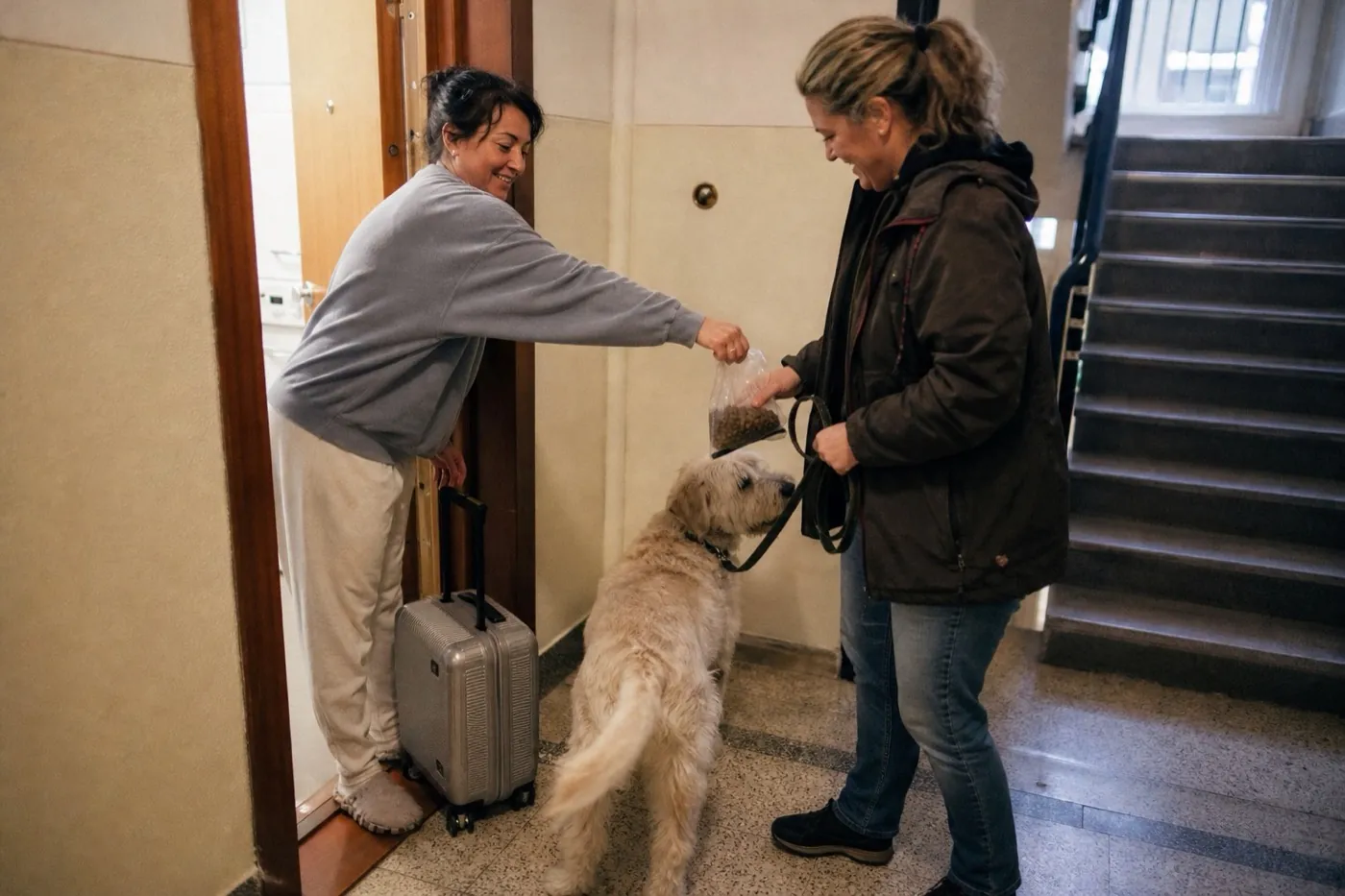
A pet sitter can visit your pet at home, live in while you are away, or take your pet into their own home. Before you book, check the sitter's experience, what the visits cover, how they react in an emergency and who covers for them. Only once you have chosen a specific person should you prepare instructions on feeding, medication, routine, your home and contacting the vet. From this article you can copy two separate lists into BuyNest: the first for choosing a pet sitter, the second for the sitter to follow while you are away.
How to choose a pet sitter: checklist for BuyNest
This list takes you from choosing the type of care to confirming the arrangement. Each item is short, so that once copied it works as a separate task in the app.
How to choose a pet sitter: checklist for BuyNest
- Choose the type of care.
- Agree the number and length of visits.
- Check the pet sitter's experience.
- Check the pet sitter's references.
- Confirm who will actually do the care.
- Ask about the sitter's pets and household.
- Agree on medication and health care.
- Agree a backup plan for the sitter.
- Arrange a meet and greet.
- Do a trial visit or walk.
- Agree the dates and scope of care.
- Agree the price and any extra charges.
- Confirm the terms in a message or contract.
Move the pet sitter checklist into BuyNest so nothing gets forgotten.
Pet sitter, a friend or family member, or a dog or cat hotel?
| Type of care | When it can work | What to settle before booking |
|---|---|---|
| Visits at your pet's home | A cat is happy in familiar surroundings; a dog can be left alone between visits of the right length | Number and length of visits, walks, monitoring your pet and a backup sitter |
| Sitter who stays in your home | Your pet needs company often or copes badly with long spells alone | Hours present, house rules, alarm, keys and how long your pet is left unattended |
| Stay at the sitter's home | Your pet tolerates a change of place and the sitter has suitable conditions | Other pets and household members, security, a place to rest and walking rules |
| Dog or cat boarding | You want a professional facility and your pet copes well in that setting | Required vaccinations, living conditions, number of animals, night supervision and access to a vet |
| Family or a friend | Your pet knows them and they understand everything the job involves | Availability, experience, giving medication and a backup plan |
Staying at home limits the change of surroundings, but does not always give enough hours of contact. A stay with the sitter means more human company, but can be harder for a territorial or anxious pet, or one that reacts badly to other animals. Base your choice on your pet's past behaviour, its health and how its day really runs, not on price alone.
The Koteria Foundation (a Polish cat welfare charity) recommends that a trusted person visits a cat left at home, ideally twice a day. A kitten, a senior cat, or a cat that is ill or on medication may need a different plan. For more, see How to look after your cat while you are away.
How to choose a good pet sitter
First, describe your pet honestly, including the difficult behaviour. Give its age, health, any medication, and how it reacts to strangers, other animals and being touched. Mention any attempts to escape, guarding of food, separation anxiety, reactivity on walks and trouble getting into a carrier. The sitter needs this to judge fairly whether they can take the job on safely.
In your conversation, find out:
- who will actually be looking after your pet;
- how many minutes one visit lasts and what it includes;
- how long your pet will be alone between visits;
- how many animals the sitter looks after at the same time;
- whether the sitter can give medication the way your pet needs;
- how they would react if your pet refuses food, is injured, escapes or suddenly feels worse;
- whether they can take your pet to the vet;
- who can step in for them in an emergency;
- how they record visits and when they send a report;
- what the price covers and which situations cost extra.
Ask for references, or check how the platform vets its sitters. Reviews help, but they are no substitute for a conversation about your own pet's needs. Someone experienced with calm adult dogs may not be able to handle a reactive dog, and feeding a healthy cat on a schedule is not the same as giving medication to a sick senior.
Meet and greet and a trial visit
Hold the first meeting where the care will take place. Show how to open the doors, put on the harness, secure the gate, use the carrier and give medication. With a dog, walk the usual route together. With a cat, show the feeding spots, litter trays, hiding places and window safety measures.
Watch whether the pet sitter:
- gives your pet time to make contact instead of forcing touch;
- does what you show them exactly as agreed;
- asks about the risk of escape, behaviour and emergencies;
- can spot signs of stress;
- says plainly which tasks they will not take on without extra preparation.
A dog that is anxious or a cat that hides during the first visit does not decide whether the sitter is any good. How the person reacts to the animal's behaviour says more. If the care will last several days or your pet needs medication, a short trial visit lets you check in practice the access to your home, the walk, feeding, the report and contact with you.
How much does a pet sitter cost, and how to compare offers
Compare the total price for the same scope of work, not the rate for services with similar names. One offer may cover a 20-minute visit to your flat, another an hour-long walk, feeding and a report. The final amount depends on:
- the number and length of visits;
- an overnight stay by the sitter, or your pet staying at their home;
- the number of animals;
- giving medication and extra grooming;
- travel and transporting your pet;
- public holidays and busy periods;
- an extra visit or extended care if you return late.
In a summary message or a contract, write down the dates, times, scope of tasks, total price, method of payment, cancellation rules and how emergency expenses will be settled. That way both sides know whether an extra walk, a purchase of food or a trip to the vet falls within the agreed service.
What should a pet sitter's instruction sheet include?
The instruction sheet is a document for quick reference, not your pet's life story. Put the most important details on the first page. Add routine and details of your home further on.
| Part of the instructions | What to write in |
|---|---|
| Your pet | Name, age, a recent photo, microchip number and features that help identify it |
| Feeding | Full name of the food, portion, how to measure it, mealtimes, treats and forbidden foods |
| Medication | Name, dose and time as prescribed by the vet, how to give it and what to do if a dose is missed |
| Health | Illnesses, allergies, typical symptoms and specific changes that mean calling the vet |
| Routine | Walks, litter tray, play, rest, commands, which rooms are allowed and your pet's usual behaviour |
| Risks | Escape attempts, reactivity, guarding of resources, anxiety, problems with touch and stress triggers |
| Home | Keys, alarm, locks, windows, balcony, garden and where food, medication and the carrier are kept |
| Help | Contact details for you, a local contact, your regular vet and a 24-hour clinic |
| Emergency | Rules on getting your pet to the clinic, who makes decisions, who pays the costs and how care continues if you are delayed |
| Contact | When reports are sent, what information they should include and how to confirm the final visit is done |
Leave medication in its original, labelled packaging. If your pet takes several medicines, prepare a separate schedule approved by the vet. A pet sitter should not change a dose on their own or decide what to do after a missed one.
The RSPCA recommends leaving the carer clear information on feeding, medication, your vet's details and an emergency contact. You will find the full scope in the guide Exploring pet sitting options.
Looking after a dog while you are away: what to discuss separately
With a dog, most of the risk comes when leaving the house and on the walk. Show the sitter how to put on the harness, the collar and any extra safety gear you use. Walk the usual route and point out where your dog reacts to other animals, bikes, cars or people.
In the walking instructions, write down:
- the usual times and length of walks;
- the commands you use on walks;
- rules for passing other dogs and people;
- places to avoid;
- whether your dog can use a dog run or a garden;
- how to open and secure the doors and the gate;
- where the lead, poo bags, towel and spare equipment are kept.
If your dog has separation anxiety, health problems or needs medication at a fixed time, the sitter must know the longest time your dog can be left without a person. A few short visits may not meet the needs of a dog that needs constant company. In that case a sitter who stays overnight, or a stay at a trusted place, may be better.
Looking after a cat while you are away: what to discuss separately
On every visit the pet sitter should actually see your cat, not only top up the bowl and the water. A cat that is hiding may need a calm check of its usual hiding places. If the sitter has not seen your cat, they should tell you and follow the plan you agreed in advance.
In the cat instructions, write down:
- the number and position of litter trays;
- the type of litter and how to clean it;
- your cat's usual hiding places;
- how to secure windows, the balcony and doors;
- the usual amounts of food and water;
- preferred play and how your cat likes to be approached;
- how it reacts to strangers and signs of stress;
- where the carrier is and how to get your cat into it.
An automatic feeder and a water fountain can support the routine, but you need to check that they work. A full tank does not prove that the device dispensed a portion, or that a particular cat has eaten.
What to set out for the pet sitter in one place
Set aside one labelled spot with all the supplies, and show the sitter where to find what they need for feeding, walks, cleaning and giving medication.
| Need | What to leave |
|---|---|
| Feeding | Food with a spare supply, a scoop or scales, treats that fit the diet and a note of portion sizes |
| Medication | Original packaging, the vet's schedule and any accessories needed |
| Dog | Lead, harness, collar, poo bags, a towel and spare equipment used on walks |
| Cat | Litter, a scoop, waste bags and whatever you use to clean the litter tray |
| Transport | An accessible carrier and instructions for getting your pet into it safely |
| Cleaning | Kitchen roll, bags and the product you use to clean up after your pet |
| Documents | Vaccination record, microchip details, emergency contacts and written authorisation if needed |
If you have several pets, label products with their names. Keep specialist food and medication separate, so the sitter does not have to tell them apart by the look of the packaging.
An emergency plan while your pet is in someone's care
The plan should answer specific questions: when the sitter contacts you, when they go straight to the vet, who can decide if they cannot reach you and how the costs will be covered. Also write down who takes over the remaining visits if the sitter falls ill or your trip is extended.
The AAHA (American Animal Hospital Association) recommends putting the details of your vet, a 24-hour clinic, you and a backup person somewhere easy to find. The instructions should also cover feeding, medication and your pet's usual routine. See Essential pet sitter instructions.
In the shared BuyNest list, include only tasks the sitter has to do or confirm. Send the alarm code, payment details, full medical records and any other sensitive information separately, through a secure channel.
Pet sitter instructions: checklist for BuyNest
Fill in the checklist with times, portions and dates. Pick the tasks that apply to your pet.
Pet sitter instructions: checklist for BuyNest
- Feed: [portion and time].
- Change the water: [time].
- Give medication: [name, dose and time].
- Check appetite, drinking, stools and behaviour.
- Take the dog out: [time and length].
- Walk the dog as per the walking instructions.
- Clean the litter tray: [time].
- Check the feeder and water fountain work.
- Play with your pet: [time].
- Lock the doors, windows, balcony and gate.
- Send a report after the visit: [time].
- Top up the food: [date].
- Top up the litter: [date].
- Wash the bowls: [date].
- Do the grooming: [task and date].
- Put out the rubbish: [date].
- Confirm the final visit: [date and time].
- Return the keys: [how].
Make a task list for your pet sitter in BuyNest and share it with them before you leave. The sitter ticks off each feed, walk, dose of medication and report, and you see the current state of care on your phone, without having to ask after every visit.
Do not repeat the details of the walk, how to give medication or the emergency plan in every task. They belong in the instruction table you hand to the sitter.
How to use the pet sitter checklist in BuyNest
Make two separate lists in BuyNest: a checklist for choosing a pet sitter, and a checklist of instructions for the sitter you pick. Share the second with the pet sitter once the arrangement is confirmed, so that all the daily care tasks are in one place.
If you need the same care on later trips, save your finished instructions as a template in BuyNest Premium. Before reusing it, just update the dates, times, medication, portions and the sitter's details.
Frequently asked questions about pet sitters
When should I start looking for a pet sitter?
Start once you have fixed the dates of your trip. The first time you work with someone, you need time to compare sitters, hold a meet and greet and do a trial visit. Before holidays, school breaks and the summer, availability can run out earlier.
How many times a day should a pet sitter visit a cat?
The Koteria Foundation recommends visits, ideally twice a day, for a cat left at home. A kitten, a senior, or a cat that is ill or on medication may need more frequent or longer care, agreed with your vet.
What should I give a dog sitter before the first walk?
Hand over the harness, collar, lead and bags you use. Show how to put the equipment on, the usual route, the commands, places that call for caution and how your dog reacts to people, other animals and traffic.
Can a pet sitter give medication?
Settle this before booking and check the sitter's experience with the specific method of giving it. Hand over the medicine in its original packaging, a schedule prepared in line with your vet's advice and the clinic's contact details in case a dose is missed or your pet reacts badly.
How long should a pet sitter's instruction sheet be?
The first page should cover feeding, medication, your vet's details, an emergency contact and the main hazards. The rest can describe routine, behaviour, your home and equipment. The tasks in the app should be much shorter than the instruction sheet itself.
What should I do about the keys when the care ends?
Agree how they will be returned before you go, and leave a fallback in case you are delayed. A key locked inside the flat will not be available for an extra visit, so the final handover needs a clearly defined procedure.
Sources
Take the shopping into BuyNest
BuyNest is on iPhone and Android. The app has no ads, including on the free plan.

