What does the ‘of which sugars’ row mean on a nutrition label?
Sugars on nutrition labels appear as ‘of which sugars’ under carbohydrate, given in grams per 100 g or 100 ml. The row shows all the sugars in the product, including those that are there naturally, such as in milk or fruit. It does not tell you how much sugar the maker added.
Regulation 1169/2011 defines sugars as all monosaccharides and disaccharides in the food, apart from polyols. The row is compulsory on most pre-packed foods, and EU rules do not require a separate line for added sugars.
EUR-Lex: Rozporządzenie (UE) nr 1169/2011 w sprawie przekazywania konsumentom informacji na temat żywnościFruit yoghurt made from plain yoghurt
A homemade version of fruit yoghurt. The sweetness comes from fruit, and you decide how much honey to add, if any.
Ingredients
- Plain yoghurt400 g
- Frozen berries150 g
- Ripe banana1
- Rolled oats30 g
- Honey optional1 tsp
Method
- Warm the berries in a small pan for 2–3 minutes until they release their juice, or thaw them in the fridge overnight.
- Mash the banana with a fork until smooth and stir it into the berries.
- Spoon the yoghurt into two bowls or jars, add the fruit and sprinkle with oats. Taste before adding honey: a ripe banana is often enough.
Banana and raisin oat bars
Bars with no added sugar, sweetened with banana and raisins. The fruit still contains sugars, so these are a snack, not a "sugar-free" product.
Ingredients
- Rolled oats200 g
- Ripe bananas3
- Raisins60 g
- Walnuts50 g
- Rapeseed oil2 tbsp
- Cinnamon1 tsp
- Egg1
Method
- Heat the oven to 180°C. Line a tin of about 20 × 20 cm with baking paper.
- Mash the bananas with a fork, add the egg, oil and cinnamon and mix.
- Add the oats, raisins and chopped walnuts. Mix into a thick dough and press it into the tin with a spoon.
- Bake for 22–25 minutes until the edges are golden. Cool in the tin, then cut into 10 bars. Keep in a container for up to 4 days.
How do natural, added and free sugars differ?
EU labels merge all sugars into one number, so it helps to know where they can come from. That is why plain yoghurt shows sugars in the table even though nobody added any.
Three terms you will meet in guides and on packs:
- naturally present sugars: lactose in milk and plain yoghurt, fructose in fruit,
- added sugars: anything the manufacturer put in, such as sugar, glucose or glucose-fructose syrup,
- free sugars (a WHO term): added sugars plus those in honey, syrups, juices and fruit concentrates; sugars in whole fruit, vegetables and milk are not counted.
The WHO recommends keeping free sugars below 10% of total energy intake, with a further benefit below 5%. At the 5% level the WHO gives roughly 25 g a day, or about six teaspoons. The advice concerns free sugars, not the sugars in whole fruit.
WHO: Guideline: sugars intake for adults and childrenWHO: WHO calls on countries to reduce sugars intake among adults and childrenHow can you spot added sugars when the table does not show them?
In the EU and UK there is usually no added-sugars row, so check the ingredients list. Ingredients appear from largest to smallest, so sugar near the top means a lot. A maker can, however, use several names so that no single sugar comes first even though together they add up.
Sugar hides under many names. Examples, not a full list, are sugar, glucose, fructose, dextrose, maltose, glucose syrup, glucose-fructose syrup, honey, agave syrup, maple syrup, fruit juice concentrate and molasses. If several appear in one product, consider choosing another.
Products from the USA carry a separate ‘added sugars’ row, because the US label required by the FDA includes it. It shows directly how much sugar was added, which is a handy reference for imported goods.
EUR-Lex: Rozporządzenie (UE) nr 1169/2011 w sprawie przekazywania konsumentom informacji na temat żywnościFDA: Added Sugars on the Nutrition Facts LabelHow much sugar per 100 g is a lot, and how much is a little?
For a quick judgement the UK colour-coded scale helps. According to the NHS, more than 22.5 g of total sugars per 100 g is high, and 5 g or less per 100 g is low. In between is medium. The scale uses total sugars, the same figure you see in the table.
There is a caveat: milk, plain yoghurt and fruit contain sugars naturally, so do not judge them by the same yardstick as sweets. The table gives simplified examples without brand names.
| Level | Sugars per 100 g | Typical foods |
|---|---|---|
| Low | 5 g or less | plain yoghurt, bread, pasta, rolled oats |
| Medium | above 5 g up to 22.5 g | fruit yoghurts, some muesli and sauces |
| High | more than 22.5 g | sweets, cakes, sweetened breakfast cereals |
The examples in the third column are editorial guidance, not measurements. Always check the number on the pack in your hand.
NHS: How to read food labelsWhat do ‘no added sugars’ and ‘low sugars’ claims mean?
Claims about sugars are governed by Regulation 1924/2006 and have fixed thresholds. ‘Low sugars’ means no more than 5 g of sugars per 100 g of solids or 2.5 g per 100 ml of drink. ‘Sugars-free’ means at most 0.5 g per 100 g or 100 ml.
‘No added sugars’ may be used when no mono- or disaccharides, or other foods used for their sweetening properties, have been added. If the product naturally contains sugars, the label should say ‘contains naturally occurring sugars’. A claim on the front never replaces the table.
EUR-Lex: Rozporządzenie (WE) nr 1924/2006 w sprawie oświadczeń żywieniowych i zdrowotnychHow do you compare two products for sugars in the shop?
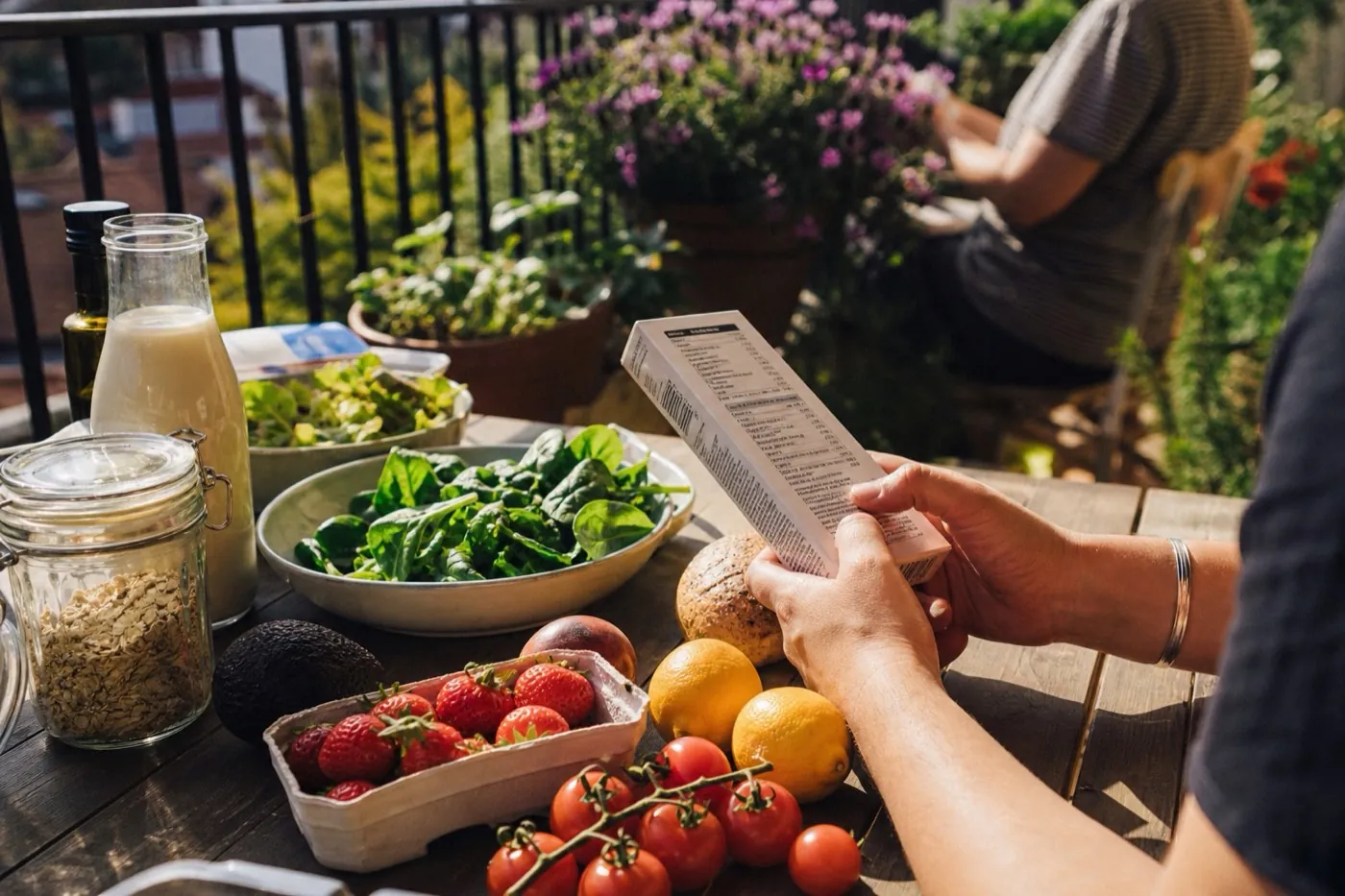
First decide what you are comparing: fruit yoghurt with fruit yoghurt, cereal with cereal, not cereal with yoghurt. Then look at the ‘of which sugars’ row in the per-100 g column and at the ingredients.
Five steps are enough at the shelf:
- Turn the pack over and find ‘carbohydrate, of which sugars’.
- Compare the per-100 g figure, not the per-serving one, because servings differ.
- Read the ingredients and count how often a sweetening ingredient appears under different names.
- Ask whether the sugars come from milk or fruit, or from something added.
- Choose the plain version and sweeten it yourself if you need to: with fruit, cinnamon or a teaspoon of honey.
The home version is often cheaper and sweet exactly the way you like. The recipe for fruit yoghurt made from plain yoghurt is further down, above the list.
How can you cut down on sugars without giving up sweet food?
This is not about a ban, only proportions. The biggest change comes from swapping sweetened drinks for water, fruit tea or unsweetened tea, and choosing the plain version of foods you meet every day: yoghurt, cereal and sandwich spreads.
Order matters too. Start with the foods your household eats most often, not those that appear only on special occasions.
What can replace a sweetened breakfast?
Porridge oats with banana, raisins and cinnamon are sweet from the fruit, not from added sugar. Plain yoghurt with frozen berries gives a similar result to a fruit yoghurt, with a shorter ingredients list. Banana and raisin oat bars make a good snack when children want something sweet for school.
Keep in mind that dried fruit and honey carry a lot of sugar in a small volume. They are better than sweets with added sugar in terms of what they contain, but the amount still counts. The Polish Healthy Eating Plate from NCEZ advises eating less sugar and highly processed products.
What should you watch for in yoghurts, cereals and drinks?
The three categories where sugars are easiest to miss are yoghurts, breakfast cereals and drinks. Each has its own trap, and the answer always starts with the per-100 g column.
How do you read sugars in yoghurts?
Plain yoghurt has sugars from nature, mainly lactose, so a zero in the table does not happen. Fruit yoghurt has the same lactose plus sugar added in the fruit preparation, which is why its figure is higher. Compare it with the plain yoghurt of the same brand: the difference is roughly what was added.
A simple alternative is plain yoghurt with your own fruit. You sweeten it exactly as you like, and you see what is in the pot.
Where do hidden sugars sit in breakfast cereals?
Rolled oats and rye flakes contain little sugar, but frosted cornflakes, chocolate balls or muesli with dried fruit can contain a lot. In muesli remember that raisins and other dried fruit add natural sugars, while honey or syrup add more.
Look at the first three ingredients. If sugar or syrup is among them, the product is closer to a dessert than a breakfast. Swapping one box for a plainer one trims sugars across the whole week.
What about drinks and juices?
In drinks every millilitre counts, because they are drunk quickly and in large amounts. Fruit juice has sugars from fruit, but the WHO counts the sugars in juice as free sugars, so do not treat it as whole fruit. The ‘low’ threshold for drinks is 2.5 g per 100 ml.
Water, unsweetened fruit tea and other unsweetened drinks are the easiest way to cut sugars without changing the rest of the menu.
How do you note a sugar comparison on your shopping list?
For products you compare, add a note such as ‘sugars per 100 g’ or the brand that came out best. Next time you can just pick the item from the list. The list ‘Breakfasts and snacks with less sugar’ holds the base products you need to make your own fruit yoghurt and oat bars.
In BuyNest you can save the list as your own template and tick things off together with the household. Two recipes are waiting further down, above the list: fruit yoghurt made from plain yoghurt, and banana and raisin oat bars.
This text is general information. People with diabetes or insulin resistance, and parents of babies and young children, should agree the rules with a doctor or dietitian.
Breakfasts and snacks with less sugar
- Dairy
- Plain yoghurt no added sugar800 g
- Milk1 l
- Eggs6 pcs
- Fruit
- Bananas6 pcs
- Frozen berries450 g
- Apples1 kg
- Raisins100 g
- Grains
- Rolled oats1 kg
- Cornflakes compare sugars1 pack
- Wholemeal bread1 loaf
- Extras
- Walnuts100 g
- Peanut butter, 100% nuts jar1 pcs
- Cinnamon1 pack
- Honey small jar1 pcs
- Drinks
- Still water6 l
- Fruit tea no sugar listed1 pack
Frequently asked questions
Are the sugars in the table the same as added sugar?
No. The ‘of which sugars’ row covers all sugars, including those naturally present in milk and fruit. Added sugars you have to spot in the ingredients list, because EU and UK rules do not give them a separate row.
How much sugar a day does the WHO advise?
The WHO advises that free sugars make up less than 10% of energy intake, with a further benefit below 5%. At the 5% level the WHO gives roughly 25 g a day. This does not apply to the sugars in whole fruit.
Is a ‘no added sugars’ product sugar-free?
Not always. The claim means no sugars were added, but the food may contain sugars naturally, for example from fruit or milk. Check the figure in the table.
Are honey and agave syrup better than sugar?
For label purposes it makes no difference. Honey and syrups count as free sugars according to the WHO. They taste and contain different things but do not remove the need to watch the amount.
Can I compare sugars in a drink with a solid food?
Better not to. The ‘low’ threshold is different for drinks, at 2.5 g per 100 ml, and for solids, at 5 g per 100 g. Compare drinks with drinks.
Sugars on nutrition labels are one row in the table, while added sugars show up in the ingredients list. Open the ready list in BuyNest, buy the base products and sweeten your own versions exactly as much as you like.
Open the ready list in BuyNestSources
- EUR-Lex: Rozporządzenie (UE) nr 1169/2011 w sprawie przekazywania konsumentom informacji na temat żywności
- EUR-Lex: Rozporządzenie (WE) nr 1924/2006 w sprawie oświadczeń żywieniowych i zdrowotnych
- WHO: Guideline: sugars intake for adults and children
- NHS: How to read food labels
- FDA: Added Sugars on the Nutrition Facts Label
- NCEZ / NIZP PZH-PIB: Talerz Zdrowego Żywienia
- WHO: WHO calls on countries to reduce sugars intake among adults and children
Take the shopping into BuyNest
BuyNest is on iPhone and Android. The app has no ads, including on the free plan.