
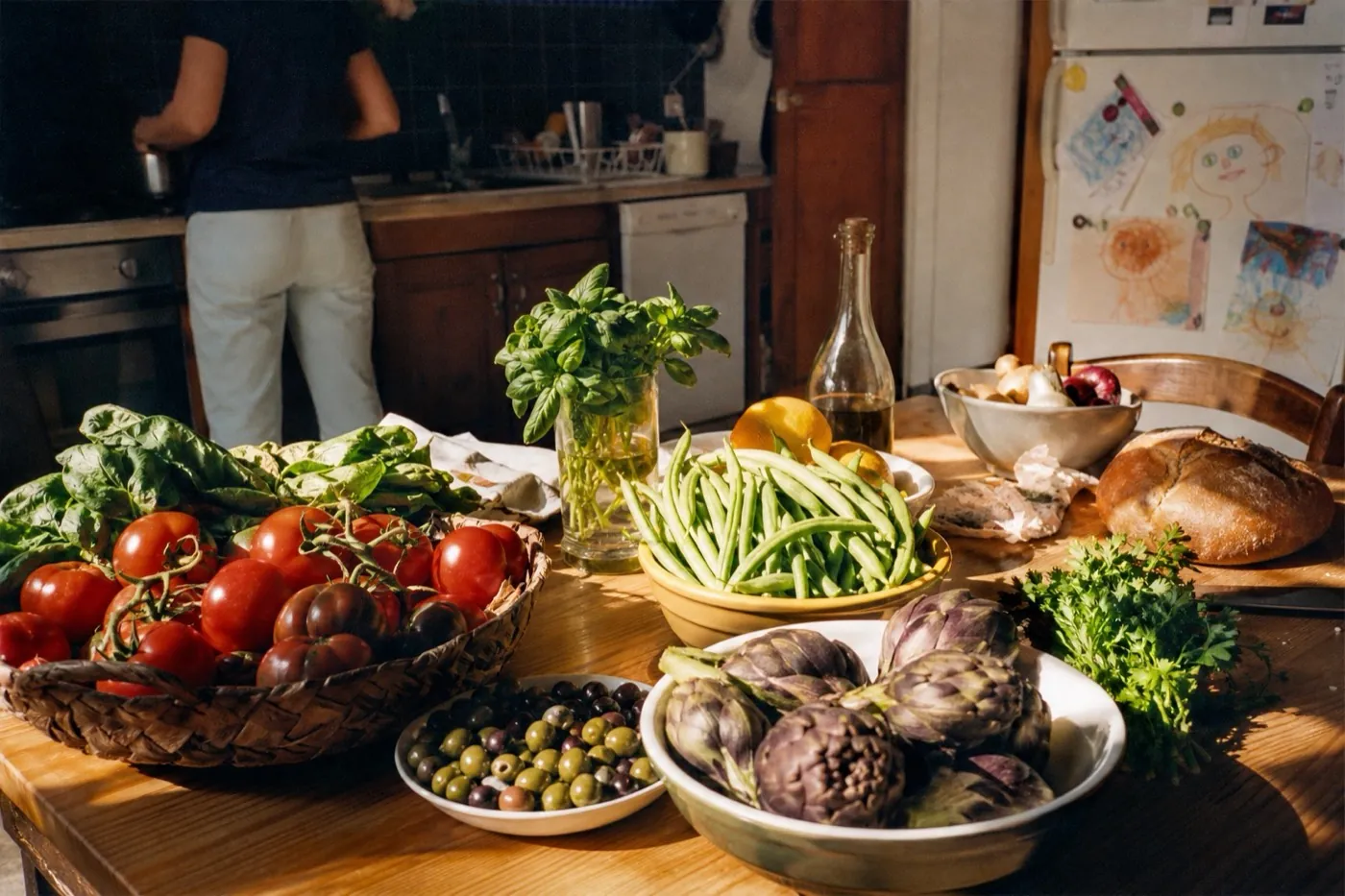
What is a Mediterranean diet shopping list built around?
A Mediterranean diet shopping list is built around vegetables, fruit, pulses and wholegrains, with olive oil as the main fat. Fish, nuts and yoghurt appear regularly, while red meat and sweets are occasional extras. It describes a way of eating drawn from the habits of people around the Mediterranean, not a fixed menu.
UNESCO recognised it as intangible cultural heritage, which is a helpful clue. The pattern covers the whole practice, from seasonal shopping to shared meals, rather than a set of special products from one aisle.
This guide is about shopping and cooking in general terms. It is not medical advice, and anyone with a health condition should talk to a doctor or dietitian.
UNESCO, Mediterranean diet (lista niematerialnego dziedzictwa)Chickpeas braised with tomatoes and spinach
A one-pot dish made mostly from cupboard staples, plus a handful of fresh spinach. Serve with wholemeal bread or bulgur wheat.
Ingredients
- Olive oil2 tbsp
- Onion1
- Garlic3 cloves
- Smoked paprika1 tsp
- Ground cumin1 tsp
- Chopped tomatoes 400 g1 tin
- Tinned chickpeas drained2 tin
- Water150 ml
- Baby spinach100 g
- Lemon½
- Flat-leaf parsley½ bunch
- Salt and pepper
Method
- Heat the olive oil in a wide pan. Dice the onion and cook over medium heat for 6–7 minutes until soft.
- Add the chopped garlic, paprika and cumin. Stir for a minute so the spices release their aroma without burning.
- Pour in the tomatoes and water and add the drained chickpeas. Cover and simmer for 12–15 minutes, stirring now and then. The sauce should thicken but not catch.
- Add the spinach and stir until it wilts, about 2 minutes. Season with salt, pepper and lemon juice. Tinned chickpeas are often salted already, so add salt last and taste first.
- Scatter over the chopped parsley. Put any leftovers in a container in the fridge; the next day it is good cold with yoghurt.
Bulgur salad with vegetables and sardines
A quick dinner or packed lunch. Tinned fish, a grain that does not need cooking on the hob, and raw vegetables.
Ingredients
- Bulgur wheat120 g
- Boiling water250 ml
- Sardines in olive oil about 120 g1 tin
- Tomatoes2
- Cucumber½
- Red onion½
- Black olives40 g
- Flat-leaf parsley½ bunch
- Lemon½
- Olive oil1 tbsp
Method
- Put the bulgur in a bowl, pour over the boiling water, cover with a plate and leave for 15 minutes. Then fluff it with a fork.
- Meanwhile dice the tomatoes and cucumber, slice the onion thinly and chop the parsley.
- Mix the bulgur with the vegetables, olives, lemon juice and olive oil. Taste before adding salt: olives and tinned fish bring plenty of it.
- Drain the sardines, break them into pieces with a fork and arrange on top. For a work lunch, keep the salad in the fridge and eat it the same day or the next.
Tip Swap the sardines for mackerel in brine, or for chickpeas if you do not eat fish.
How does a Mediterranean plate compare with a standard healthy plate?
The easiest comparison is with the Polish Healthy Eating Plate from the National Institute of Public Health. Half the plate is vegetables and fruit, a quarter is grain foods, mostly wholegrain, and a quarter is protein, including pulses and fish. A small amount of vegetable oil, such as olive or rapeseed, is the fat.
The table below is our own simplification to help you think about the basket. It gives no portions, because those depend on the person.
| Group | What you buy most often | Role in the basket |
|---|---|---|
| Vegetables and fruit | tomatoes, cucumbers, onions, spinach, lemons, seasonal fruit | the base of every meal |
| Pulses | chickpeas, beans, lentils | the main protein in many dinners |
| Grains | bulgur, buckwheat, brown rice, wholewheat pasta and bread | the filling base |
| Fats and nuts | olive oil, rapeseed oil, unsalted nuts | a small amount, but daily |
| Fish and dairy | sardines, mackerel, plain yoghurt, cottage cheese, feta | an addition a few times a week |
| Meat and sweets | a piece of chicken, cold cuts, cake | occasional, in small amounts |
The pattern is close to the plate you probably know, so the change is a shift of emphasis rather than a revolution. More pulses and vegetables at dinner, fewer cold cuts on sandwiches.
NCEZ / NIZP PZH-PIB, Talerz Zdrowego ŻywieniaWhat do you buy for a Mediterranean diet in an ordinary supermarket?
You do not need exotic products. The groups below fit a standard supermarket or a local market. Start with what you already eat and add one group at a time.
Which vegetables and fruit work in winter and summer?
Tinned tomatoes, frozen green beans, onions, cabbage, carrots and apples do the same job as fresh vegetables from the south. In winter, frozen and tinned vegetables are often the sensible choice. In summer, buy what is in season, because it tastes better and usually costs less.
How do you shop for pulses and grains?
Buy pulses in two forms: dried for slow weekend cooking and tinned for quick dinners. For grains, choose buckwheat, bulgur, brown rice, wholewheat pasta and wholemeal bread. How to check that a product really is wholegrain is covered in our guide to what wholegrain means on a label.
Which fish, nuts and dairy make sense?
Fish does not have to be fresh. Tinned sardines, mackerel or sprats are convenient, keep well and cost less than a fresh fillet. Buy nuts unsalted, without honey or caramel. A small bag of walnuts or hazelnuts a week is enough for porridge, salad or yoghurt.
Plain yoghurt and cottage cheese replace sweetened dairy desserts well. Hard cheese or feta can top a dish rather than be its main part.
Does a Mediterranean diet have to be expensive?
It does not, because its core is inexpensive: pulses, grains, seasonal vegetables and tinned fish. Olive oil and nuts are the costly items, and that is where you can economise deliberately.
The Polish health institute lists rapeseed oil alongside olive oil as a good vegetable fat. For everyday frying you can use rapeseed oil and keep olive oil for salads and dishes where you taste it. That split usually lowers the cost of the basket.
- Buy dried pulses in larger bags, as they keep for a long time.
- Choose frozen vegetables when fresh ones are out of season.
- Buy meat for a specific dinner instead of stocking up on what you will not eat.
- Compare the price per kilogram or litre, not per pack.
Eating less meat and fewer cold cuts often leaves room in the budget for a better olive oil. Check current prices in your own shop, because they change from week to week.
What should you check on olive oil, tins and ready meals?
The word “Mediterranean” on a pack is not a term defined in law. A ready salad, pizza or pasta dish in that style can still be high in salt, sugar or fat from sources other than olive oil. What decides is the ingredients list and the nutrition table per 100 g, which EU regulation 1169/2011 requires on packaged food.
How do you tell olive oil categories apart?
EU law distinguishes extra virgin olive oil, virgin olive oil, “olive oil” made of refined and virgin oil, and olive pomace oil. These are different products with different flavours and prices.
Choose extra virgin for salads, and a cheaper category for baking and braising.
Where does salt hide in a Mediterranean basket?
Olives, feta, capers and fish in brine bring a fair amount of salt. Compare the salt line per 100 g between brands, and where you can, pick fish in oil or its own juices rather than in spicy sauces.
With tinned chickpeas and beans, draining and rinsing removes part of the liquid. Keep that in mind if you watch salt at home.
Rozporządzenie (UE) nr 1169/2011 w sprawie przekazywania informacji na temat żywnościHow do you start with just one week?
It works best not to change the whole kitchen at once. Pick a week with a calmer calendar and change a few habits. The steps below assume a home that cooks four or five dinners a week.
- Plan three dinners built on pulses or wholegrains and two with fish or eggs.
- Check the cupboard for olive oil, tinned tomatoes, chickpeas, grains and spices.
- Make one shopping list split into vegetables, dry goods and dairy.
- Swap cold cuts on sandwiches for a bean spread, an egg or cottage cheese with vegetables.
- Buy fruit and unsalted nuts as a snack instead of sweets.
- After a week, note what worked and keep it in a template.
You do not have to buy everything at once. If half the stock is left after a week, the plan was too ambitious, not a failure on your side.
What does a Mediterranean diet not promise?
The Mediterranean pattern is often described in research, but most studies compare groups of people who eat differently. They show associations in populations. They do not say what will happen to one person who changes their shopping for a month.
The WHO describes healthy eating with similar rules: at least 400 g of vegetables and fruit a day for people over ten, more unsaturated than saturated fat, less than 5 g of salt and free sugars below 10% of energy. These are general population guidelines, not a promise of a specific result.
If you have heart disease, diabetes, kidney disease or another condition, discuss how you eat with a doctor or dietitian. A therapeutic diet needs individual advice that a general article cannot replace.
WHO, Healthy dietHow do you set up the list in BuyNest, and which two dinners come first?
Two recipes sit just above the list: chickpeas braised with tomatoes and spinach, and a bulgur salad with sardines. Both rely mostly on cupboard staples, so they are easy to repeat. The ready Mediterranean-style shopping list covers both dishes, fruit for a few days, yoghurt and nuts for breakfasts, and a stock of olive oil and spices.
Feta is marked as optional: it suits the salad but is not essential. If you do not eat fish, swap the sardines for a second tin of chickpeas or beans.
In the app, assign products to shops: pulses and oil to the supermarket, vegetables to the market. Save the list as your own template, and next time you can add the whole basket in one go and only note what changed. More ideas in this style are in the diets and recipes section.
A Mediterranean-style basket for a few days
- Vegetables and fruit
- Tomatoes6 pcs
- Cucumber1 pcs
- Onions2 pcs
- Red onion1 pcs
- Garlic bulb1 pcs
- Baby spinach150 g
- Flat-leaf parsley bunch1 pcs
- Lemons2 pcs
- Seasonal fruit1 kg
- Cupboard
- Tinned chickpeas 400 g each2 pcs
- Chopped tomatoes 400 g tin2 pcs
- Bulgur wheat500 g
- Wholemeal bread1 loaf
- Extra virgin olive oil500 ml
- Black olives1 pack
- Walnuts100 g
- Fish and dairy
- Sardines in olive oil tins2 pcs
- Plain yoghurt400 g
- Feta cheese optional200 g
- Spices
- Smoked paprika1 pack
- Ground cumin1 pack
Frequently asked questions
Is a Mediterranean diet the same as a vegetarian diet?
No. The Mediterranean pattern includes fish, dairy and sometimes meat, just in smaller amounts than a typical Polish menu. A vegetarian diet excludes meat and fish. If someone at home eats differently, split the list into a shared part and extras for one person.
Do I have to buy extra virgin olive oil?
No, though it is worth having for salads and dishes where you taste the oil. For frying and baking a cheaper category or rapeseed oil is enough, and the Polish health institute lists rapeseed oil as a good vegetable fat.
Do frozen vegetables and tins fit a Mediterranean diet?
Yes. Tinned tomatoes, frozen spinach or green beans do the same job as fresh vegetables, especially out of season. With tins, check the ingredients list and the salt per 100 g.
Is this way of eating suitable for children and people with health conditions?
The general pattern can be a good starting point, but it is not advice for a particular person. Children, pregnant women, older adults and people with chronic conditions should discuss any change with a doctor or dietitian.
How much does a Mediterranean basket cost?
We do not give a figure, because prices depend on the shop, region and season. Pulses, grains, frozen vegetables and tinned fish keep the cost down. Olive oil and nuts are usually the most expensive items.
A Mediterranean diet shopping list is a handful of steady habits rather than a new cuisine. Start with one week and one list, and next time change only what did not work.
Open the ready list in BuyNestSources
Take the shopping into BuyNest
BuyNest is on iPhone and Android. The app has no ads, including on the free plan.