
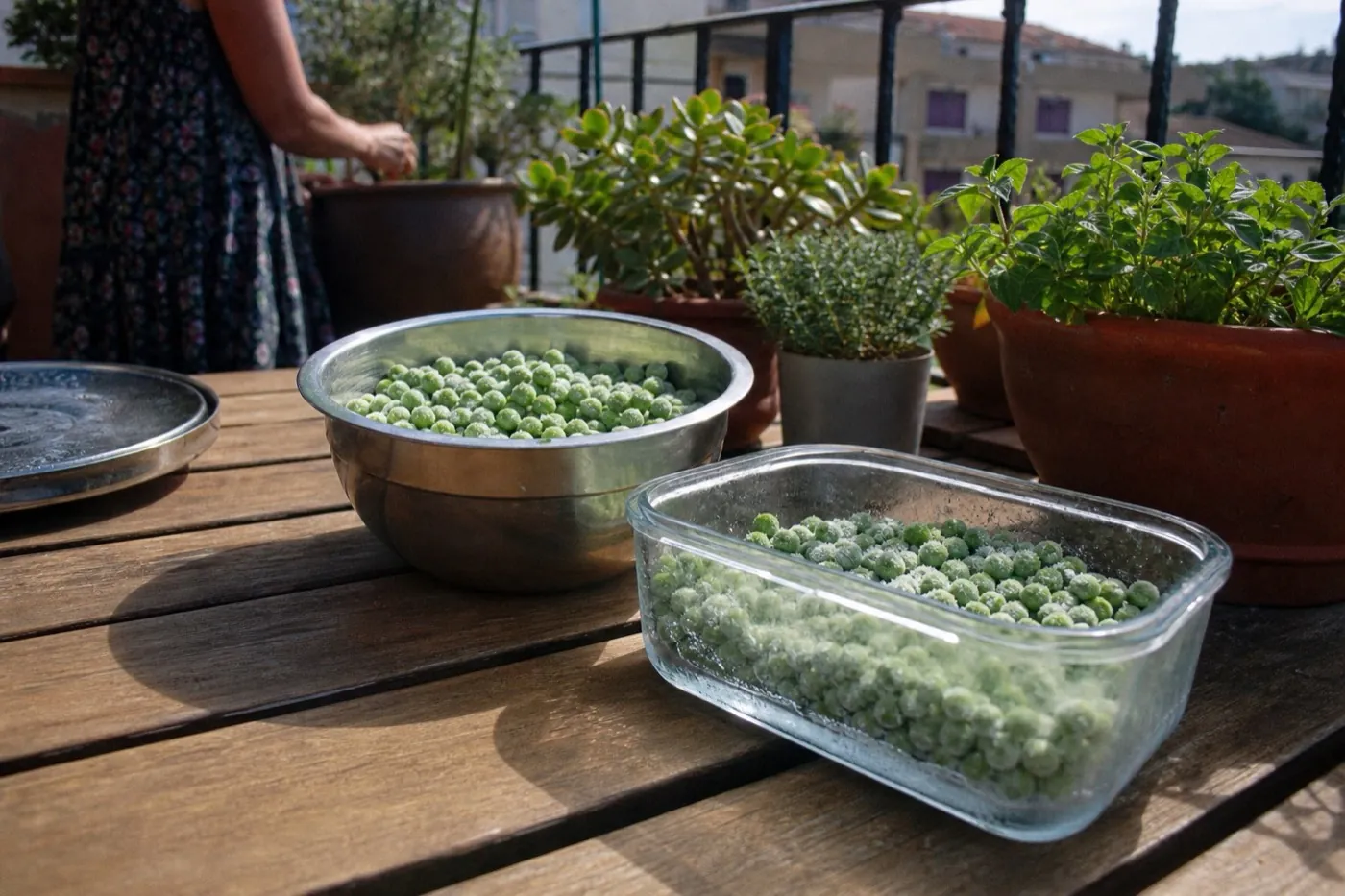
Frozen vegetables: mix or single ingredient?
Frozen vegetables, a mix or a single ingredient? Buy a mix for the one dish it was put together for, such as a stir-fry. Buy single vegetables when the same ingredient will turn up in several dinners. Your plan for the week decides, not the packaging.
A mix saves chopping and several separate bags, but it fixes the proportions. Single vegetables give you control, and you use up the rest of the bag in another dish. Below is a simple way to choose, plus an example week built from five bags.
If you are really asking whether to buy frozen instead of fresh, that is another question. We cover it in our guide to fresh or frozen vegetables for dinner. Here we assume the frozen bags are already heading for your basket.
Chicken and vegetable stir-fry
Dinner from one bag of mixed vegetables in 20 minutes. The vegetables go into the pan straight from the freezer.
Ingredients
- Frozen stir-fry vegetable mix450 g
- Chicken breast or plain tofu400 g
- Soy sauce3 tbsp
- Honey1 tsp
- Cornflour1 tsp
- Garlic2 cloves
- Fresh ginger10 g
- Rapeseed oil2 tbsp
- Jasmine rice to serve225 g
Method
- Cook the rice. Cut the chicken into strips. In a cup, mix the soy sauce, honey, cornflour and 4 tablespoons of water.
- Heat the oil in a large frying pan or wok over high heat. Fry the chicken for 4–5 minutes until browned and white in the middle. Lift onto a plate.
- Tip the frozen vegetables into the same pan. Fry over high heat for 5–6 minutes, stirring. Water from the ice comes out first and then evaporates. Do not cover the pan, or the vegetables will steam instead of frying.
- Add the chopped garlic and grated ginger and fry for 30 seconds. Return the chicken, pour in the sauce and stir until it thickens and coats the vegetables, about a minute.
- Serve straight away with the rice.
Frozen broccoli soup
Frozen broccoli is already trimmed and cut, so the only chopping is an onion and a potato.
Ingredients
- Frozen broccoli600 g
- Potatoes medium2
- Onion1
- Garlic1 cloves
- Vegetable stock1 l
- Butter20 g
- Single cream optional100 ml
- Pumpkin seeds to serve30 g
Method
- Soften the chopped onion in the butter for 5 minutes and add the garlic.
- Add the peeled, diced potatoes and the stock. Bring to the boil and cook for 10 minutes.
- Add the broccoli straight from frozen. Cook for 8–10 minutes after it returns to the boil, until tender but still green.
- Blend until smooth, stir in the cream and season with salt and pepper. Thin with water if it is too thick.
- Toast the pumpkin seeds in a dry pan and scatter them over each bowl.
What kinds of frozen vegetables are in the shop?
The freezer aisle has three main groups. The table shows what each one suits and what to watch for before it goes in your basket.
| Type | Examples | Best for | Watch out for |
|---|---|---|---|
| Single vegetable | Broccoli, peas, green beans, spinach | Soups, sides, pasta, several different dishes | You add the seasoning yourself |
| Mix for one dish | Stir-fry, soup or roasting mixes | The one dish it is made for | Proportions are fixed, and you may skip some pieces |
| Mix with extras | Vegetables with butter, sauce or seasoning | A quick side with no extra cooking | Check the ingredients and the salt or fat |
| Blocks with herbs or garlic | Spinach blocks, vegetables with garlic | Soups, fillings, pasta | Blocks can hold water, so check the net weight |
The lines between groups blur, so always read the name and the ingredients, not just the picture on the bag.
When is a mix better, and when should you buy vegetables separately?
A mix makes sense when you know you will use it in one dish. A stir-fry mix goes in the pan, a soup mix goes in the pot, and a roasting mix goes on the tray. One bag replaces several products and the chopping.
Single vegetables work better when you want to use them in several meals. One bag of broccoli covers a soup and a side, spinach blocks cover pasta and an omelette, and peas cover fried rice and a vegetable salad.
How do you decide at the freezer shelf?
The quickest method takes a minute, before you add frozen bags to the list. The steps are the same for one person or a family, and only the bag size changes.
- Write down your dinners for the coming week and note the vegetables each one needs.
- If one dish needs five vegetables in small amounts, buy a mix.
- If the same vegetable appears in three dishes, buy it on its own in a bigger bag.
- Check that the mix has nothing someone at home will not eat, because picking pieces out of a bag soon puts people off.
When is a mix the better buy?
When you cook after work and want one bag to open, a mix wins on some nights. For a small household that rarely cooks big batches, half a bag of a single vegetable can be hard to use up, while a mix goes into one dish entirely.
A mix is also handy for trying new flavours. You get several vegetables for one price and see which you like before buying separate bags.
What does a week of dinners from five bags look like?
The plan behind the list under this article shows how one mix and four single vegetables cover five dinners for two or three people. The amounts on the list are the editors' estimate, based on typical portions in recipes for a few people.
Only one dish uses the mix, because it needs many vegetables at once. The others rest on single vegetables, each of which you can use again.
- Monday: chicken and vegetable stir-fry with soy sauce, from a Chinese-style mix, with jasmine rice.
- Tuesday: cream of broccoli soup on stock, topped with pumpkin seeds.
- Wednesday: pasta with spinach, garlic and cheese.
- Thursday: egg fried rice with peas.
- Friday: roast chicken thighs or fish with green beans and the rest of the broccoli.
After a week like this you usually have some peas and spinach left for the next week, rather than half a bag of mix that fits nothing. Two recipes sit below, above the list: chicken and vegetable stir-fry and frozen broccoli soup.
To plan more dishes from the same vegetables, see our guide to vegetables that work across several meals.
What should you check on a frozen vegetable label?
The label on frozen vegetables is simple, but a few details decide how much you are really buying. The rules for what must appear come from EU Regulation 1169/2011 on food information, which also applies in Poland. Look at the points below.
Always check the ingredients, because the same name on a bag can sit above very different products.
- Ingredients: plain frozen vegetables list one vegetable and nothing else. A mix with extras shows salt, fat, seasoning or sauce, and the longer the list, the less control you have over the taste.
- Net weight: for products with a glaze, the layer of ice, the declared net weight excludes the glaze, so what you weigh is the product itself.
- Quantity of ingredients: when the name mentions an ingredient, such as “with butter”, the rules require its percentage to be shown.
- Cooking instructions: the producer says whether to cook from frozen or thaw first.
- Refreezing guidance: if the pack gives it, follow it, because it reflects how the product was processed.
How do you cook frozen vegetables and store them?
Most frozen vegetables go straight from the bag into the pot or pan with no thawing, and cook faster than fresh ones. The exact time is on the pack, because it depends on the vegetable and the size of the pieces. Thawed vegetables overcook more easily and release water.
A home freezer should hold -18°C and a fridge about 4°C. At that temperature food is safe, and time in the freezer affects quality more than safety. So use opened bags within a reasonable time.
How do you close an opened bag?
Press the air out of the bag, fold it over and seal it with a clip or an elastic band, then put it in a tub or a second bag. Air dries vegetables out and frosts them. Write the opening date on the bag so you do not hunt for it a month later.
Can you thaw vegetables and freeze them again?
According to FSIS, food thawed in the fridge can go back into the freezer without cooking, though quality drops. If you thawed vegetables in cold water or the microwave, cook them straight away. The producer's advice on the pack always applies, so follow it.
What about the trip home from the shop?
Pick up frozen bags last and carry them home in an insulated bag if the trip is long. More detail is in our guide to bringing frozen groceries home.
FDA: Are You Storing Food Safely?USDA FSIS: Freezing and Food SafetyHow do you put frozen vegetables on a BuyNest list?
Write the vegetable, the form and the bag size, for example “frozen broccoli 750 g”. In the shop you then see straight away whether you are taking a mix or a single ingredient. You can open the ready list for a week of dinners in BuyNest and tick items off on your way to the freezer.
Items are grouped into frozen vegetables, meat and the rest, so you do not go back to the same aisle. If others in your household shop too, a shared list shows at once that the bag of peas is already in the basket.
In a custom template you can save the frozen staples you always keep and add only what is missing. If your freezer is small, our guide to groceries for a small freezer will help.
Frozen vegetables for a week of dinners
- Frozen
- Stir-fry vegetable mix450 g
- Broccoli750 g
- Spinach portions450 g
- Garden peas450 g
- Green beans450 g
- Meat and tofu
- Chicken breast400 g
- Vegetables
- Potatoes1 kg
- Onions3 pcs
- Garlic bulb1 pcs
- Fresh ginger small piece1 pcs
- Dairy
- Single cream200 ml
- Pantry
- Jasmine rice500 g
- Soy sauce1 pcs
- Vegetable stock1 l
- Pumpkin seeds100 g
Frequently asked questions
Do you need to thaw frozen vegetables before cooking?
Usually not. Most go straight from the bag into the pot or pan and cook faster than fresh. The producer gives the exact method on the pack, so read the instructions for the product you bought.
Is a vegetable mix cheaper than single vegetables?
It depends on the shop and any offers, so compare the price per kilogram, not per bag. In a mix you also pay for pieces you may not use. If you use the whole bag in one dish, the gap usually narrows.
How long can you keep an opened bag of frozen vegetables?
Frozen food at -18°C stays safe, and time mostly affects quality. Seal the opened bag well and use it within a few weeks. Write the date on it so you are not guessing.
Can you refreeze thawed vegetables?
According to FSIS, food thawed in the fridge can be refrozen without cooking, though quality drops. Vegetables thawed in water or the microwave should be cooked straight away. Always check the advice on the pack.
What does a lot of frost in the bag mean?
A thick layer of frost or lumps of ice can mean the product thawed and refroze, or sat in the shop for a long time. Choose another bag if so. A little frost is common in opened bags and usually points to air getting in.
Before adding frozen bags, write down five dinners and pick one mix for one dish, with single vegetables for the rest. You can open the ready list in BuyNest with one tap. Then the question of frozen vegetables, a mix or a single ingredient, gets settled at the plan, not at the shelf.
Open the ready list in BuyNestSources
Take the shopping into BuyNest
BuyNest is on iPhone and Android. The app has no ads, including on the free plan.