How do you check allergen information on shared trips so nobody buys the wrong product?
Allergen information on shared shopping trips is easiest to manage when the whole group has one agreed list of specific products, not a vague note such as ‘gluten-free bread’. Everyone then buys the same item, and you read the ingredients once, when you choose, not at every visit.
Below are the rules for reading labels in the EU and UK, a short list of the 14 allergens, tips on splitting the shop between people and how to save agreed products in BuyNest.
EUR-Lex: Rozporządzenie (UE) nr 1169/2011 w sprawie przekazywania konsumentom informacji na temat żywności (art. 9, 21, 44, załącznik II)Chicken tray bake with potatoes and vegetables
A dish made from simple, unprocessed ingredients, where every label is easy to check. It is not an "allergy-safe" recipe: always read the ingredients of what you buy, especially spices.
Ingredients
- Chicken thighs or drumsticks1 kg
- Potatoes800 g
- Carrots3
- Red onions2
- Red pepper1
- Rapeseed oil3 tbsp
- Garlic4 cloves
- Sweet paprika single spice2 tsp
- Dried thyme1 tsp
- Salt and pepper
Method
- Heat the oven to 200°C. Quarter the potatoes, cut the carrots into thick slices, the onions into wedges and the pepper into strips.
- On a large baking tray, toss the vegetables with two tablespoons of oil, half the paprika, the thyme, salt and pepper.
- Rub the chicken with the rest of the oil and paprika and the crushed garlic. Lay it on the vegetables, skin side up.
- Roast for 40–45 minutes until the skin is golden and the juices from the thickest part run clear. Poultry should reach at least 74°C in the centre.
- Before serving, check whether anyone at the table needs a separate portion without toppings.
Tip Spice blends and chicken seasonings often contain celery, mustard or gluten. Single spices are easier to check, but they can also carry a trace warning.
Which 14 allergens must be highlighted on a label?
Annex II of Regulation 1169/2011 lists substances that cause allergies or intolerances. On pre-packed food they must appear in the ingredients list and be emphasised, for example in a different typeface, colour or bold. If there is no ingredients list, a ‘contains’ statement with the allergen’s name replaces the emphasis. The UK Food Standards Agency uses the same list of 14.
For convenience, the fourteen groups in one place:
- cereals containing gluten: wheat, rye, barley, oats, spelt and their varieties,
- crustaceans, molluscs and fish,
- eggs and milk (including lactose),
- peanuts and soya,
- nuts: almonds, hazelnuts, walnuts, cashews, pecans, Brazil nuts, pistachios, macadamia,
- celery, mustard and sesame seeds,
- sulphur dioxide and sulphites above 10 mg/kg or 10 mg/l,
- lupin.
The list covers substances that a maker must flag. Other ingredients can also cause reactions, but the rules do not treat them this way, so if someone in your group reacts to something outside the list, agree it separately and put it in a note.
EUR-Lex: Rozporządzenie (UE) nr 1169/2011 w sprawie przekazywania konsumentom informacji na temat żywności (art. 9, 21, 44, załącznik II)GOV.UK (FSA): Food allergy and intolerance advice for consumersHow do you read an ingredients list to catch allergens in seconds?
Read the whole ingredients list, not only the start. Allergens can sit inside indirect names; for example whey is a milk ingredient and soya lecithin is soya. The maker must emphasise the allergen’s name, so look for bold or coloured words that stand out in the text.
Before you reach the till, follow four steps that take under a minute per product:
- Turn the pack over and find the ingredients list.
- Scan the emphasised words and compare them with the allergens that matter in your group.
- Check any ‘contains’ or ‘may contain’ statement near the list.
- If the product passes, record its name and maker in a note on the list.
Remember that recipes change. The same product bought six months later may have a new ingredients list, so for anyone with an allergy turn the pack over even for items you have bought for years.
EUR-Lex: Rozporządzenie (UE) nr 1169/2011 w sprawie przekazywania konsumentom informacji na temat żywności (art. 9, 21, 44, załącznik II)What do ‘may contain’ and ‘gluten-free’ mean on a pack?
Statements like ‘may contain traces of’ refer to possible cross-contamination at the factory. They are voluntary warnings from the maker (GOV.UK says no UK law requires them), so the absence of a warning does not mean there is no risk. A person with an allergy should agree with their doctor how to treat such warnings.
Gluten claims have clear thresholds. Under Regulation 828/2014, ‘gluten-free’ means no more than 20 mg of gluten per kilogram of the food sold to the consumer. ‘Very low gluten’ means no more than 100 mg/kg and applies only to foods made with wheat, rye, barley, oats or their varieties that have been specially processed to reduce gluten.
| Claim | Gluten threshold | Note |
|---|---|---|
| Gluten-free | no more than 20 mg/kg | for food sold to the consumer |
| Very low gluten | no more than 100 mg/kg | only specially processed cereal-based foods |
| May contain gluten | no threshold in the rules | voluntary maker’s warning |
If someone in your group has coeliac disease, agree with them or their doctor which marks to look for. This text cannot replace that advice.
EUR-Lex: Rozporządzenie wykonawcze (UE) nr 828/2014 w sprawie informacji o braku lub zmniejszonej zawartości glutenuEUR-Lex: Rozporządzenie (UE) nr 1169/2011 w sprawie przekazywania konsumentom informacji na temat żywności (art. 9, 21, 44, załącznik II)How do you agree with the group who can eat what?
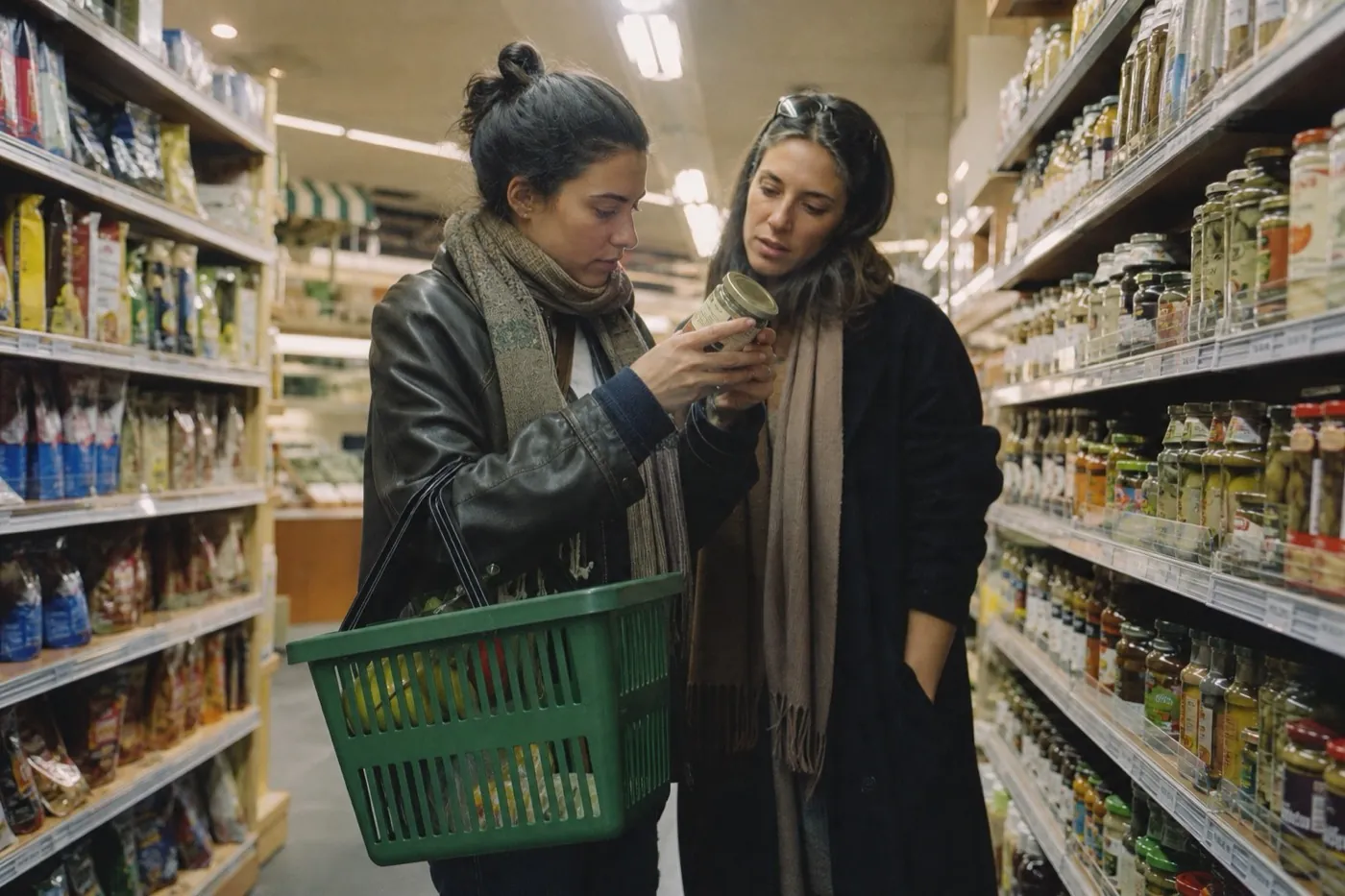
Before anyone sets out for the shop, write down together what must be excluded and what is merely unwelcome. A shared note saves phone calls and lowers the risk that someone buys something by eye.
In a home where one person has an allergy and the others do not, a split into two kinds of products works well.
Which products do you buy for everyone, and which separately?
Basics such as potatoes, vegetables, rice or meat are bought jointly and need no separate decision. Processed items such as bread, plant drinks, sauces or snacks should be chosen once, checked and saved on the list as an agreed purchase.
Many people start with the question ‘is this for everyone?’. If the answer is no, the item gets its own group on the list so it does not land in the basket by mistake.
How do you talk to guests and extended family?
When you cook for guests, ask about allergies in advance, not at the table. Ask for specific names, because ‘I don’t like nuts’ and ‘I am allergic to nuts’ mean different things. Never assume a product is safe just because it looks it.
How do you check allergens in loose food and eating out?
For non-prepacked food, such as bakery counters or takeaways, allergen information must be available, but it may take a different form than on a pack. Under Article 44 of Regulation 1169/2011, member states decide how, so the information may come from staff, a notice or a menu.
Do not be shy about asking. Say exactly which allergens matter and ask for the ingredients. If the person at the counter is unsure, choose a labelled product. The UK Food Standards Agency guidance on GOV.UK advises asking staff for information about your specific allergen rather than relying on your own assumptions.
EUR-Lex: Rozporządzenie (UE) nr 1169/2011 w sprawie przekazywania konsumentom informacji na temat żywności (art. 9, 21, 44, załącznik II)GOV.UK (FSA): Food allergy and intolerance advice for consumersHow do you split the shopping when not everyone in the group has the same restrictions?
The most common mistake in shared shopping is assuming everyone eats the same. It helps to split the shopping into a shared part that is safe for everyone and extras for individual people, such as a separate loaf or their own spread.
That split reduces the risk of a mix-up, because products in the shared part are checked once rather than anew each time. Note who is responsible for checking which aisle, so nobody assumes someone else did it.
How do you label products on the list so the shopper does not have to guess?
A product name alone is rarely enough, because the same kind of bread or sauce has a different recipe in different brands. So add a short note to sensitive products. The patterns below help when the list goes to several people.
- The brand and variant that was checked, such as “same brand as last time”.
- What the product must not contain, such as “no nuts in the ingredients”.
- A reminder to read the label again in the shop.
- The name of the person the product is bought for.
If a recipe has changed, the person with the allergy should know before buying. Producers can change a recipe without changing the name, so even a familiar product is worth reading again.
What should you do if you suspect an allergic reaction?
This guide covers shopping and reading labels, not treatment. If someone in the group has a diagnosed allergy, their action plan should be agreed with a doctor or allergy specialist. For severe symptoms such as difficulty breathing, swelling of the face or loss of consciousness, call emergency services.
The NHS describes a food allergy as an immune system reaction to a food. Symptoms can be mild or severe, so if in doubt see a doctor rather than cutting foods out on your own.
NHS: Food allergyHow do you save agreed products on a shared list?
On the ready list, products checked for allergens have their own group, ‘Uzgodnione produkty’ (agreed products in Polish). The list ‘Shopping with agreed products’ includes, for example, gluten-free bread, gluten-free oat drink and coconut yoghurt, while the rest are basics.
In BuyNest you can save the list as your own template and share it with the household, so a change of name or brand is visible to everyone at once. Add a note with the maker and the date you checked the ingredients. The chicken tray bake with potatoes and vegetables sits further down, above the list: it uses basics, so it is easy to adapt to most allergies.
See also our guide to adding variety without replacing your whole cupboard if you want to change foods without replacing your whole kitchen.
Frequently asked questions
How many allergens must be flagged on a label?
Fourteen groups listed in Annex II of Regulation 1169/2011: cereals with gluten, crustaceans, eggs, fish, peanuts, soya, milk, nuts, celery, mustard, sesame, sulphites, lupin and molluscs. The maker must emphasise them in the ingredients.
Is a ‘may contain’ statement compulsory?
No. It is a voluntary warning from the maker about possible cross-contamination, and GOV.UK says that no law requires it in the UK. Agree with your doctor how to treat it.
Is ‘gluten-free’ food always safe for someone with coeliac disease?
The claim means no more than 20 mg of gluten per kilogram, which is the set threshold. Whether a particular person can eat it should be confirmed with their doctor.
How do I check allergens in bakery bread?
Ask the seller for the ingredients and request them in writing if available. For loose food the rules require allergen information to be available, but its form depends on national rules.
Do I need to read the ingredients of a product I have bought for years?
Yes, at least from time to time. Makers change recipes, suppliers and production lines, so the ingredients can change without any change to the look of the pack.
Allergen information on shared shopping trips is easiest to keep under control with one agreed list of products rather than guesswork at the shelf. Open the ready list in BuyNest, swap in the items your group has checked and split the shop between you.
Open the ready list in BuyNestSources
- EUR-Lex: Rozporządzenie (UE) nr 1169/2011 w sprawie przekazywania konsumentom informacji na temat żywności (art. 9, 21, 44, załącznik II)
- EUR-Lex: Rozporządzenie wykonawcze (UE) nr 828/2014 w sprawie informacji o braku lub zmniejszonej zawartości glutenu
- GOV.UK (FSA): Food allergy and intolerance advice for consumers
- NHS: Food allergy
Take the shopping into BuyNest
BuyNest is on iPhone and Android. The app has no ads, including on the free plan.