
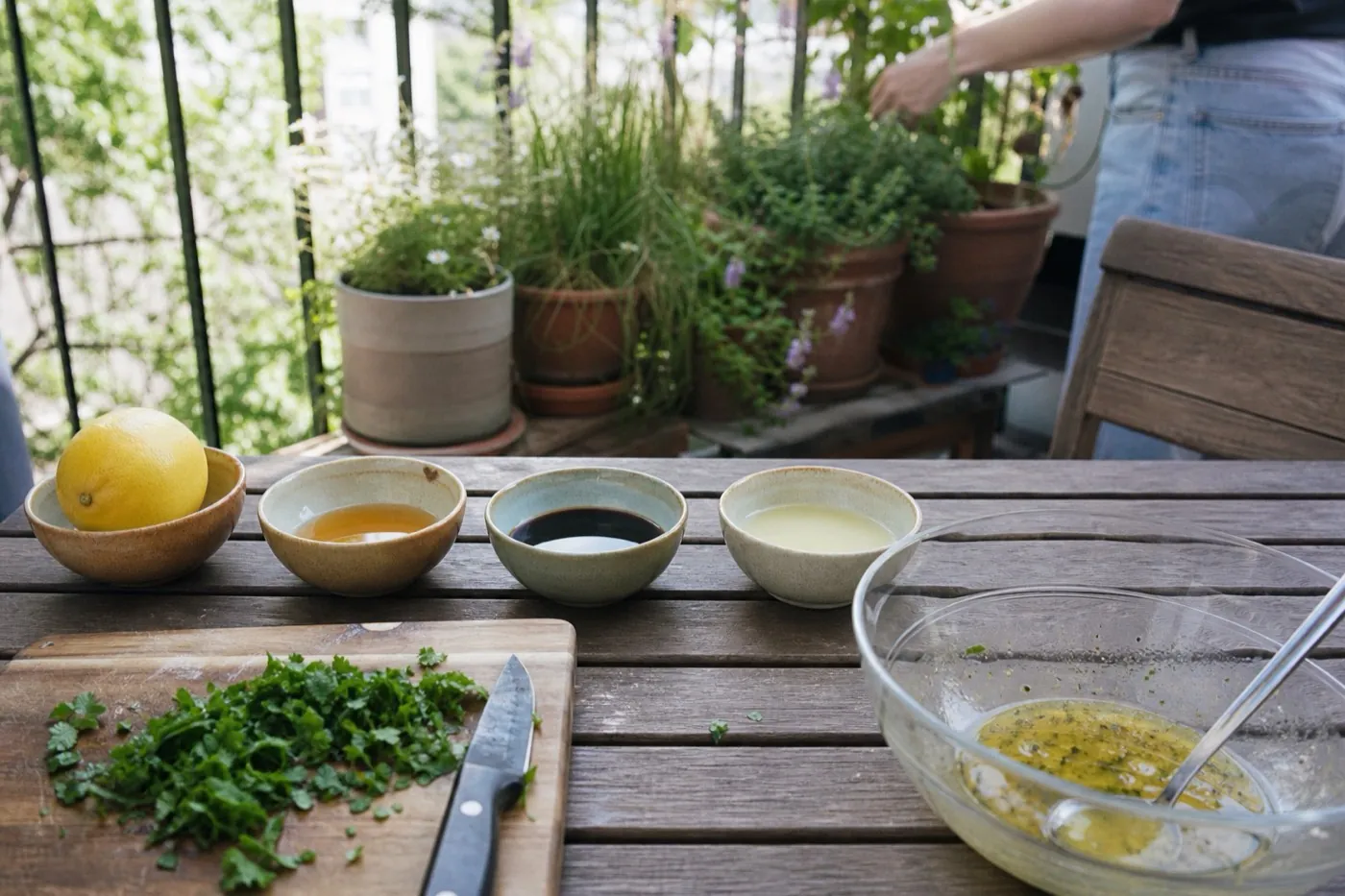
What is the best lemon juice substitute for salad dressing?
The best lemon juice substitute for salad dressing is vinegar, apple cider or white wine, used in slightly smaller amounts than the juice. For each tablespoon of lemon juice, use about two teaspoons of vinegar, taste, then add more. Vinegar is sharper, but with oil and honey that edge is barely noticeable.
The amounts in the table are an editorial rule of thumb, not a standard. The acidity of vinegars and juices varies between products, so always taste before dressing the salad.
| Instead of | Use | Amount | Notes |
|---|---|---|---|
| 1 tbsp lemon juice | Apple cider vinegar | about 2 tsp | Mild and fruity. Best for salads with apple, cabbage and nuts. |
| 1 tbsp lemon juice | White wine vinegar | about 2 tsp | Dry and clean. Good for delicate leaves and cooked vegetables. |
| 1 tbsp lemon juice | Lime juice | 1 tbsp | Closest in flavour. Suits dressings with coriander, avocado and chilli. |
| 1 tbsp lemon juice | Thick plain yoghurt | 2–3 tbsp | Turns a dressing into a creamy sauce. It will not replace the freshness of juice in a vinaigrette. |
| 1 tbsp lemon juice | Light balsamic vinegar | about 1 tsp | Sweeter and darker. It changes the colour, so pair it with oil and mustard. |
| Lemon juice in a coleslaw dressing | Wine vinegar and a pinch of sugar | 2 tsp vinegar and a pinch | Sugar softens the sharpness of vinegar in slaws. |
Two recipes that use vinegar, a leaf salad with apple in a cider vinaigrette and a cabbage slaw in a yoghurt dressing, are below, above the shopping list.
Remember that the lemon juice in a recipe plays one of two roles: it adds acid or it adds fresh aroma. If it was there for acid, vinegar solves it. If it was for aroma, add chopped herbs, orange zest or a little lime juice and treat the vinegar as a supplement. Check what the juice was doing in the recipe before you choose a swap.
Leaf salad with apple and walnuts in a cider vinaigrette
Cider vinegar stands in for lemon, and honey softens its edge. The vinaigrette makes enough for two salads, so keep half in the jar.
Ingredients
- Mixed salad leaves150 g
- Apple1
- Walnuts40 g
- Goat cheese or feta optional80 g
- Cider vinegar2 tbsp
- Olive oil5 tbsp
- Mustard1 tsp
- Honey1 tsp
- Salt and pepper to taste
Method
- In a jar, combine the vinegar, mustard, honey, a pinch of salt and pepper. Add the oil, close the lid and shake for 20 seconds, until it thickens.
- Taste it on a salad leaf, not from a spoon. If it is too sharp, add a spoonful of oil or a little honey. If it is flat, a few drops of vinegar.
- Toast the walnuts in a dry pan for 3–4 minutes and chop them roughly.
- Slice the apple thinly just before serving and drizzle it straight away with a spoonful of the dressing so it does not brown.
- Toss the leaves with half the dressing in a large bowl. Arrange on plates and top with the apple, walnuts and crumbled cheese.
Tip Walnuts, the mustard and the milk in the cheese are EU-listed allergens. Without nuts, toasted sunflower seeds work well.
Cabbage slaw in a yoghurt and wine vinegar dressing
Yoghurt brings acid and body, and a spoonful of wine vinegar replaces the lemon juice. The slaw goes with roast meat, fish and potatoes.
Ingredients
- White cabbage a quarter head500 g
- Carrots2
- Thick plain yoghurt150 g
- Mayonnaise optional1 tbsp
- White wine vinegar1 tbsp
- Sugar1 tsp
- Dill chopped2 tbsp
- Salt and pepper to taste
Method
- Shred the cabbage finely, sprinkle with a teaspoon of salt, toss and leave for 10 minutes. Then squeeze it with your hands and pour off the juice. The slaw will not turn watery.
- Coarsely grate the carrots.
- Mix the yoghurt with the mayonnaise, vinegar, sugar and pepper. Add the vinegar gradually and taste, as the cabbage is already salted.
- Combine the cabbage, carrots, dill and dressing. Chill for 15–20 minutes before serving.
Tip Yoghurt is milk, and mayonnaise contains egg and often mustard. For a dairy-free version, use 4 tablespoons of oil and one of vinegar.
How do you make a vinaigrette with vinegar instead of lemon juice?
The base of a vinaigrette is three parts oil to one part acid, with mustard, salt and a little honey. That is common kitchen practice that you can adjust to taste. With vinegar, start with less acid, because it is stronger.
Mustard and honey bind the oil to the vinegar so the dressing does not separate. Mix everything in a jar and shake.
- Pour the vinegar into a jar and add a teaspoon of mustard, a pinch of salt and a teaspoon of honey.
- Close the jar and shake until combined.
- Add the oil and shake again until you have a smooth emulsion.
- Taste on a lettuce leaf, not a spoon. A leaf shows how the dressing will taste on the plate.
- Adjust: more vinegar if it is flat, more oil or honey if it is too sharp.
Dress the salad just before serving. Delicate leaves wilt quickly in an acidic dressing.
Which lemon substitute suits which salad?
Not every acid suits every salad. The choice depends on what is in the bowl. Below are editorial suggestions for the most common combinations.
Apple cider vinegar: salads with fruit and nuts
Cider vinegar has a gentle, fruity acidity that lifts the sweetness of apples and pears. With oil, mustard and walnuts it makes a dressing for mixed leaves with goat's cheese or feta.
Add half a teaspoon of honey if the vinegar seems too sharp, and begin with less than the table suggests.
White wine vinegar: slaws and cooked vegetables
Wine vinegar is clean and dry. It goes well with a white cabbage slaw, carrot, cucumber and dill. For cabbage, add a pinch of sugar to soften the edge.
For steamed or roasted vegetables such as green beans or broccoli, wine vinegar with olive oil is a quick, all-purpose dressing.
Yoghurt and mayonnaise: when you want a creamy dressing
When you have no acid at all, make a creamy sauce from thick plain yoghurt, a pinch of salt, garlic and dill. Yoghurt is tangy on its own and can stand in for lemon in a slaw dressing.
Mayonnaise stirred into yoghurt thickens the sauce and softens its tang. Keep in mind that this is a sauce for a day or two.
When does a lemon swap in dressing not work?
Lemon brings both acid and aroma. Vinegar brings only acid, so in some dishes the difference will show. It is worth knowing before you swap one for the other.
| Dish | Problem | Use instead |
|---|---|---|
| Dressing for fish and seafood | Vinegar overpowers the delicate flavour | Lime, or a little wine vinegar and plenty of herbs |
| Hummus and chickpea dips | Missing the fresh citrus aroma | Lime, or cider vinegar with a little orange zest |
| Avocado and banana salads | Vinegar is less effective at slowing browning than citrus juice | Lime or orange juice |
| Dressings for fruit salads and desserts | Vinegar gives a sharp, sour edge | Orange or grapefruit juice |
| Mayonnaise-based sauces | Too much vinegar thins the texture | Add a teaspoon at a time and stir |
If you have bottled lemon juice, you can use it in the same amount as fresh, though it has less aroma. Check the label, as such juices sometimes contain preservatives.
Which other cupboard items can add acidity to a dressing?
Beyond vinegar and lime, acid hides in a few items you usually have to hand. Not all of them replace lemon alone, but combined with oil and salt they make a dressing that is not bland.
Keep in mind that these are stopgaps. When the acid comes from a product with its own flavour, the dressing takes on its character, so match it to the salad.
- Pickle brine from gherkins or sauerkraut: salty and aromatic, good for slaws. Add a spoonful at a time and do not add extra salt.
- Orange or grapefruit juice: gentler and sweeter, suits salads with fruit, fennel and goat's cheese.
- Mustard: has its own acidity and emulsifies the dressing, so even a teaspoon improves a vinaigrette that uses less vinegar.
- Plain yoghurt, buttermilk and kefir: tangy and creamy, good for slaw dressings but not for delicate leaves.
- Rice vinegar: very mild if you happen to have it. It is sometimes sweetened, so taste before adding honey.
If all you have is distilled white vinegar, dilute it with water and add more oil, as it is very sharp. It suits cabbage slaws better than delicate salads.
How much dressing do you need for a salad for four?
In our experience a large bowl of leaves for four people takes four to five tablespoons of finished vinaigrette, roughly three tablespoons of oil to one of vinegar plus the extras. A cabbage slaw soaks up more dressing than leaves, so make half as much again.
Start with less and toss the salad with your hands or a wide spoon. Dressing is easy to add and hard to remove.
Bottled lemon juice and allergens: what to check?
If you cook for someone with an allergy, check the label of both the vinegar and any bottled juice. Sulphites, that is sulphur dioxide, are among the allergens listed in Annex II of Regulation 1169/2011, and the manufacturer must highlight them in the ingredients.
Sulphites can appear in some wine vinegars and bottled juices. Mustard often contains mustard seed, which is a separate allergen on that list. Yoghurt and mayonnaise are dairy and egg, so for a creamy dressing for guests ask about allergies in advance.
Rozporządzenie (UE) nr 1169/2011 w sprawie przekazywania konsumentom informacji na temat żywnościHow do you store dressing for a few days, and what about browning fruit?
A vinaigrette of oil and vinegar keeps in a closed jar in the fridge for a few days. Shake it before use. Olive oil thickens a little when cold, so take the jar out fifteen minutes ahead. Treat yoghurt or mayonnaise dressings like any leftovers and keep them in the fridge for about 3–4 days.
Cut apples and pears brown in the air. Acid slows this, and in our editors' experience vinegar does it less well than lemon juice, so slice the fruit just before serving or toss it straight into the dressing. Dress the leaves only at the table.
FoodSafety.gov: Cold Food Storage ChartWhat should you buy so dressing does not depend on lemon?
Two vinegars, olive oil, mustard and honey last in the cupboard for months. With that set you can whisk up a vinaigrette in three minutes, whether or not there is a lemon in the basket.
Use the ready shopping list for dressing without lemon. It covers the ingredients of both recipe salads. A shared list in the app lets another member of the household add vinegar when they notice it is running low.
If you also need a swap for fresh herbs, read how to replace fresh herbs in a sauce. More like this sits in the substitutes guides.
Dressings without lemon: shopping
- Fruit and veg
- Mixed salad leaves150 g
- Apple1 pcs
- White cabbage small head1 pcs
- Carrots2 pcs
- Dill bunch1 pcs
- Dairy
- Thick plain yoghurt about 180 g1 pcs
- Goat cheese or feta optional1 pack
- Oils and vinegars
- Cider vinegar1 pcs
- White wine vinegar1 pcs
- Olive oil1 pcs
- Dry goods
- Walnuts100 g
- Check the cupboard
- Mustard1 pcs
- Honey1 pcs
- Mayonnaise1 pcs
- Sugar1 pack
Frequently asked questions
How much vinegar can I use instead of lemon juice?
Usually about two teaspoons of cider or wine vinegar for a tablespoon of lemon juice. Vinegar is stronger, so start with less and taste. This is an editorial rule of thumb, not a fixed rule.
Can lime replace lemon in a dressing?
Yes, in the same amount. Lime is the closest in flavour and works best with coriander, avocado and chilli. It is a little more bitter, so add a pinch of honey or sugar.
Can citric acid replace lemon juice?
In a pinch, in a very small amount, as it is strong, and dissolve it in a spoonful of water. The flavour is flatter because it lacks aroma. Vinegar is the better choice.
How do I make a dressing with no lemon and no vinegar?
Make a sauce from thick yoghurt, a pinch of salt, garlic and herbs. The yoghurt is tangy enough to stand in for the acid. It is creamy, so it suits slaws more than delicate leaves.
Why does my vinaigrette separate?
Oil and vinegar do not mix on their own. Add a teaspoon of mustard or honey and shake hard in a jar. Separating after standing is normal, so shake it again.
A lemon juice substitute for salad dressing is usually in the cupboard already: cider or wine vinegar in slightly smaller amounts, lime, or yoghurt for a creamy sauce. Open the ready list in BuyNest and keep a vinaigrette set at home for good.
Open the ready list in BuyNestSources
Take the shopping into BuyNest
BuyNest is on iPhone and Android. The app has no ads, including on the free plan.

