Starting nursery checklist: what goes in the day-one bag?
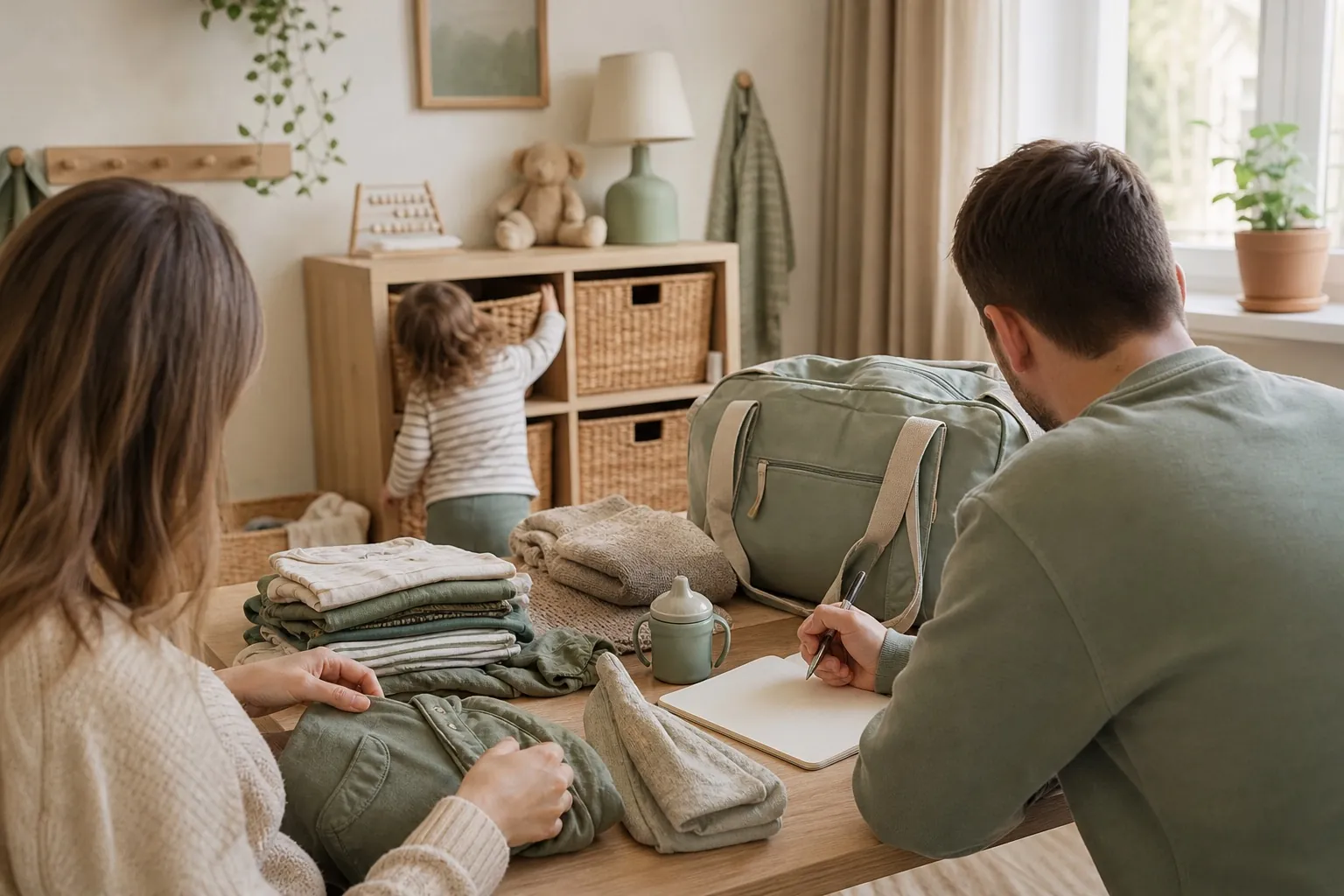
A starting nursery checklist begins with a labelled bag: spare clothes, nappies and wipes, a drinking cup or bottle, a comforter and easy shoes. Your nursery will tell you about the rest, such as bedding or creams, so ask for its list before you buy much.
Nurseries differ in what they provide, so the amounts below are our suggestions, not rules. They are for a baby or toddler who stays for a full day.
| What to pack | How many | Why |
|---|---|---|
| Spare outfits | 2 | Spills and accidents can happen on day one |
| Nappies and wipes | A day's worth plus spare | Some nurseries provide them, some ask you to bring your own |
| Bags for wet clothes | 2 | Keeps dirty items separate on the way home |
| Beaker or water bottle | 1 | Your child drinks from something familiar |
| Comforter or dummy | 1 | Helps with naps and with saying goodbye |
| Easy indoor shoes | 1 pair | Staff can put them on quickly |
| Coat and hat for the weather | 1 set | Outdoor play is part of the day |
Label everything, even the socks
A nursery cloakroom holds a dozen similar coats and a dozen similar pairs of shoes. Name labels or a fabric marker save the staff guessing and save you losing things. Label the bag, bottle and comforter as well.
What should stay at home?
Precious or breakable toys are easier to leave at home. A comforter is the exception, and it is worth asking staff about if your child will not sleep without one. Only send food from home if the nursery asks for it.
How do you choose approved childcare and a place?
In England, help with childcare costs only applies if you use approved childcare, such as a registered nursery, childminder, playscheme or club. For Free Childcare for Working Parents, GOV.UK says the childcare must be provided by a registered provider, such as a registered nursery, playscheme or school.
Check this when you choose, before you visit and before you apply for funding. Then book visits, ask to see the rooms and the outdoor space and note down what the staff say about the daily routine.
What should you look for on a visit?
Ask to see the rooms, the cloakroom and the sleeping area. Find out what a typical day looks like, who looks after each group and how the nursery tells parents about meals and naps. Notice whether staff answer calmly and specifically, because you will talk to them every day.
Why compare two or three nurseries?
Popular nurseries do not always have a space when you want it, so a second choice helps. Note the pros and cons of each on a shared list with your partner and decide together once you have all the answers.
GOV.UK: Help with childcare costsGOV.UK: Free Childcare for Working ParentsWhat should you ask the nursery before day one?
The best day-one bag is the one that matches your nursery. Ask at your visit or when you sign the contract, and write the questions down beforehand, because they are easy to forget once you are standing in the room.
- What does the nursery provide: nappies, wipes, bedding, creams?
- How many spare outfits should we bring?
- How does settling in work, and can I stay for the first sessions?
- Who is allowed to collect my child, and how do you record it?
- What do you need to know about allergies and medicines?
- How do I report an absence, and who do I phone?
- Can my child bring a comforter or a family photo?
Add the answers to your list straight away so it matches what the nursery says and not what a website suggests. Health decisions, such as giving medicine at nursery, belong with your GP or health visitor.
How do you help your child settle in?
Settling in is the first days and weeks when your child gets to know the place, the staff and the daily rhythm. Every child reacts differently, so agree with the nursery how the start will look instead of expecting one fixed pattern.
A calm, repeatable routine helps: the same goodbye, the same person collecting in the first days and the same comforter in the bag.
Visit before your child starts
If the nursery offers settling-in sessions or short visits, use them. Your child sees the room and the staff with you nearby, and you see how a day runs.
Say goodbye briefly and clearly
Tell your child you will come back, then leave without dragging it out. Long goodbyes usually make it harder for both of you. Ask how the key person will let you know once your child has calmed down, and plan the first days so you can collect early if needed.
Clear your diary for the first weeks
Early on, there will be sick days and calls asking you to collect. If you can, avoid booking important meetings in the first weeks, and agree with your partner who is the nursery's first contact.
What should you tell your child about nursery?
Use simple sentences: there will be other children, staff and toys, and you will come back later in the day. A picture book about a first day at nursery can help, and so can walking past the building together so the place feels familiar. Do not promise what you cannot do, such as always being the first to collect.
What free childcare hours can you get in England?
Several schemes apply at different ages, and a nursery must be approved to take part. Check each scheme on GOV.UK before you rely on it, because eligibility depends on your work, your benefits and your child's age.
Free childcare for working parents
Free Childcare for Working Parents offers 30 hours of free childcare a week for children aged 9 months to 4 years if you live in England. You can apply from when your child is 23 weeks old, so you can sort it out before the nursery start date.
15 hours for some 2-year-olds
Your 2-year-old can get 15 hours a week of free childcare if you live in England and you or your child are eligible, which means you must get certain benefits or support. The hours cover 38 weeks of the year and must be with a registered provider.
Planning for the next step
Funding rules for 3 and 4-year-olds and the move to nursery school are covered in our nursery school checklist, so we keep them there. If you are still in the first weeks after the birth, our new baby paperwork guide covers registering the birth and leave.
GOV.UK: Free Childcare for Working ParentsGOV.UK: 15 hours free childcare (Early Learning for 2 year olds)What should you do when your child is ill?
Sick days will happen, especially in the first months, so agree with your partner in advance who stays home when your child is ill. Ask the nursery in advance how it wants to be told about an absence.
When should your child stay home?
NHS advice written for schools says a child with a high temperature should stay at home until it goes, and nurseries usually follow similar logic. Children with vomiting or diarrhoea should stay away until they have not been sick or had diarrhoea for at least 2 days (48 hours). Always ask the nursery for its own sickness policy as well, and speak to your GP, pharmacist or NHS 111 if you are worried.
Who covers if neither parent can?
List the people who can help on a sick day: grandparents, relatives, a trusted friend. Share the list and the nursery's phone number with them, so nobody has to find the details in a hurry.
NHS: Is my child too ill for school?How do you organise the nursery list in BuyNest?
The ready starting nursery list splits everything into getting a place, questions for the nursery, the day-one bag, sleep and care, shoes and outdoor wear and labels. Send it to the app, share it with your partner and tick items off as you buy or pack them, and you will both see the changes at once.
When the nursery sends its own list, add what is missing and remove what the nursery provides. After the first week, move the things that run out to your regular shopping list.
For more ready lists for parents, see family lists, and for baby gear before the nursery years, see the newborn essentials checklist.
First day at nursery
- Before you start
- Pick an approved nursery Ofsted register
- Read the nursery's policies
- Book a visit and a place
- Check funding eligibility
- Apply for free hours
- Ask the nursery
- Ask about settling in
- Ask what is provided nappies, bedding
- Share allergies and medicines
- List who can collect
- Ask about sick-day rules
- Day-one bag
- Named bag or backpack1 pcs
- Changes of clothes ask how many2 pcs
- Nappies if not provided
- Wipes1 pack
- Bag for wet clothes2 pcs
- Beaker or bottle1 pcs
- Milk or packed food if asked
- Comforter or dummy1 pcs
- Sleep and care
- Sleep sack or bedding if asked1 pcs
- Spare sheet1 pcs
- Nappy cream labelled1 pcs
- Tissues1 pack
- Shoes and outdoor
- Easy indoor shoes pair1 pcs
- Coat for the weather1 pcs
- Hat for the season1 pcs
- Wellies pair1 pcs
- Labels
- Name labels1 pack
- Fabric marker1 pcs
- Family photo for the peg if allowed1 pcs
- First weeks
- Plan for sick days
- List helpers for sick days
- Check spare clothes monthly
Frequently asked questions
What should a baby wear on the first day at nursery?
Comfortable clothes that are easy to change and that you do not mind getting messy. Label everything, and send the spare outfits in a named bag. Ask the nursery if it has a dress code.
How many spare outfits does a nursery need?
Two is a sensible start, but that is our suggestion. The nursery will tell you what it wants, and younger children or those still learning to use the toilet may need more.
Do I need to bring bedding for naps?
It depends on the nursery. Some provide bedding for nap time and some ask you to bring it, so wait for the nursery's list before you buy.
From what age can I get free childcare in England?
Working parents can apply for 30 hours a week for children aged 9 months to 4 years, and you can apply from when your child is 23 weeks old. Some 2-year-olds can get 15 hours if the family gets certain benefits or support.
When should I keep my child home from nursery?
The NHS says to keep a child with a high temperature at home until it goes. After vomiting or diarrhoea, wait until they have not been sick or had diarrhoea for at least 2 days (48 hours), and ask your nursery how to report an absence.
A starting nursery checklist works best when it follows your nursery's own list and you label everything before day one. Open the ready list, share it with your partner and add the answers the nursery gives you.
Open the ready list in BuyNestSources
- Gov.pl: Zapisz dziecko do żłobka
- Gov.pl (MRPiPS): Aktywny Rodzic
- Biznes.gov.pl: Urlopy i świadczenia związane z macierzyństwem i rodzicielstwem
- GOV.UK: Free Childcare for Working Parents
- GOV.UK: 15 hours free childcare (Early Learning for 2 year olds)
- GOV.UK: Help with childcare costs
- NHS: Is my child too ill for school?
- Gov.pl MRPiPS: Pytania i odpowiedzi, program Aktywny Rodzic
- Gov.pl: Uzyskaj zasiłek opiekuńczy na opiekę nad chorym dzieckiem
Take the shopping into BuyNest
BuyNest is on iPhone and Android. The app has no ads, including on the free plan.