
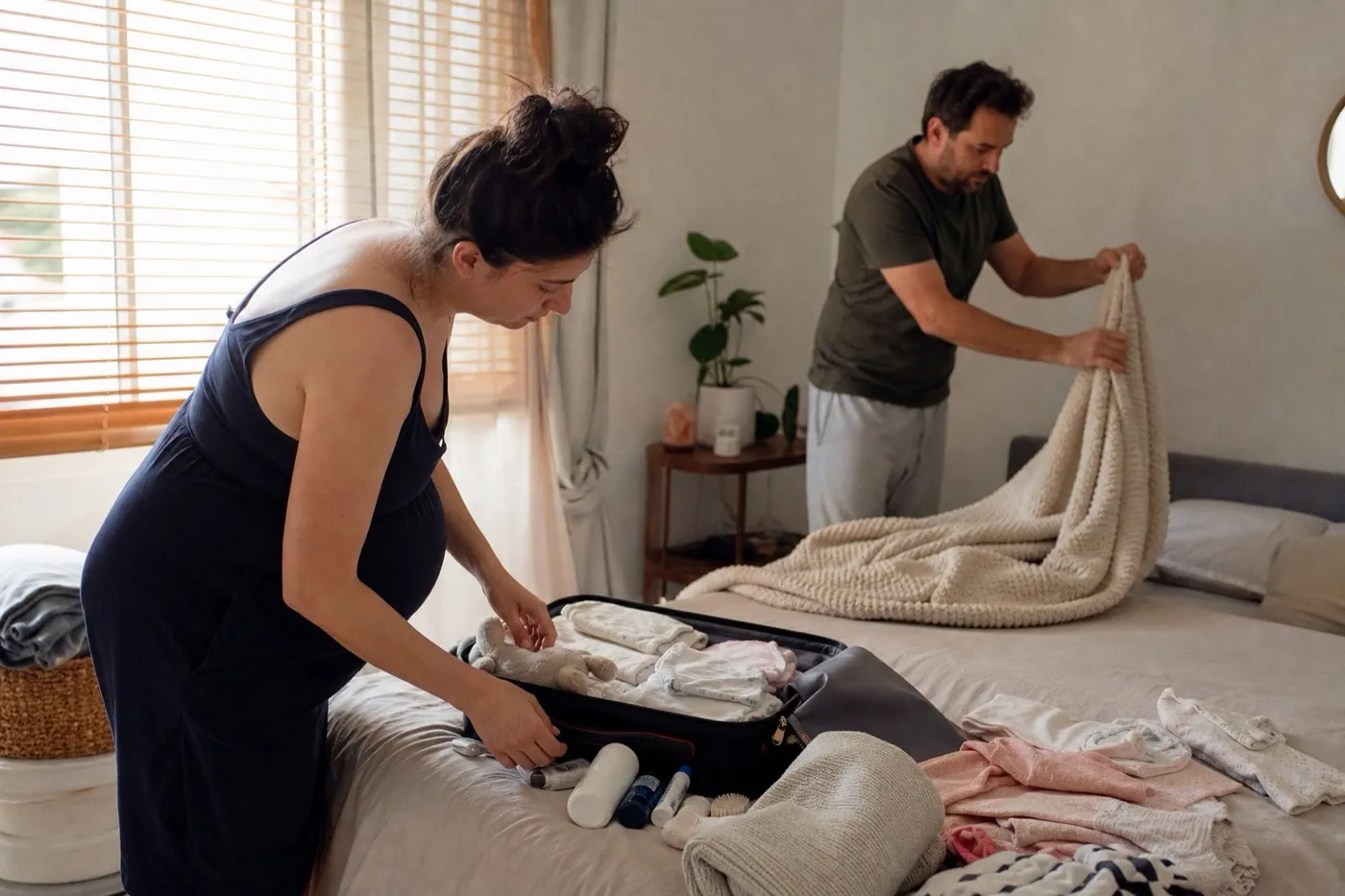
Before you start packing your hospital bag, get the current list from your chosen hospital. The differences can be big: one hospital asks for several sets of baby clothes and nappies, while another provides clothes during the stay and only asks for a going-home outfit. Treat the list below as a base, then cross off what your ward supplies. Prepare separately your documents, what you need in the delivery room, what you need for your stay after the birth, and a going-home outfit for the baby.
Hospital bag checklist: a ready list to tick off
Hospital bag checklist: a ready list to tick off
- Documents and medical information
- ID document
- Pregnancy record card
- Test results required by the hospital or your doctor
- Confirmed blood group result, if on the hospital's list
- List of your medicines and key health information
- Birth plan, if you have prepared one
- Paternity acknowledgement papers, if relevant to your family
- Small delivery room bag
- Comfortable clothes recommended by the hospital
- Easy-to-wash slippers
- Socks
- Hair tie or headband
- Lip balm
- Water and a permitted snack
- Phone and a long charging cable
- Birth partner's things, as per hospital rules
- For mum after the birth
- 2–3 nightdresses or other clothes for a comfortable stay and feeding
- Dressing gown or zip-up hoodie
- A few pairs of breathable postnatal underwear
- Pads and hygiene items the hospital specifies
- Nursing bra, if you plan to use one
- A few nursing pads, not a whole pack
- Lanolin for nipples, if you want it and can use it
- Large bath towel and small hand towel
- Toothbrush and toothpaste, soap or shower gel, shampoo, hairbrush and any other toiletries you use, in small containers
- Cup and cutlery, if the hospital requires them
- Glasses, contact lenses or other aids you use
- Regular medication, only as agreed with the hospital staff
- Bag for dirty clothes
- For the newborn
- Baby clothes in the numbers and sizes the hospital states, if the ward requires your own
- Disposable nappies in the number the hospital states
- Terry, bamboo or cotton nappies, if they are on the ward's list
- Wipes, cotton pads or other care items the ward requires
- Barrier cream and changing mats, if on the ward's list
- Blanket or swaddle, if the hospital asks for your own
- Going-home outfit suited to the weather
- Correctly fitted car seat, if you travel home by car
Hospital bag for mum: how to avoid packing too much
Start by comparing this list with your hospital's requirements. Cross off the pads, hygiene products, nappies or baby clothes that the ward provides. Decant toiletries into small containers, and match the number of nightdresses, towels and underwear to your expected stay and to whether someone close can bring you clean items.
Pack bottles, formula, a breast pump, a feeding pillow and your own baby care products only if the hospital asks for them or you have individual medical advice to bring them. Some wards supply this equipment and use their own products.
Newborn hospital bag: what the baby needs
If the hospital requires your own baby clothes, prepare ready-made sets: a bodysuit or wrap top, a sleepsuit or romper, socks and, if you like, a hat. Put each set in its own labelled bag, so your birth partner does not have to hunt for matching pieces in the big bag.
Choose sizes according to the hospital's guidance. Some hospitals ask for sizes 56 and 62, but there is no point buying large numbers of both just for the stay. Whatever the ward provides, prepare a separate going-home outfit suited to the weather and how you will travel.
Labour bag: what to take to the delivery room
For a small delivery room bag, pack your documents, a nightdress or other clothes for labour, slippers, socks, water, lip balm, a hair tie, and your phone with a charger. Add absorbent pads, snacks and extra accessories only if they are on the hospital's list or the unit confirms you can use them.
Documents for labour: what to prepare
Hospitals usually ask for ID, your pregnancy record card and specific test results. The exact scope depends on current requirements and your medical situation. Also prepare a list of the medicines you take, any allergies and important diagnoses. Do not copy details from memory if you can bring the original records or the required copy.
What should your birth partner pack?
Your birth partner should prepare their own rucksack, so their things do not take up room in the mother's bag. Before packing, they should check the hospital's rules on protective clothing, footwear, food and staying on the ward.
What should your birth partner pack?
- ID document
- Comfortable clothes and shoes required by the hospital
- Water and permitted food
- Phone, charger and possibly a power bank
- Regular medication
- Bank card or cash for parking
- Basic toiletries, if your birth partner can stay overnight
What to wear when leaving hospital
Prepare the going-home outfit separately and match it to the season. Whoever collects you can bring it on the day you are discharged, so it takes up no space during your stay. Before you leave, check how to fit the car seat; the first time you use it should not be in a rush at the hospital entrance.
A thick snowsuit under the harness can make it harder to fasten your baby in properly. Dress your baby for the journey according to the instructions for your particular car seat; a warm layer can usually go over correctly fastened straps, leaving the baby's face uncovered.
Once you are home, a few time-limited matters remain, such as registering the birth at the USC (Polish civil registry office) and registering the baby for health insurance. The checklist Paperwork after the birth: what to do and by when sets out the order and deadlines.
When should you pack your hospital bag?
Do not wait until your due date. One official hospital list recommends being ready about three to four weeks early, but agree the timing with whoever is overseeing your pregnancy, especially if there is a risk of an earlier admission. Keep the documents you use at appointments in one place, so you can add them to the bag quickly.
Prepare a short note of the things to add at the last minute:
When should you pack your hospital bag?
- Phone
- Documents used at recent appointments
- Medicines taken morning or evening
- Charger
- Water and fresh snacks, if permitted
How to save your hospital bag list in BuyNest
In BuyNest, create a list called "Hospital bag" and put on it your documents, delivery room items, things for mum's stay and things for the baby. Share the list with your birth partner. When they pack the charger, the documents or the going-home outfit and tick the item off, you will see the change on your phone. Products you still need to buy can go on a separate shopping list split by shop.
Hospital bag: frequently asked questions
Do I need two bags?
No, but a small bag for the delivery room and a larger one for your stay make things quicker to find.
How many baby outfits should I pack?
If your ward asks for your own baby clothes, stick to the number on its list. For example, the Medical Institute of the Ministry of Interior (PIM MSWiA) in Warsaw lists 4–5 sleepsuits and 4–5 bodysuits in sizes 56 and 62. That is not a universal set for every maternity ward. PIM MSWiA packing list.
Does the hospital provide newborn clothes?
Some do, but it is not the rule everywhere. The MSWiA hospital in Bydgoszcz asks parents not to bring newborn clothes apart from the going-home outfit, while PIM MSWiA in Warsaw requires your own clothes for the stay. If your ward's list does not answer this, call the maternity unit and ask about nappies, a swaddle blanket and baby care products too. Information for women in labour at the MSWiA hospital in Bydgoszcz.
Should I bring a breast pump?
Not always. Ask the hospital whether it provides one and when it recommends bringing your own.
Does the hospital bag replace a newborn essentials list?
No. The hospital bag covers your stay and the journey home. For what you need once you are back, see Newborn essentials: a list for the first weeks. If you are preparing for a hospital stay unrelated to birth, use What to pack for a hospital stay.
Sources
Take the shopping into BuyNest
BuyNest is on iPhone and Android. The app has no ads, including on the free plan.

