Road trip food list: where do you start?
A road trip food list starts with how long you'll drive and how many stops you'll make. For four people on a full day in the car, plan sandwiches or wraps for two meals, cut vegetables and fruit, a few dry snacks and small bottles of water. Chilled food goes in a cool bag, the rest in one bag within reach.
Before you shop, answer three questions. How many hours is the drive, who's coming, and will there be places on the way to buy a hot meal? The answers tell you how many sandwiches to make and whether you need a cool bag at all.
Count the hours and the stops
Split the route into stretches between stops. A drive from morning to mid-afternoon usually means two longer stops for food and a few short ones to stretch your legs. Each long stop is one round of sandwiches per person; each short one is a piece of fruit or a handful of snacks.
Check who's travelling and what they eat
Ask about allergies, favourite fillings and what someone definitely won't eat. Children often prefer their own box of bite-sized pieces to a big sandwich. If anyone gets car sick, plan lighter food for them, which we cover further down.
Decide what travels chilled and what travels loose
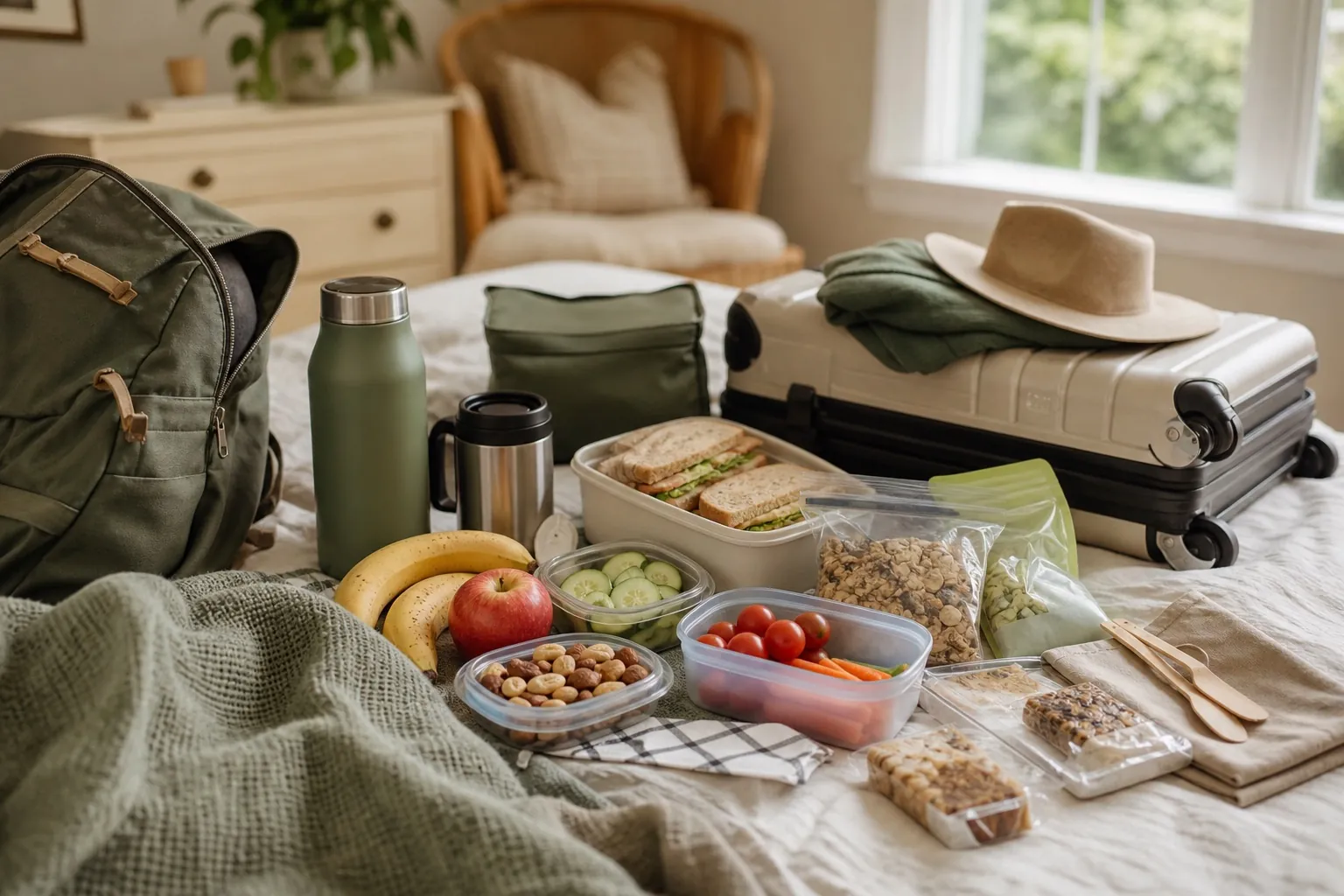
Split the food into two groups. Anything from the fridge goes in the cool bag: cheese and ham sandwiches, eggs, hummus, cut vegetables. Whole fruit, plain bread, nuts, crackers and cereal bars travel loose.
What should you buy a day or two before you go?
Shop a day or two before you leave so the morning is only about packing. The amounts below are for four people and one day of driving with two meals on the road. They're our own estimate based on a typical portion: two rolls or wraps per person and one piece of fruit for every long stop.
- Bread: 8 wholemeal rolls, a pack of tortilla wraps, 4 sweet buns for later.
- Fillings: sliced cheese, ham or turkey, hummus, butter, 6 eggs to hard-boil.
- Vegetables: carrots, small cucumbers, cherry tomatoes, a few lettuce leaves.
- Fruit: apples, bananas and seedless grapes, which don't drip on the seats.
- Road trip snacks: nuts or trail mix, crackers or breadsticks, rice cakes, cereal bars, dried fruit.
- Drinks: still water in small bottles, a large bottle for refills, tea or coffee for a flask.
Travelling with children? Buy snacks in small packs or tip them into boxes. One big bag of crackers opened on the back seat ends up as crumbs in every car seat.
What can you prepare the night before?
Most of the work takes 30–40 minutes the evening before, as long as the shopping is done. In the morning you only lift the bag out of the fridge and fill the flask. This order works well for an early start.
- Put the ice packs in the freezer so they're solid by morning.
- Hard-boil the eggs, cool them and keep them in their shells in the fridge.
- Cut the carrots and cucumbers into sticks and pack them in lidded boxes.
- Make sandwiches or wraps for the first stop and wrap them in paper or put them in boxes.
- Wash the fruit and dry it so it doesn't sit wet in the bag.
- Pack a dry bag with snacks, wet wipes, kitchen roll and a bin bag.
- Chill the bottles of water, or freeze one so it cools the rest.
You can make the second round of sandwiches at a stop from the bread and fillings in the bag. That way the bread doesn't go soggy from tomato and lettuce for half a day.
How do you pack food in the car so it stays safe?
Carry chilled food in a cool bag or cool box with frozen ice packs. The Food Standards Agency says a home fridge should run at 0–5°C and that chilled food should spend as little time out of it as possible. A cool bag in a car is no substitute for a fridge, so only take what you'll eat that day.
Keep the bag in the cabin rather than a hot boot, and only open it at stops. Put what you'll eat first on top. Food for the later meal stays at the bottom, packed between the ice packs.
- Ice packs go on the bottom and sides, with sandwiches and vegetables between them.
- Leave the eggs in their shells and peel them at the stop.
- Keep hummus and other spreads in a sealed tub rather than in the sandwiches.
- Pack dry snacks in a separate bag behind the driver's or passenger's seat.
- Clip a bin bag to a seat pocket so peel and wrappers don't end up on the floor.
If the food has spent all day in a warm car and the ice packs thawed hours ago, don't save the cheese and ham sandwiches for tomorrow. Eat the dry snacks and buy the rest when you arrive.
Food Standards Agency (GOV.UK): How to chill, freeze and defrost food safelyHow do you plan meals around your stops?
The Highway Code recommends a break of at least 15 minutes after every two hours of driving. That rhythm suits food too: every other stop is a longer one for a meal. Here's a sample plan for four people leaving at 7am.
| When | What you eat | From |
|---|---|---|
| Before you leave | Light breakfast at home, tea | Kitchen |
| After about 2 hours | Fruit, water, a leg stretch | Dry bag |
| After about 4 hours | Sandwiches or wraps, veg sticks, eggs | Cool bag |
| After about 6 hours | Crackers, nuts, coffee from the flask | Dry bag |
| After about 8 hours | Second round of sandwiches or a hot meal at services | Cool bag or buy |
The driver eats at the stops, not while driving. A front-seat passenger can pass water across, but sandwiches with fillings are better eaten at a picnic table in the car park.
GOV.UK: The Highway Code, rules for drivers and motorcyclists (89 to 102)What food works for a road trip with children?
Children in the car do best with small portions, more often. Sliced apple, a few grapes or half a sandwich in a box is easier to eat in a car seat than a big roll. Stick to food they already know, because a long drive is a poor moment for new flavours.
How do you keep crumbs and spills down?
Choose snacks that don't crumble or stick: rice cakes, veg sticks, seedless fruit. Save chocolate for a stop, because it melts fast in a warm car. Tuck a wet wipe into every box.
What helps if someone gets car sick?
For motion sickness, the NHS advises against heavy meals, spicy food and alcohol shortly before or during travel. It mentions ginger as something to try, for example as tea or biscuits. A pharmacist can help you choose a travel sickness remedy, including one for children, and our travel first aid kit guide covers what else to pack.
How much water and what drinks should you take?
The NHS suggests 6 to 8 glasses of fluid a day as a guide and says you may need more in hot weather. Water, tea and coffee all count. It recommends keeping fruit juice to one small 150ml glass a day, ideally with a meal.
In practice, everyone gets their own 500ml bottle within reach, and a large bottle in the boot covers refills at stops. Fizzy drinks spill easily in a moving car and leave you thirstier, so save them for when you arrive.
NHS: Water, drinks and your healthWhat should you bring from home and what can you buy on the way?
Bring from home whatever is hardest to find on the road or costs more there: water, fruit, sandwiches for the first meal and snacks your children will definitely eat. Motorway services and roadside shops tend to have a smaller choice and higher prices than your usual supermarket.
Buy on the way what's better fresh or hot. A coffee at the services or lunch in a town along the route can be part of the trip rather than a fallback. If you're planning one, make fewer sandwiches and leave room in the bag.
- From home: water, fruit, sandwiches for the first meal, snacks in boxes, a flask of tea.
- On the way: a hot lunch, fresh bread for the second half of the drive, coffee, an ice cream at a stop.
- Always in the car: one pack of crackers and two bottles of water in case of a traffic jam.
What should you leave off the list?
A few foods cause more trouble in a car than they're worth. This list is for a warm day, with or without children.
- Mayonnaise salads and saucy dishes that are hard to eat without a table and lose their chill quickly.
- Fish and anything with a strong smell that lingers in the car for the rest of the trip.
- Fruit that drips: peaches, chunks of watermelon, ripe pears.
- Chocolate and coated bars if the car will sit in the sun.
- Fizzy drinks in cans, which spray when opened after a bumpy stretch.
Stopping for a picnic on the way? Our no-cook picnic shopping list has ideas that need no kitchen.
How do you get this road trip food list into BuyNest?
At the bottom of the page you'll find the ready road trip food list for four people. Open it in the app with the QR code or the button and change the amounts to suit your family.
The items are grouped, so in the app you can assign them to shops: bread to the bakery, everything else to the supermarket. Share the list with whoever is doing the shopping while you get on with packing. Heading to a cottage? Our holiday cottage food shopping list covers the whole stay, and travel lists cover the suitcase.
Road trip food: 4 people, one day
- Bakery
- Wholemeal rolls8 pcs
- Wheat tortilla wraps1 pack
- Sweet buns or brioche rolls4 pcs
- Sandwich fillings
- Sliced cheese200 g
- Sliced ham or turkey200 g
- Hummus tub1 pcs
- Butter1 pcs
- Eggs to hard-boil6 pcs
- Fruit and veg
- Baby or regular carrots500 g
- Small cucumbers3 pcs
- Cherry tomatoes250 g
- Lettuce for sandwiches1 pcs
- Apples4 pcs
- Bananas4 pcs
- Seedless grapes500 g
- Dry snacks
- Nuts or trail mix200 g
- Breadsticks or crackers2 pack
- Rice cakes1 pack
- Cereal bars8 pcs
- Dried fruit200 g
- Ginger biscuits or plain biscuits1 pack
- Drinks
- Still water 500 ml bottles6 pcs
- Large bottle of water for refills1 pcs
- Tea or coffee for a flask1 pcs
- For the car
- Cool bag1 pcs
- Ice packs freeze the night before2 pcs
- Boxes for sandwiches and veg4 pcs
- Flask1 pcs
- Wet wipes1 pack
- Kitchen roll1 pcs
- Bin bags1 pack
- Before you leave
- Boil the eggs and cut the veg
- Make sandwiches for the first stop
Frequently asked questions
How many sandwiches should I make for a full day of driving?
Plan two sandwiches or wraps per person for each long meal stop. For a drive from morning to mid-afternoon that's usually four each. Make smaller portions for children and add fruit.
How long will cheese sandwiches last in the car?
It depends on how warm the car gets and whether the cool bag has frozen ice packs. Without chilling on a warm day, eat them at the first stop. For later in the day, pack the bread and fillings separately in the cool bag.
What should I eat on a long drive so I don't feel sleepy?
Several lighter meals rather than one big lunch. Go for wholemeal sandwiches, vegetables and fruit, and save heavy food for when you arrive. Feeling drowsy at the wheel needs a proper break, though, not a snack.
Which road trip snacks don't make a mess?
Rice cakes, carrot and cucumber sticks, grapes, apple slices and nuts in a box cause the least trouble. Avoid crackers with loose toppings, chocolate in the sun and fruit that drips.
Is it worth packing food if there are services on the way?
Take at least water, fruit and one meal from home. Traffic and diversions move your stops, and hungry children won't wait for the next junction. You can still buy a hot meal later.
Do the shopping the day before and make the sandwiches and veg sticks that evening, so the morning is just packing the bags. Your road trip food list stays in the app as a template, so next time you only change the number of people.
Open the ready list in BuyNestSources
Take the shopping into BuyNest
BuyNest is on iPhone and Android. The app has no ads, including on the free plan.