
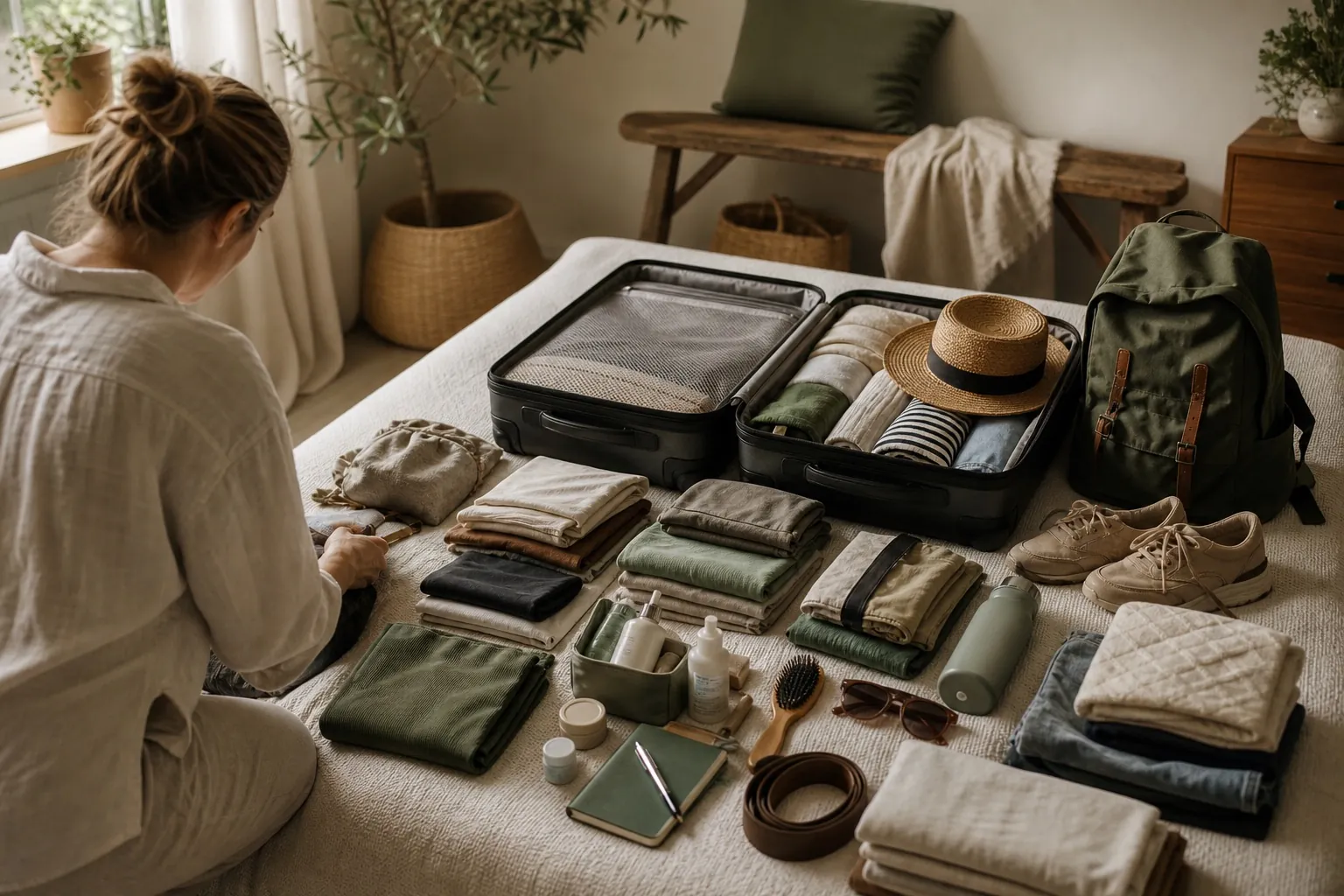
Wondering what to pack for a holiday? Packing should not mean putting everything that might come in handy into the suitcase. A good holiday packing list takes into account the length of the trip, the weather, how you are travelling, what your accommodation provides and the activities you have planned. A person driving to an apartment packs differently from a passenger on a plane, and a family with children differently again.
The list below helps you pack for a typical holiday. Do not treat it as a mandatory kit. Remove what you do not need and add things that come from your health, your travel style and your plans.
What to pack for a holiday: the basic list
The easiest way to pack is by category. That makes it simpler to spot gaps and to avoid packing several similar things while forgetting one you really need.
Documents, bookings and money
Pack documents and things you will need during the journey in a backpack, a hand bag or a small pouch. Do not put them at the bottom of your main luggage.
What to pack for a holiday: the basic list (part 1 of 3)
- Holiday packing list: the basics
- ID card or passport
- driving licence, if you plan to drive
- tickets or booking confirmations
- address and contact details of your accommodation
- travel insurance documents
- payment card
- a small amount of cash
- EHIC card (EKUZ), if needed on the trip
- any required health documents or certificates
- copies of key documents, kept separately
- children's documents, if travelling with family
- documents and gear for your pet, if it is coming with you
- short-sleeved T-shirts
- one or two long-sleeved tops
- shorts
- light trousers or a skirt
- a dress, if you need one
- hoodie, jumper or thin fleece
- light jacket
- rain jacket or poncho
- clothes for a cooler evening
- comfortable sightseeing outfit
- clothes for your planned activities
- a smarter outfit, if needed
- sun hat or cap
- belt, if you use one
- bag for dirty clothes
- Underwear, nightwear and swimwear
- underwear for each day plus a few spare
- socks
- pyjamas or other sleepwear
- swimsuit
- spare swimsuit, if it will get a lot of use
- flip-flops for the shower or pool
- light beach cover-up
- bag for a wet swimsuit
What to pack for a holiday: the basic list (part 2 of 3)
- Holiday packing list: the basics
- comfortable walking shoes
- sandals or light shoes for warm days
- flip-flops
- trainers, hiking or water shoes, if your plans need them
- shoes for a more formal outing, if needed
- toothbrush
- toothpaste
- dental floss
- shower gel or soap
- shampoo and conditioner
- deodorant
- face cream
- sun cream
- after-sun lotion
- hairbrush or comb
- hair ties and clips
- razor
- period products
- tissues
- wet wipes
- hand sanitiser
- make-up, if you use it
- insect repellent, if it may be needed
- towel, if your accommodation does not provide one
- small quick-dry towel for the beach, pool or workouts
- contact lenses and solution
- prescription glasses and spare glasses, if you have them
- regular medicines
- enough medicines for the length of the trip
- prescriptions, certificates or documents needed to carry medicines
- medicines your doctor advised for this trip
- plasters
- antiseptic for small cuts
- allergy medicines, if you have allergies
- thermometer, if it may be needed
- glasses, lenses or other aids you use
- medical equipment and its chargers
- notes on allergies, conditions or health needs
What to pack for a holiday: the basic list (part 3 of 3)
- Electronics
- phone
- phone charger
- power bank
- cable to charge the power bank
- headphones
- camera, if you use one
- camera charger or spare battery
- e-reader
- watch and its charger
- laptop or tablet, if needed
- laptop or tablet charger
- plug adapter, if travelling abroad
- extension lead or small power strip, if several people are travelling
- luggage tracker, if you use one
- case to protect electronics from water and sand
- Useful for the journey and stay
- sunglasses
- small backpack or bag for day trips
- water bottle
- travel pillow, if you have a long journey
- eye mask
- earplugs
- book, e-reader or other entertainment for the journey
- umbrella or light poncho
- reusable shopping bag
- zip bags or small organisers
- food container, if needed
- notebook and pen
- sewing kit with basic supplies
- pouch for documents and money
- padlock for luggage or locker, if your accommodation needs one
- hand-wash detergent, if you plan to wash clothes
- bin bags or bags for wet items
- equipment for remote work, if you will work on the trip
- Holiday packing list: the basics
- water suited to the travel conditions
- simple snacks
- sandwiches or a meal for the road
- food for a child, if needed
- food to suit the traveller's diet or allergies
- cutlery and napkins, if needed
- bag or container for rubbish
Before travelling abroad, check the current requirements for documents, passport validity, insurance and the entry rules of the country. Do not rely only on what you remember from a previous trip.
Holiday clothes
Match the amount of clothing to the length of the trip and whether you can do laundry. For a week away you do not always need seven complete outfits, because some clothes can be combined in several ways.
If you plan to visit places of worship or restaurants with a dress code, or to attend a ceremony, check in advance whether you need an extra outfit.
If the trip lasts longer than a week, check whether the property has a washing machine, a tumble dryer or a laundrette. Being able to wash clothes lets you take far fewer.
Shoes
For most holidays, two or three well-chosen pairs are enough.
Wear the heaviest pair for the journey. Do not pack brand-new, unbroken-in shoes as your only footwear for sightseeing.
Toiletries and hygiene
Before packing toiletries, check what your accommodation provides. A hotel may supply towels, a hairdryer, soap and basic toiletries, while a cabin, hostel or campsite may offer far less.
Decant the toiletries you need into smaller containers if full-size bottles take up too much room. If you are flying, check the current rules on carrying liquids at the airport and with your airline.
Medicines and health items
Your medicines list should come from the traveller's individual needs. Do not put together a random, elaborate first aid kit if you do not know how to use what is in it.
Keep the medicines you need on the journey and your most important medical equipment in luggage you can always reach. Before a flight, also check the rules for carrying medicines and medical devices.
Do not pack every cable you find at home. Check each device and add to the list only the charger or cable it really needs.
Food and drink for the journey
Not every trip calls for taking food. But if you have a long route, are travelling with children or will be on the road at hours when it is hard to buy a meal, prepare a small kit.
For a flight, check the rules on bringing drinks on board and carrying food, especially on international trips.
Suitcase and backpack: what goes where
The main rule is that things you need during the journey, and anything valuable or hard to replace, should stay with you. The main luggage is mostly for clothes, shoes and equipment you will only need when you arrive.
Suitcase and backpack: what goes where
- Pack in your suitcase or main bag:
- most of your clothes
- spare underwear and sleepwear
- extra shoes
- toiletries you do not need on the journey
- towel and beach gear
- organisers and a laundry bag
- items you only need once you arrive
- Pack in your backpack or hand bag:
- documents
- phone and wallet
- tickets and booking confirmations
- medicines you need on the journey
- glasses and other important aids
- valuable electronics
- charger and power bank
- a snack and a drink, if travel rules allow
- tissues and basic hygiene items
- a light hoodie or layer for changes in temperature
- a change of underwear and a T-shirt on a longer journey
- things a child needs during the journey
If your main luggage is delayed, what is in your backpack should let you reach your accommodation safely and fairly comfortably and get through the first hours of your stay.
How many clothes to pack for a holiday
There is no single number that suits every traveller. What counts is not only the length of the trip but also the weather, your activities and whether you can use a washing machine.
A trip of 3–4 days
You will usually need:
How many clothes to pack for a holiday
- 3–4 T-shirts or tops
- 2 bottoms
- underwear and socks for each day plus one spare
- sleepwear
- one warmer layer
- light rain protection
- no more than 2–3 pairs of shoes
- 5–7 tops
- 3–4 bottoms
- underwear for each day, or the chance to do laundry
- 1–2 warmer layers
- rainwear
- clothes for planned activities
- no more than 3 well-chosen pairs of shoes
A trip of 7–10 days
Pack clothes for about a week, but choose pieces that can be combined into different outfits.
A trip of two weeks or more
Do not automatically double the contents of a one-week suitcase. Instead of packing fourteen full sets of clothes, check whether you can do laundry halfway through. That keeps the luggage lighter and leaves room for things you truly need.
How to adapt the list to the type of trip
A universal packing list is a starting point. Before you close the suitcase, add things that come from the destination and your planned activities.
A hotel holiday
Check whether the hotel provides:
How to adapt the list to the type of trip
- towels
- toiletries
- a hairdryer
- pool or beach towels
- an iron
- a kettle
- a cot and equipment for a child
Do not take your own versions if what the property provides meets your needs.
Staying in an apartment or cabin
Check the kitchen, bathroom and bedroom equipment. Find out whether towels, bedding, washing-up liquid, basic spices, a washing machine and a dryer are there.
Travelling by car
A bigger boot does not mean you should fill it with things "just in case". Also check the car documents, the equipment required in the countries along your route, chargers, a phone holder and what you need during stops.
Travelling by train or coach
Choose luggage you can carry, lift and place on a rack by yourself. Keep documents, water, snacks and what you need during the journey in a smaller bag.
Travelling by plane
Before packing, check the size and weight limits of your specific airline. The rules on liquids, electronics, medicines, food and extra items can depend on the airline, the airport and the destination.
If you are choosing a particular kind of holiday, use these more detailed checklists too:
What to check before you start packing
Before you get the suitcase out, answer a few questions:
What to check before you start packing
- How many full days will the trip last?
- What is the weather forecast for your stay?
- What activities are planned?
- Does your accommodation provide towels, toiletries and a hairdryer?
- Can you do laundry on site?
- Is there a luggage limit?
- Do you need special clothing or footwear?
- Do you have medicines, documents and things for individual needs?
- Does a child or another traveller have their own list?
- Can you easily buy anything missing at your destination?
Check the weather forecast again shortly before you leave. Do not pack the whole suitcase based on average temperatures you looked up weeks earlier.
How to pack for a family, a couple or a larger group
One shared list does not mean everything should go in one bag. It is best to split it into three parts:
- each traveller's personal items,
- shared items,
- things you need during the journey.
Each person should have a separate section for clothes, shoes, medicines and toiletries. You can pack chargers, cosmetics, a first aid kit, a guidebook, an umbrella or beach equipment together.
For children, add things suited to their age, feeding, sleep and daily care. Do not assume equipment for a child will be available on site. Confirm it directly with the property.
If one suitcase holds the things of two people, it is worth splitting the basic clothes between the bags. That way, if one bag is lost or delayed, one person is not left without everything.
What to pack for a holiday: what not to forget
What we most often forget is not big pieces of clothing but small things we need to use the rest of our kit.
What to pack for a holiday: what not to forget
- phone charger
- power bank cable
- plug adapter
- regular medicines
- glasses or contact lens solution
- pyjamas
- swimsuit
- sun hat or cap
- bag for wet clothes
- bag for dirty underwear
- house and car keys
- code or instructions for collecting the accommodation keys
- child's documents
- charger for watch, camera or e-reader
- camera memory card
- confirmation of parking or transfer booking
Before leaving home, do not go through the whole suitcase yet again. Check above all the things that are not easy to replace: documents, medicines, money, phone, keys and glasses.
What not to pack for a holiday
An overloaded suitcase makes travel harder, raises the risk of going over the luggage limit and makes it harder to find what you need.
You can usually do without:
- several similar pairs of shoes,
- clothes you do not usually wear,
- full-size bottles of toiletries,
- lots of things "just in case",
- equipment your accommodation provides,
- a stock of snacks for the whole stay, if there are shops nearby,
- many paper books,
- items that do not fit your planned activities.
Every extra item should answer a specific question: when and in what situation will I use it? If you cannot name a likely use, you probably do not need it.
How to pack a suitcase so everything is easy to find
Instead of focusing only on saving space, make sure you can get at things easily.
How to pack a suitcase so everything is easy to find
- group clothes by type or by person
- put toiletries in a leak-proof wash bag
- protect shoes with separate bags
- keep documents and medicines out of the main luggage
- prepare a separate bag for dirty clothes
- put what you need on the first day on top
- label organisers for children or for each traveller
- leave a little free space
Rolling clothes can help keep soft items tidy, but it will not solve the problem of too much luggage. Taking out what you do not need makes the biggest difference.
A packing list in BuyNest
Create a checklist for your trip in BuyNest. Add the things you want to take and tick them off as you pack.
FAQ: packing for a holiday
What should I pack for a one-week holiday?
For a week away, prepare clothes for about 5–7 days, underwear, something to sleep in, two or three pairs of shoes, toiletries, medicines, documents, electronics and things for your planned activities. If you can use a washing machine, you can take fewer clothes.
When should I start packing for a holiday?
It is worth creating the list early, but do the main packing after you have checked the current weather forecast and what your accommodation provides. Prepare documents, medicines and any items you still need to buy well in advance. You can add everyday items just before you leave.
Is it better to pack a suitcase or a backpack?
A suitcase works well in a hotel, on car journeys and on routes with smooth surfaces. A backpack is more comfortable if you change place often, use stairs or public transport, or travel on foot. Let the choice follow how you travel, not only how long you are away.
What should always go in the hand luggage backpack?
Keep documents, money, your phone, medicines you need on the journey, valuable electronics, the most important chargers and things you would struggle without on arrival in your backpack. On a longer journey, a basic change of clothes also comes in handy.
How can I avoid forgetting the most important things?
Use a list divided into categories and tick things off only once they are in your luggage. At the end, do a separate check of documents, medicines, money, phone, charger, keys and glasses.
Do I have to take everything on the universal list?
No. The universal list is there to help you spot possible gaps, not to push you into packing every item on it. Remove items that do not suit your trip and add things that come from your individual needs.
Pack only what you really need
A good suitcase and backpack list should not be as long as possible. It should fit the specific trip. Consider the length of your stay, the weather forecast, the type of accommodation, how you are travelling and the needs of everyone going.
Save your list in BuyNest, split it into clear sections and tick off items as you pack. That makes it easier to avoid both forgetting important things and taking things you will never use on the trip.
Sources
Take the shopping into BuyNest
BuyNest is on iPhone and Android. The app has no ads, including on the free plan.