
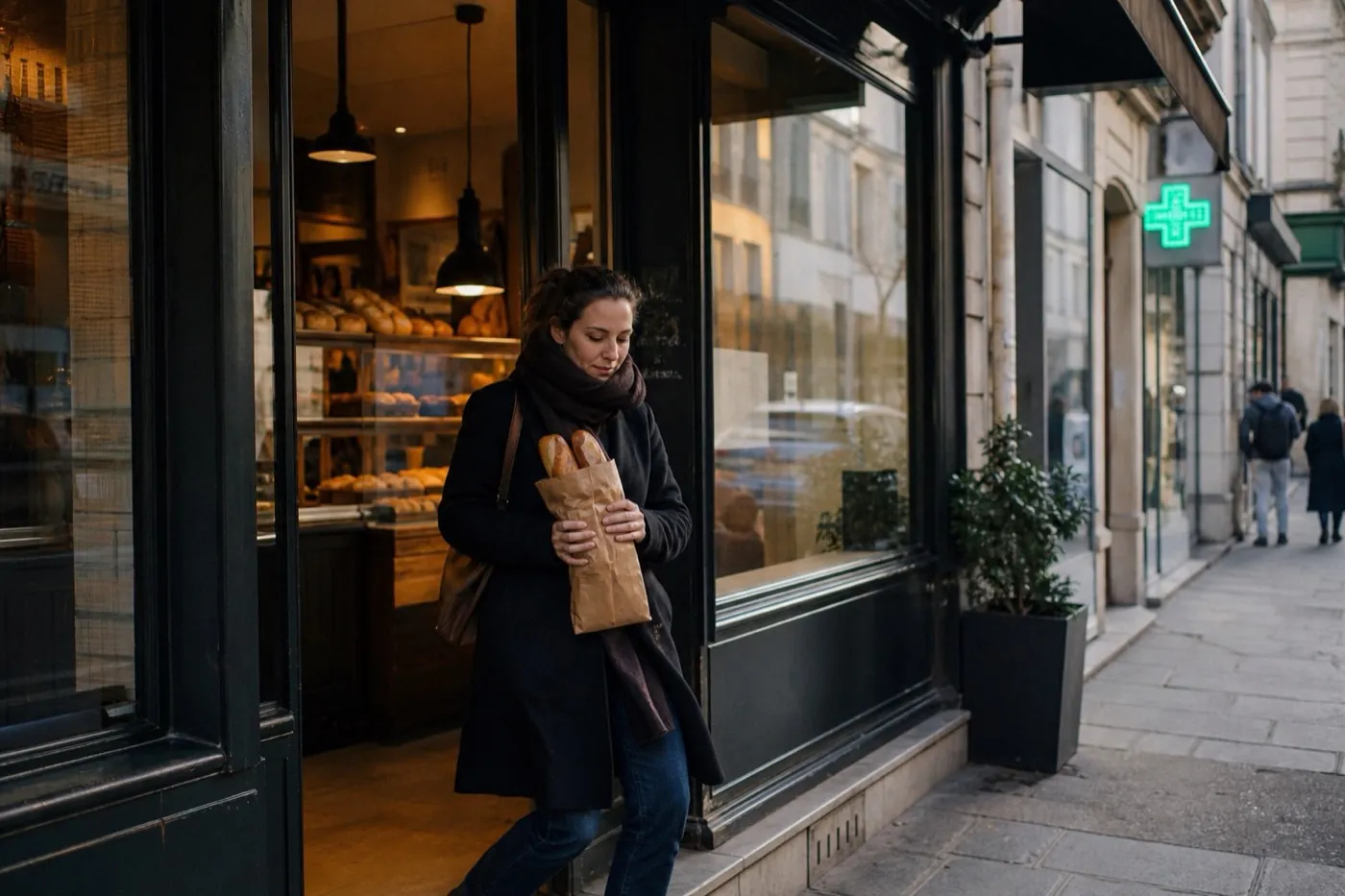
In BuyNest you can split these products by shop and tick them off with your household.
Bakery and chemist in one trip
- Bakery
- Rye sourdough for the weekend1 loaf
- Sliced white loaf to freeze1 loaf
- Bread rolls for Sunday6 pcs
- Baguette for Saturday supper1 pcs
- Plaited sweet loaf for breakfast1 pcs
- Sweet buns3 pcs
- Chemist: personal care
- Toothpaste1 pcs
- Toothbrushes2 pcs
- Shampoo1 pcs
- Shower gel1 pcs
- Liquid hand soap refill1 pcs
- Deodorant1 pcs
- Cotton pads1 pack
- Plasters1 pack
- Tissues1 pack
- Toilet paper 8 rolls1 pack
- Chemist: household
- Washing-up liquid1 pcs
- Dishwasher tablets1 pack
- Laundry liquid1 pcs
- Kitchen sponges1 pack
- Bin bags 35 l1 pack
- Take from home
- Bread bag cotton or paper1 pcs
- Bag for household items a separate one1 pcs
How do you combine a chemist shopping list with a bakery run?
A chemist shopping list with a bakery stop works when you split it in two parts and two bags. Go to the chemist first, because its goods are heavy and do not spoil, and to the bakery last so the bread gets home fresh. The list below has 23 items, including bread for the weekend.
The reason to combine these two shops is simple: you visit both on the same rhythm. You buy bread every few days, and toothpaste and washing-up liquid every few weeks. One list with two sections lets you do one route instead of two.
This guide shows how much bread to count for a weekend, what to check at home before the chemist, the best order to shop in and how to pack, so the bread does not smell of laundry liquid.
How much bread should you buy for a weekend?
For a weekend for two to four people, one loaf, a few rolls and something sweet are usually enough. Our list holds a sourdough rye loaf, a sliced wheat loaf, six rolls, a baguette, a plait loaf and three sweet buns. That is our editorial estimate, because every home eats differently, so treat it as a starting point.
Before you go to the bakery, count the breakfasts and suppers across two days. If you eat sandwiches once a day, you can skip one loaf. If someone takes a packed lunch to work, add a few slices.
- sourdough rye loaf for breakfasts and suppers
- sliced wheat loaf for toast and children's sandwiches
- six rolls for a Saturday or Sunday morning
- a baguette or plait loaf for lunch or to serve to guests
- three sweet buns if you like something with your coffee
Bread you will not finish in two days should be sliced and frozen in portions. Defrosted slices only need a toaster. More on choosing between sliced bread and a whole loaf is in the guide to sliced bread or a whole loaf.
What should you count in the bathroom and kitchen before the chemist?
The most common mistake at the chemist is buying something that is already in the cupboard. That is why the list starts with checking your home, not the shop. It takes five minutes and saves money and space.
Walk round the house with your phone and check what tends to run out unnoticed.
- toothpaste and toothbrushes: how many are in the bathroom and when you last replaced them
- shampoo, shower gel and liquid soap: check the last bottles, not only the ones in view
- toilet roll and tissues: how many rolls are left in the cupboard
- washing-up liquid, dishwasher tablets, sponges: look under the sink
- laundry liquid and bin bags: check the utility area or the cleaning cupboard
Buy only what will run out within two weeks, unless there is an offer and you have space to store extra. How to count a stock of cleaning products without duplicates is covered in the guide to a household supplies list without doubles.
What order should you shop in?
The order depends on what has to survive the way home. You buy heavy and robust things first and delicate things last. The table below shows how it works across two shops.
| Step | Shop | Why this order |
|---|---|---|
| 1 | Chemist: home | laundry liquid and tablets are heavy, so get them into the bag early |
| 2 | Chemist: toiletries | small items that tuck easily into a bag |
| 3 | Bakery | bread and rolls stay freshest when bought just before heading home |
| 4 | Home | unpack the bread first, then put the chemicals away |
When the shops are on opposite sides of the estate, pick the order that does not make you retrace your steps. The bakery should always be the last stop before home.
How often should you go to the bakery, and how often to the chemist?
The bakery and the chemist run on very different rhythms, so one list does not mean you buy everything every week. You buy bread every few days and household chemicals every few weeks (our own shopping rhythm, not a rule). Once you separate them, the list gets shorter and less tiring.
A simple split you can adapt to your family:
- bread: every few days, or once a week if you freeze portions
- personal care: every two or three weeks, depending on how many people live at home
- household cleaning: once a month, with the dishwasher and washing machine setting their own pace
- small items such as plasters or cotton pads: once every few months
Mark on the list what you are buying this week and leave the rest ticked for later. After two months you will see your own rhythm and stop buying just in case.
How do you pack bread and chemicals in separate bags?
Keep bread and cleaning products in separate bags, even if you carry them together. The last group on the list, Bring from home, holds two items: a bread bag and a bag for chemicals. Bread takes on the smell of whatever lies next to it, and laundry liquid has a strong one.
Cleaning products carry hazard pictograms and precautionary statements on the label, whose format across the EU is set by the CLP Regulation. Read them before first use, keep the products in their original packaging and never mix different ones. At home, put them where children and pets cannot reach.
Rozporządzenie (WE) nr 1272/2008 (CLP) / Regulation (EC) No 1272/2008 (CLP)What should you do with bread that is left over?
Everyone buys too much bread now and then, so it is good to have a plan for the surplus. The simplest approach is to slice and freeze it straight after you get home, while it is still fresh. After defrosting, toast the slices or warm them in a dry pan.
Ideas for bread from previous days:
- croutons for soup or salad from a stale roll, cubed and baked
- toasties or bakes from loaf that has gone hard
- breadcrumbs from dry slices, whizzed in a blender
- bread pudding or fried bread with egg and milk
If you freeze, slice before freezing and put portions in a bag marked with the date. That way you do not defrost the whole loaf at once.
What should you avoid buying in a hurry at the chemist?
The chemist tempts you with offers you will not use. Choose what you will actually use in a few weeks, and skip novelties you have not tried. A rule of one spare pack is enough in most homes.
For medicines, remedies for ailments or anything health related, go to a pharmacy or ask a pharmacist. The list holds only sticking plasters, as ordinary home first-aid items. It does not replace advice from a doctor or pharmacist.
How do you plan a monthly stock at the chemist?
A stock at the chemist only makes sense when you have somewhere to keep it and know how much you use. Otherwise the bathroom cupboard turns into a storeroom. It helps to count once how much of each thing goes in a month and note it on the list.
A few simple steps help:
- Write the opening date of each bottle of shampoo, shower gel and laundry liquid on the first pack.
- After a month, check how much is left and estimate your use.
- Set the quantity on the list to cover two weeks plus one spare pack.
- If an offer tempts you, buy only what you will use before the best-before date.
After a few months you will see that some things are bought too often and others always run out. Then adjust the quantities in your template.
How do you turn this into one list with two parts in BuyNest?
Save the ready bakery and chemist list and assign groups to shops: the bakery group to the bakery, toiletries and home to the chemist. In the shop you see only what you buy there, and ticked items drop out of view.
If you live with someone, share the list. One person can call at the bakery on the way home from work, and the other at the chemist after training. Nobody buys a second toothpaste, because ticks show on both phones at once.
After the first trip, save the list as your own template. In a few weeks you only change the number of rolls and what ran out.
What if you need more than a bakery and a chemist?
If you are planning a full grocery shop for the week, use the ready pattern for weekly groceries for two. Here we stay with the two shops you visit most often and which are easy to fit into one route.
Frequently asked questions
How much bread should you buy for a weekend for two?
Usually one loaf, a few rolls and something sweet. That is an editorial estimate, because appetites differ. If bread is left over, slice and freeze it in portions.
Should you go to the bakery or the chemist first?
The chemist first and the bakery last. Bread is best bought just before heading home, so it is fresh. Heavy chemicals are better already in the bag.
Can you carry bread and cleaning products in one bag?
Better not. Bread absorbs smells, and cleaning products smell strongly. Take two separate bags and keep chemicals in their original packaging.
How long does fresh bread keep?
It depends on the bread and how you store it, so check the pack or ask at the bakery. Freeze the rest before it goes hard.
Can I keep bread and chemist items on one list in BuyNest?
Yes. Split the items into groups and assign them to shops, and in the shop you see only items from that group. Ticks appear at once for everyone you share the list with.
A chemist shopping list and a bakery run fit one route in two parts: chemicals first, fresh bread last. Open the ready list in BuyNest, check your cupboards and tick off what you still have.
Open the ready list in BuyNestSources
Take the shopping into BuyNest
BuyNest is on iPhone and Android. The app has no ads, including on the free plan.

