
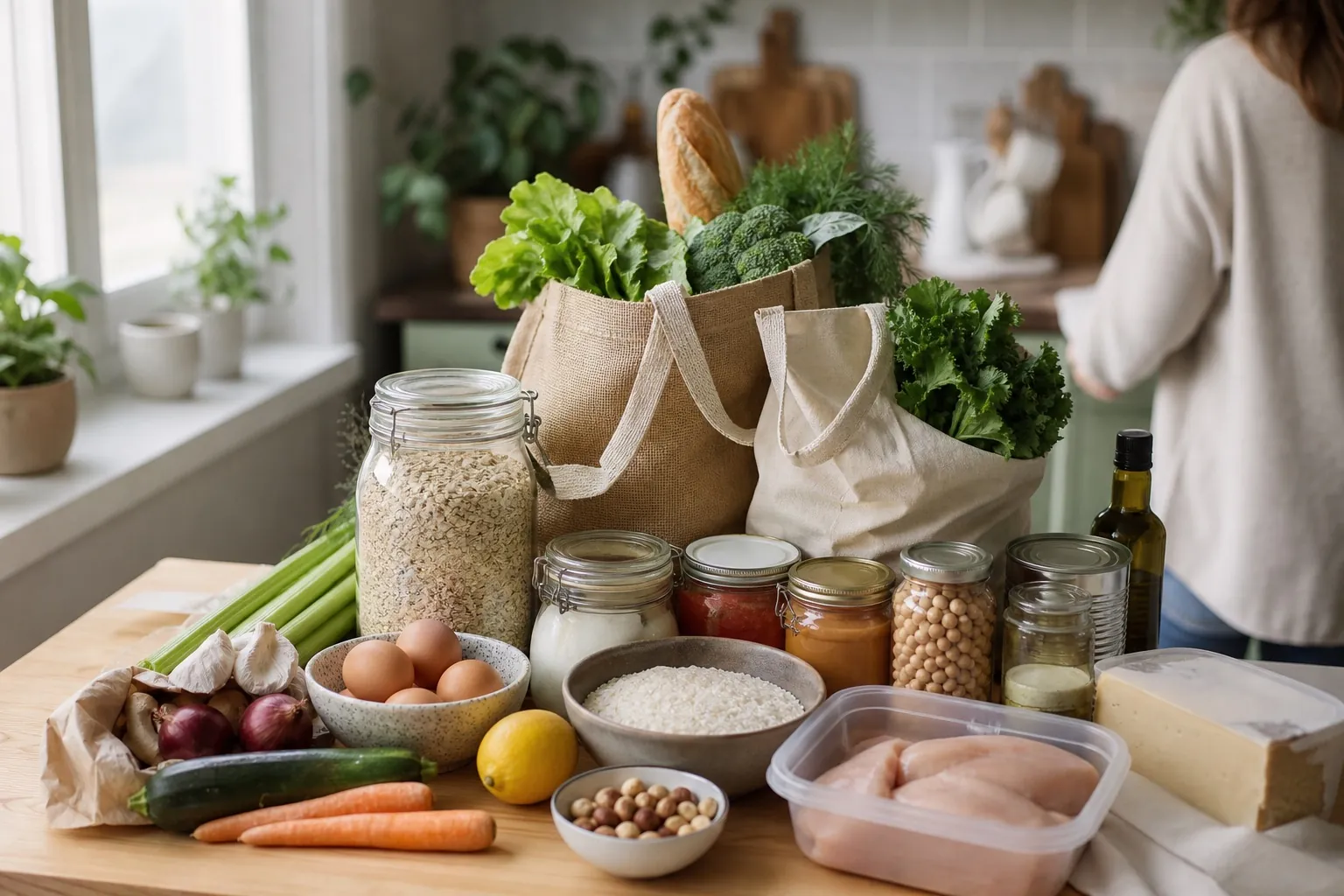
In BuyNest you can split these products by shop and tick them off with your household.
A basic grocery list should hold the products you really cook with, not a random set of items thought to be essential. A person who cooks every day needs a different base from someone who eats some meals out, and a family with children needs another again. The list below will help you stock your fridge, freezer and kitchen cupboards so you can make a few simple meals without building up excessive stocks.
Basic grocery staples: a starter list
Do not buy every item below automatically. Tick the ones that suit how you eat, the dishes you cook most often and the storage space you have.
Basic groceries: a starter list (part 1 of 3)
- Fruit and veg
- onion
- garlic
- carrots
- potatoes
- tomatoes
- cucumbers
- peppers
- lettuce or other salad leaves
- seasonal veg
- apples
- bananas
- lemons
- seasonal fruit
- frozen veg
- frozen fruit
- Bread and grain products
- bread or rolls
- crispbread or tortillas if you use them
- rolled oats
- rice
- pasta
- groats
- flour
- breadcrumbs if you use them in cooking
- potato starch, if your dishes need it
- yeast or baking powder if you bake
- Dairy, substitutes and eggs
- eggs
- milk or plant-based drink
- plain yoghurt
- kefir or buttermilk if you eat them
- quark or cottage cheese
- cheese for sandwiches or cooking
- butter
- cream or plant-based cooking cream, if planned dishes use it
- Meat, fish and plant proteins
- meat for planned meals
- fresh or frozen fish
- tuna, sardines or other tinned fish
- beans
- chickpeas
- lentils
- peas
- tofu or another plant product
- extra eggs, if often the base of a meal
Basic groceries: a starter list (part 2 of 3)
- Tins, preserves and pantry
- tinned tomatoes
- passata
- tomato purée
- beans or chickpeas in a jar or tin
- tinned sweetcorn
- tinned peas
- pickled or gherkin cucumbers
- jarred veg you use regularly
- tuna or other tinned fish
- stock, or ingredients to make it
- jam or fruit preserve
- honey if used at home
- Fats, sauces and extras
- rapeseed or other cooking oil
- olive oil if you use it
- butter or other spread
- mustard
- vinegar
- soy sauce, if it suits your dishes
- mayonnaise if used at home
- ketchup or tomato sauce
- horseradish, if you reach for it regularly
- Basic spices
- salt
- pepper
- sweet paprika
- hot paprika if you use it
- garlic granules
- marjoram
- oregano
- basil
- curry or turmeric if they suit your dishes
- bay leaf
- allspice
- cinnamon
- favourite herbs and blends, without doubling up
- Freezer items
- frozen veg
- frozen fruit
- frozen fish
- bread in portions
- ready portions of meals made earlier
- frozen herbs
- other items for emergency meals
Basic groceries: a starter list (part 3 of 3)
- Drinks and breakfast items
- water, if you do not use tap water or a filter
- coffee
- tea
- cocoa
- rolled oats or other unsweetened cereal
- nuts and seeds
- peanut butter if used regularly
- dried fruit if you add it to meals
- items for your most common breakfasts
There is no need to buy all the fresh veg and fruit at once. Pick those you can use in several dishes. Carrots, onions and garlic work in soup, sauce and a one-pot meal. Tomatoes, cucumbers and lettuce can go into sandwiches, salads and side dishes.
Buy fresh produce in amounts that match your real meal plan. If you often fail to use veg before it spoils, top up your base with frozen. It is handy on days when you have no time to prepare food from scratch.
You do not need several kinds of rice, pasta and groats just because they might come in useful one day. Pick one or two that you use regularly.
If bread often goes spare, buy smaller loaves or freeze it in portions. Keep baking supplies at home only if you actually make cakes, pizza, pancakes or homemade bread.
Do not treat every dairy product as essential. If your household regularly eats only yoghurt and milk, there is no need to add kefir, quark and several kinds of cheese.
If you have allergies, intolerances or a plant-based diet, choose suitable substitutes. Check that the product fits its intended use: one may work in coffee, another for cooking.
If you buy fresh meat or fish, decide beforehand which day you will use it. Do not add it to the basket just because it is on offer.
Choose a few products you can turn into a meal quickly. Passata, beans and pasta are enough for a simple dish. Chickpeas can go into a salad, sauce or soup. Tinned fish can be a sandwich filling, a spread or a quick dinner.
Do not buy many tins of one product if you use it only occasionally. Your stock should match how often you cook, not how much free space you have in the cupboard.
A freezer is useful only if you know what is in it. Do not put in food without a label. Note the name and the freezing date, and keep older portions where you can easily reach them.
Do not buy more frozen food before checking how much space you have. An overfull freezer makes it hard to keep track of your stock and food gets forgotten.
Basic grocery staples: the minimum list
If you are setting up your first kitchen, or rebuilding your stock without spending much, start with a shorter list:
Basic grocery staples: the minimum list
- bread
- rolled oats
- rice or groats
- pasta
- eggs
- milk or plant-based drink
- plain yoghurt
- one protein of your choice
- beans, chickpeas or lentils
- passata or tinned tomatoes
- onion
- carrots
- two or three kinds of fresh veg
- two kinds of fruit
- frozen veg
- oil
- salt
- pepper
- two or three most-used spices
This list is not compulsory. Its aim is to give you a base for breakfast, a simple lunch or dinner, and supper. Buy specialist products, sauces, baking extras and larger stocks only when a specific need comes up.
How to decide which products are really worth keeping at home
Rather than copying a ready-made list in full, start with the five or six meals you cook most often. They might be, for example:
- porridge;
- sandwiches or scrambled eggs;
- vegetable soup;
- pasta with sauce;
- rice with veg and a protein of your choice;
- a salad or a tortilla wrap.
Then write down the products that appear in several of these dishes. They are what should make up your basic stock.
For example, onion, carrot, garlic and passata can go into a soup, a sauce and a one-pot meal. Eggs work for breakfast, in a salad and in a simple lunch. Rolled oats can be used for porridge, pancakes or homemade muesli.
A product used in one dish once every few months is not part of your basic stock. Add it to the list only just before you make that particular dish.
What to keep at home for a quick meal
A practical stock lets you combine a few products without an extra trip to the shop.
| Quick meal | Base products |
|---|---|
| Pasta with tomato sauce | pasta, passata, onion, garlic, spices |
| Rice with veg | rice, frozen veg, an egg, tofu or another protein |
| Cream soup | fresh or frozen veg, onion, stock, spices |
| Scrambled eggs or omelette | eggs, fat for frying, veg, bread |
| Porridge | oats, milk or plant-based drink, fruit, nuts |
| Chickpea salad | chickpeas, fresh veg, oil or olive oil, spices |
| Tortilla wrap | tortilla, veg, beans, an egg, meat or tofu |
| Sandwich spread | eggs, quark, beans or tinned fish, spices |
A table like this is more useful than a long list of random products. It shows why each item is in the cupboard and what you can combine it with.
Food stock: what to buy in advance and what to buy as you go
Products with a long shelf life
A permanent stock usually suits products you use regularly that have a longer shelf life:
- rice, groats and pasta;
- rolled oats;
- flour, if you use it;
- dried pulses;
- tinned tomatoes, beans and fish;
- oil;
- spices;
- coffee and tea;
- frozen veg and fruit.
A permanent stock does not mean a dozen packs. For most products, one open pack and one spare is enough if you use them regularly.
Products to buy according to your meal plan
Buy these as you go:
- fresh veg and fruit;
- bread;
- dairy and its substitutes;
- fresh meat and fish;
- cold cuts;
- fresh herbs;
- products needed for a specific dish.
The amount should depend on how many people live in your home, how often you eat in and what you have planned for the next few days.
How to adjust the list to the size of your household
Before you shop, answer four questions:
- How many people will eat at home?
- How many breakfasts, lunches and dinners will you really make?
- Which meals will be eaten out?
- Are you expecting guests, or going away?
Only then work out the quantities. If you need products for a particular week, see the separate guide: weekly grocery list. A basic grocery list has a different job: it helps you build a base you will use over many weeks, not a ready menu for seven days.
How to match your stock to the way you eat
If you cook every day
Choose base products you can combine in many ways: veg, groats, rice, pasta, eggs, pulses, passata, frozen food and the spices you use most.
If you cook only a few times a week
Buy fewer fresh products. More of your base can be frozen veg, dry goods and tins. Plan your dishes so that one ingredient is used in more than one meal.
If you often eat out
Do not copy lists meant for people who cook every day. Prepare a base for simple breakfasts, suppers and one or two emergency lunches. A big shop can lead to wasted food in this case.
On a vegetarian or plant-based diet
Include the dried pulses you use regularly, tofu or other plant-based products. Choose dairy substitutes to suit how you will use them and your individual dietary needs.
With allergies and special needs
Do not build your stock from a general list. Check the ingredients of every product and the possibility of contact with allergens. If one person at home needs separate products, mark them on the list and when storing them.
How to avoid buying the same products twice
Before you go to the shop, do a quick check:
How to avoid buying the same products twice
- Check the fridge.
- Check the freezer.
- Look through the dry goods cupboard.
- Check open packs.
- See which products need using first.
- Remove from the list things you already have.
- Add only the missing items for specific meals.
Arrange your products so that those bought earlier are visible and used before the new ones. Poland's National Centre for Nutrition Education (NCEZ) recommends the "first in, first out" rule, which makes it easier to control your stock and cut losses. See the NCEZ rules for planning food shopping.
How to read the dates on products
When going through your stock, tell the two labels apart:
- "Use by" relates to the safety of perishable products. After the date shown, do not eat the product.
- "Best before" is the date of minimum durability. Until then, a correctly stored product keeps its quality.
Do not judge every product by one type of date. Also check the storage conditions given by the manufacturer. The difference between the labels is explained by Poland's Chief Sanitary Inspectorate (GIS).
Detailed shelf lives and storage methods belong in a separate guide. For a basic list, the most important things are to check the label, the manufacturer's conditions and which products to use first.
How to cut spending and food waste
Do not start with special offers. First work out what you will need, then compare prices.
These rules help:
- choose products you can use in several dishes;
- buy fresh food to match your plan for the next few meals;
- do not buy a large pack just because the unit price is lower;
- check the date before putting a product in the basket;
- do not double up on similar sauces, spices and extras;
- use up products that are already open;
- check freezer space before buying frozen food;
- stock up only on things you use regularly.
An offer is not a saving if the product goes unused.
How to use the same shopping list every week
Download the ready-made list of basic products. Look through your fridge, freezer and cupboards, then adjust the list to what your household usually uses.
If you go back for the same products every week, save them once as a template in BuyNest Premium. Before your next shop, you can add the whole set with one tap. That way your regular items are to hand, with no need to type them in again or rebuild the list from memory. Remove from the current list whatever you still have plenty of, and add ingredients for the meals you have planned.
Frequently asked questions about a basic shopping list
What groceries should I always have at home?
There are no products that everyone must have. It is worth keeping a base that matches the meals you cook most. This usually means some grains, veg, eggs or another protein, frozen food, tinned tomatoes or pulses, oil and basic spices.
What should I buy to fill an empty fridge?
Start with the products for a few specific meals: eggs, bread, veg, fruit, milk or a substitute, yoghurt and one source of protein. Then fill the cupboard with rice, pasta, oats, passata, pulses, oil and spices.
What is worth having in the kitchen for a quick dinner?
Pasta or rice, passata, frozen veg, eggs, beans or chickpeas, tinned fish or tofu, and a few basic spices are useful. Choose products to suit the way you eat.
Is it worth stocking up on a lot of food?
Only if you use the products regularly, have room to store them properly and can keep track of the dates. A big stock of something you rarely use raises the risk of waste.
How often should I check my stock?
The easiest way is a quick check before each bigger shop. A more thorough check of cupboards and freezer is worth doing regularly, especially before topping up products you buy in larger packs.
Does the list include cleaning and hygiene products?
No. This is a list of groceries. Household cleaning products, toiletries and home equipment belong on a separate list, so that different shopping purposes do not get mixed up.
A basic shopping list should make everyday cooking easier
A good list is not the longest one. It should hold products you use regularly and can combine into a few simple meals. Start with a short base, watch how fast you use things up, and gradually adjust your stock to the size of your household, the way you eat and the time you spend cooking.
Share the list in BuyNest with someone you live with. If you run out of rice at home, the other person can add it to the list even when you are already in the shop. Once it is ticked off, you can see straight away that the rice has been bought.
Sources
Take the shopping into BuyNest
BuyNest is on iPhone and Android. The app has no ads, including on the free plan.