Unexpected guests dinner ideas: what to buy so the meal can grow?
Unexpected guests dinner ideas should grow with the number of people: pasta with tomato sauce, plus a salad, bread and fruit for dessert. You scale each part by adding a pack or a tin, and the recipe and cooking time stay the same.
The list follows two rules. First, easy scaling: pasta, tinned tomatoes and chickpeas, bread and fruit come in units that are simple to add. Second, your guests' limits: the dinner includes a gluten-free dish, and the list has gluten-free pasta for the person who needs it.
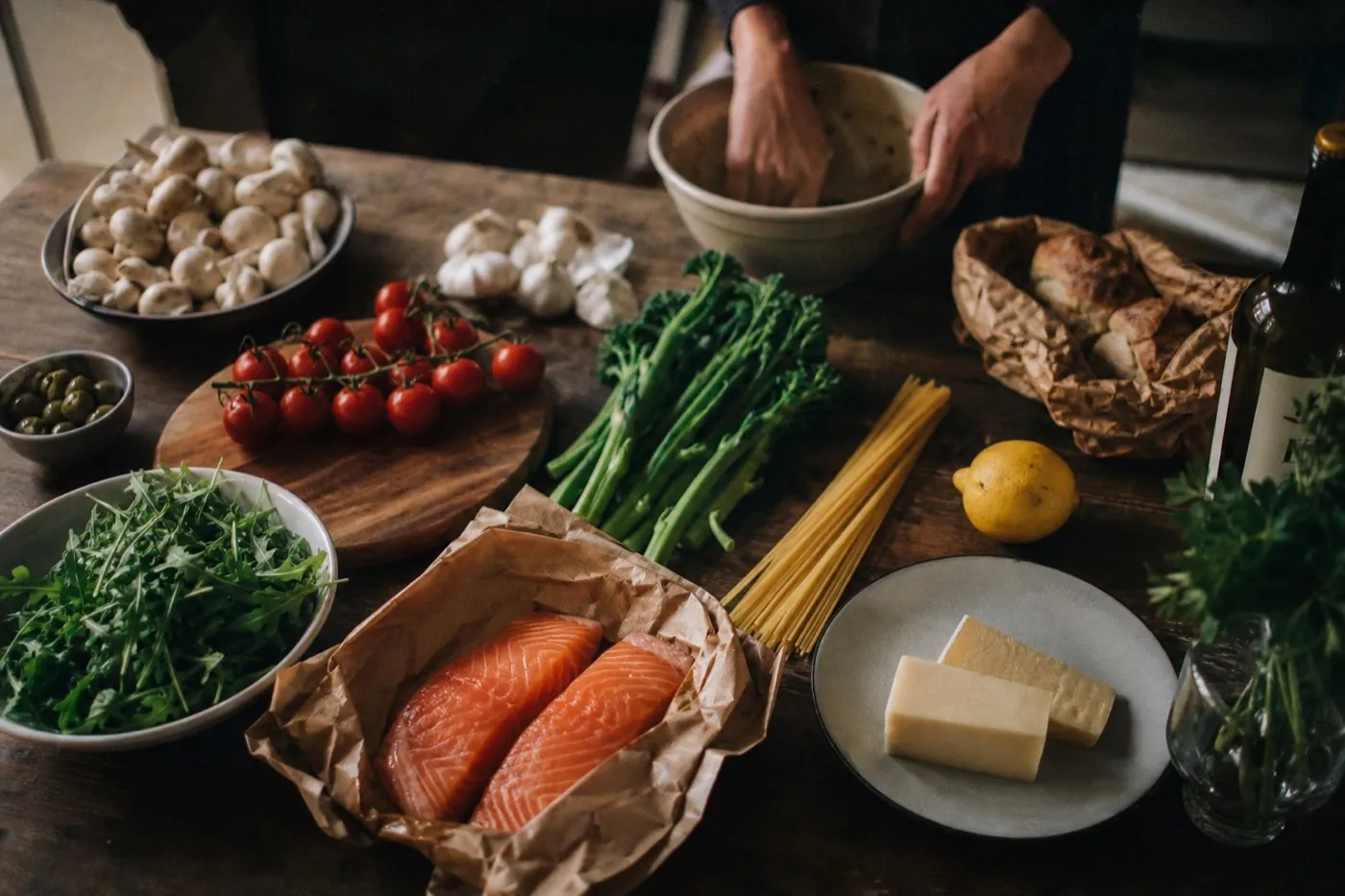
Amounts are for six. For four, buy half the pasta and two tins of tomatoes; for eight, add a pack of pasta and a tin of tomatoes. The salad and dessert grow at the same pace. Two illustrated recipes, penne in tomato sauce and the chickpea salad, sit further down, above the ready list.
Penne in tomato sauce with mozzarella
A dish you scale with more tins and more pasta. The amounts serve six; for every two extra people add 200 g of pasta and half a tin of tomatoes.
Ingredients
- Penne600 g
- Chopped tomatoes 400 g each3 tin
- Tomato purée2 tbsp
- Onions2
- Garlic4 cloves
- Olive oil4 tbsp
- Chilli flakes optional½ tsp
- Mozzarella 125 g balls2
- Hard aged cheese60 g
- Basil a handful of leaves
Method
- Put a large pan of salted water on. If a guest eats gluten-free, put a second, smaller pan on for the gluten-free pasta.
- Chop the onions and soften them in the olive oil in a wide pan for 6 minutes. Add the garlic, tomato purée and chilli and cook for a minute.
- Add the tomatoes, season with salt and simmer uncovered for 15 minutes until the sauce thickens.
- Cook the penne as the packet says. Keep a cup of the cooking water and drain.
- Set aside a portion of sauce for the gluten-free guest before the regular pasta goes in. Toss the rest of the sauce with the penne, loosening it with cooking water.
- Tip the pasta onto a platter and top with torn mozzarella, grated cheese and basil leaves.
Tip Cook gluten-free pasta in its own pan and drain it in a separate, clean colander.
Chickpea, cucumber and parsley salad
A salad free from gluten, dairy and eggs. It works as a side for the pasta and as a main for a plant-based guest.
Ingredients
- Chickpeas 400 g each2 tin
- Cucumbers2
- Cherry tomatoes400 g
- Red onion1
- Flat-leaf parsley1 bunch
- Pitted olives100 g
- Rocket100 g
- Lemon juice1
- Olive oil4 tbsp
Method
- Drain the chickpeas and rinse them in cold water.
- Dice the cucumbers, halve the tomatoes, slice the onion thinly and chop the parsley, stalks and all.
- Whisk the olive oil with the lemon juice, salt and pepper.
- Toss the chickpeas, vegetables, olives and parsley with the dressing.
- Add the rocket just before serving so it does not wilt.
How do you count portions for six?
For pasta as the main dish, count around 100 g of dry pasta per adult. That is the editors' estimate, not a standard, so add a handful for hungry guests. The same goes for one baguette per three people and about a kilo of fruit. The table below shows how the amounts on the list work out for six people.
| Product | Amount for 6 | How we count |
|---|---|---|
| Penne pasta | 600 g | about 100 g dry pasta per person |
| Tinned chopped tomatoes | 3 tins of 400 g | one tin of sauce for two people |
| Tinned chickpeas | 2 tins | salad side for six |
| Baguette | 2 | one baguette for three people |
| Fruit for dessert | about 1 kg | fruit served with no prep |
A one-kilo pack of pasta leaves a reserve for seconds or a seventh guest. The longest wait is for the pasta water, so put it on as soon as you walk into the kitchen and make the sauce and salad while it heats.
What can you cook for unexpected guests in 30 minutes?
The plan is simple and has one rule: do the longest jobs first and the short ones while something cooks. The whole evening needs one pot for pasta, one pan for the sauce and a bowl for the salad.
Put the water on and at once soften chopped onion and garlic in olive oil. Add tomato purée, chopped tomatoes and chilli flakes to suit your guests, then leave the sauce on a low heat. Drop the pasta into boiling water, and while it cooks, cut the cucumbers, cherry tomatoes and red onion for the salad.
Drain and rinse the chickpeas and mix them with the vegetables, parsley and lemon juice. At the end add diced mozzarella to the pasta so it starts to melt. Keep basil and rocket for the top so they do not wilt. The whole thing normally takes half an hour from walking into the kitchen.
How do you ask guests about allergies and diets before shopping?
Send guests one short question: does anyone have an allergy, or avoid gluten, meat or dairy? The answer changes the list more than the headcount does. One person on a gluten-free diet means a separate pasta, a separate pot and a separate colander.
The EU regulation on food information for consumers lists 14 allergens that must be labelled. They are cereals containing gluten, crustaceans, eggs, fish, peanuts, soybeans, milk, nuts, celery, mustard, sesame, sulphur dioxide and sulphites, lupin and molluscs. On packaged food, these ingredients are highlighted in the ingredient list, for example in bold.
When shopping, read the labels of products that seem safe. Jarred tomato sauce can contain celery, olives in brine can contain sulphites, and bread can contain sesame. That is why this list rests on simple products: tinned tomatoes, chickpeas, vegetables and olive oil. With a serious allergy, show the guest the packs or ask whether they would prefer to bring their own dish. On health matters, the guest's doctor has the final word.
Rozporządzenie (UE) nr 1169/2011 w sprawie przekazywania informacji na temat żywnościHow do you cook a gluten-free dish alongside ordinary pasta?
Cooking two pastas in one busy kitchen takes a few simple habits. The point is to keep gluten out of the dish that should not contain it.
Cook the gluten-free pasta in a separate, clean pot and drain it in a separate colander. Do it first, or in clean utensils before you start the ordinary pasta. You can split the tomato sauce in two before it meets the pasta, so nobody stirs both bowls with one spoon.
Serve the gluten-free dish on its own, with its own serving spoon, and tell guests which is which. The chickpea salad is naturally free of gluten, but check the label of the tinned chickpeas and olives, because not every brine is the same.
How do you serve the dinner and what do you do with leftovers?
Serve the pasta and salad on platters so guests help themselves. Slice the baguette just before serving. Wash the fruit and put it in a bowl on the table so everyone reaches for it when they feel like it.
Food should not sit on the table at room temperature for more than two hours. USDA FSIS recommends this and advises throwing away anything that stood longer. When dinner runs on, put the platters in the fridge after the first round and bring them back when someone asks for seconds.
Move leftovers into shallow containers and refrigerate them. FSIS advises eating them within 3–4 days. Pasta with sauce reheats well, and the salad without rocket can be lunch the next day.
USDA FSIS: Leftovers and Food SafetyWhat should you keep at home so guests are no surprise?
The biggest relief is a small reserve in the cupboard that you keep topping up. Then last-minute shopping is only fresh products, and the rest is waiting.
That reserve is pasta in two shapes, two or three tins of tomatoes, a tin of chickpeas, olive oil, onions and garlic. Add frozen peas or spinach, a hard aged cheese that lasts in the fridge, plus tea, coffee and something for dessert, like biscuits or nuts. Then at the shop you buy only mozzarella, bread, rocket and fruit.
A fuller list of standing supplies is in the basic grocery staples list. When you know about guests in advance, look at lists for occasions, where ready lists for bigger gatherings are collected.
What can you add when guests stay longer than planned?
Sometimes dinner turns into an all-evening get-together and after an hour everyone is hungry again. From the same list you can put together a simple extra without going back to the shop.
The easiest is bread with olive oil and cheese. Slice the rest of the baguette, drizzle it with oil, sprinkle with parsley and serve with pieces of hard cheese. A second idea is cherry tomatoes with mozzarella and basil on a platter, ready in five minutes. A third is chickpeas toasted in a pan with oil, cumin and salt, which stand in for crisps.
If you have eggs at home, make an omelette with parsley and cheese and cut it into pieces. Such an extra needs nothing outside the list, and it adds another round to the dinner without stress. When you know your guests like to linger, buy one extra baguette and a second cheese, because that is the cheapest way to build a reserve.
How do you share the jobs between host and guests?
Nobody likes being the guest who sits idle, and nobody wants to be the host who does everything. A quick phone call is enough to divide the work.
Ask one guest to pick up bread and fruit for dessert on the way. Another can bring drinks or something for coffee. You take the pasta and the salad, the two dishes you know best. If guests ask what to bring, answer specifically: one baguette and a kilo of fruit is real help, while "anything" leads to three identical desserts.
When someone drives to the shop with the list on their phone, agree what they buy and what you do. A shared list in BuyNest shows what has been ticked off as it happens, so nobody has to ring from every aisle.
How do you hand the list to whoever is going to the shop?
When you hear about the guests, you can open the ready list in BuyNest and share it with someone at home or with a guest who is going to the shop anyway. Everyone ticks off what went into the basket, so you do not end up with two jars of olives.
In the notes next to items, write your guests' limits, for example "gluten-free for Anna" next to the gluten-free pasta. The person in the shop knows at once why an item is there and what to look for on the label.
Save the list as a template called "Guests". Next time you load it with one tap and change only the amounts to match the headcount.
Unplanned dinner for guests
- Pasta and tins
- Penne1 kg
- Gluten-free pasta if a guest needs it500 g
- Chopped tomatoes 400 g tins3 pcs
- Tomato purée1 pcs
- Chickpeas 400 g tins2 pcs
- Pitted olives jar1 pcs
- Olive oil500 ml
- Chilli flakes1 pack
- Vegetables and herbs
- Onions3 pcs
- Garlic bulb1 pcs
- Basil pot1 pcs
- Cucumbers2 pcs
- Cherry tomatoes500 g
- Red onion1 pcs
- Flat-leaf parsley bunch1 pcs
- Rocket100 g
- Lemons2 pcs
- Cheese
- Mozzarella 125 g balls2 pcs
- Hard aged cheese150 g
- Bread, dessert and drinks
- Baguette2 pcs
- Fruit for dessert e.g. grapes1 kg
- Mineral water 1.5 l bottles2 pcs
Frequently asked questions
How much pasta should I cook per person?
Count about 100 g of dry pasta per adult when it is the main dish. That is the editors' estimate, so add a handful for big appetites. As a side to other dishes, half is enough.
What if a guest eats neither meat nor dairy?
This dinner is vegetarian anyway, and plant-based if you leave out the mozzarella and hard cheese. The chickpeas add protein. Ask the guest for details, because diets differ.
Can I prepare part of the meal earlier?
Yes. The salad without rocket and lemon can be made a few hours ahead and kept in the fridge. The tomato sauce reheats in minutes, and the pasta is cooked just before serving.
How long can food stand on the table?
No longer than two hours at room temperature, according to USDA FSIS. If the dinner drags on, put the platters in the fridge between rounds.
What instead of dessert if there is no time to shop?
Serve fruit, coffee or tea and something from your standing supplies, such as nuts or biscuits. A simple dessert with no prep is easy for the host and for the guests.
Unexpected guests dinner ideas start with a list you can send to someone on the way to the shop. Load it into BuyNest, change the amounts to match the headcount and add your guests' limits in the notes.
Open the ready list in BuyNestMethod and criteria
Criterion: the meal can grow with a dry cupboard food and one fresh extra. Guests’ allergies are a condition, not a footnote.
Sources
Take the shopping into BuyNest
BuyNest is on iPhone and Android. The app has no ads, including on the free plan.