
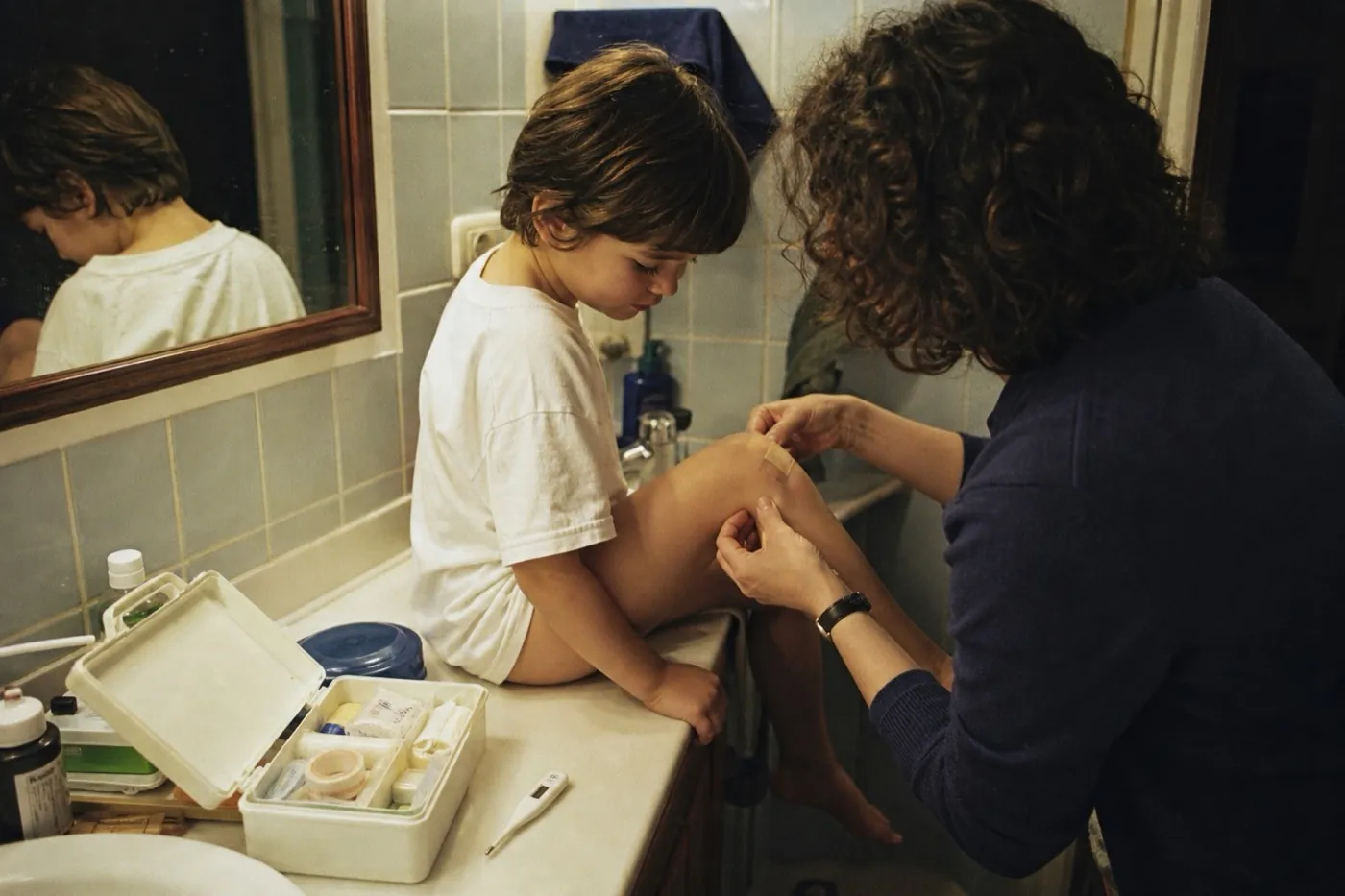
A home first aid kit should contain dressings for minor wounds, basic measuring equipment, antiseptics and medicines for common ailments, chosen to suit the age and health of everyone in the household. You also need any regular medicines and products prescribed or recommended for specific people. The list below is for checking what you have and noting what is missing. It gives no doses, because these depend on age, body weight, health conditions, allergies and any other medicines taken.
What should a home first aid kit contain?
Items to buy and check are listed as checkboxes, so you can tick off what you already have at home. This doesn't mean every family needs every medicine listed. Choose the medicines with a doctor or pharmacist, based on the people who will use them.
Home first aid kit contents (part 1 of 2)
- First aid supplies
- Adhesive plasters in several sizes
- Cutting plaster (roll to cut to size)
- Sterile gauze and compresses in several sizes
- Knitted bandages to hold dressings in place
- Elastic bandages
- Medical tape to fix compresses
- Triangular bandage
- Individual wound dressing, optional
- Hydrogel dressing for minor burns
- Disposable gloves, ideally nitrile
- Blunt-ended scissors
- Tweezers or a tick removal tool
- Cold pack, disposable or reusable
- Emergency blanket (foil, NRC)
- Face shield or mouthpiece for rescue breaths
- Clear first aid instructions
- Cleaning and disinfecting
- 0.9% saline in single-use ampoules
- Wound antiseptic suited to household ages
- Hand sanitiser for use before giving aid, if you can't wash your hands
- Health monitoring equipment
- Working thermometer
- Spare batteries, if the device needs them
- Blood pressure monitor, if someone checks regularly
- Glucose meter, if recommended for someone
- Strips, lancets and other supplies for your equipment
- List of regular medicines, allergies and key health information
- Emergency number 112 and contacts for your GP and loved ones
- Painkillers and fever reducers
- Paracetamol in a strength and form suited to the adults
- Ibuprofen, if household members can take it
- Child's fever reducer, if there are children in the home and it has been chosen to suit their age and body weight
- Stomach and bowel complaints
- Oral rehydration solution or electrolytes
- Diarrhoea remedy suited to age and health
- Constipation remedy
- Remedy for bloating or heartburn
- Allergy and bites
- Oral antihistamine chosen for the specific person
- Remedy to soothe a local reaction to a bite, if household members can use it
- Adrenaline auto-injector, only for the person prescribed it
- Written action plan for a severe allergic reaction, if it applies to someone in the household
Home first aid kit contents (part 2 of 2)
- Colds, runny nose, cough and sore throat
- Saline or nasal product suited to the user
- Sore throat remedy suited to household ages
- Cough medicine only if it has been chosen to suit the type of cough and the person who will use it
- Tissues
- Individual and regular medicines
- Regular medicines, with a stock agreed with your doctor
- Individually prescribed products, e.g. inhaler or rescue medicine
- Up-to-date dosing schedule
- Original packaging and leaflets
- Each person's medicines labelled, if easily confused
Not everyone can take both of the painkillers listed. Before buying, check the contraindications and interactions, and make sure other products you use don't contain the same active substance. A child's dose is worked out from the information on the specific product and a specialist's advice, not from age alone.
Activated charcoal is not a universal remedy for every stomach ache or poisoning, and it can reduce the absorption of other medicines. Don't add it to your basic kit automatically without discussing its use with a pharmacist.
Don't buy several combination products with a similar effect without comparing their ingredients. They may contain the same pain or fever relief substance that is already in another medicine.
Don't build up a large stock of antibiotics or leftover medicines from earlier treatment. Never use a medicine prescribed for someone else, and don't work out a dose from an online list alone.
The official Pacjent.gov.pl guide (Poland's patient information portal) lists, among other things, painkillers and fever reducers, cold remedies, products for stomach and bowel complaints, disinfectants, dressings, gloves and scissors for a home kit. The list above expands on these categories and separates shared equipment from products that depend on household members' health. Pacjent.gov.pl recommendations on first aid kit contents.
Home first aid kit contents: how to tailor your list
Before buying anything more, think about who lives in your home: their ages, ongoing treatment, allergies and any equipment they use. Only then top up the items you need for typical situations, such as a small cut, a graze, taking a temperature or supporting an injury until help arrives.
Store human medicines and veterinary products separately. Travel and car kits should have their own lists too, as they need different storage and regular checks.
A first aid kit for the home
Dressings should be easy to find but out of children's reach. Every adult in the home should know where the gloves, compresses and first aid instructions are. Having supplies is no substitute for knowing how to use them, so a practical first aid course is worth doing.
When you use the last of something, add it to your list straight away, before you forget.
A home first aid kit when you have children
Keep medicines and equipment in a locked place out of children's reach. Child-resistant packaging doesn't mean a child can't open it. Keep adults' and children's products apart, and keep the full names, strengths and leaflets on the packs.
Don't choose a dose by age alone. For many medicines, body weight, health and a specialist's advice matter. Before buying a product "just in case", ask a paediatrician or pharmacist whether it suits your particular child.
Where to store your home first aid kit
Pacjent.gov.pl advises keeping medicines in their original sealed packaging, with the leaflet and expiry date. The kit shouldn't be kept in the bathroom or kitchen, as damp and temperature swings can spoil medicines. Protect them from light and keep them out of reach of children and pets. The guide How to store medicines explains the rules in detail.
Don't put everything in the fridge automatically. Store each product exactly as the packaging or leaflet says. Products that need refrigeration should be kept as the manufacturer instructs.
Medicine expiry dates: how to check your first aid kit
Do a regular check, for example every three months, and after any illness or heavy use of supplies. Check:
Medicine expiry dates: how to check your first aid kit
- Expiry date of the unopened product
- Opening date of syrups, ointments, drops or other products
- Conditions and period of use after opening
- Whether the pack, blister or seal is undamaged
- Whether the label is legible
- Whether dressings are still complete and dry
- Whether the thermometer and other equipment work
It helps to write the opening date directly on the pack. Don't tip tablets into unlabelled containers.
How to dispose of expired medicines safely
Don't put expired medicines in the ordinary bin or flush them down the toilet. Take them to a specially marked collection box, found in some pharmacies, offices, clinics and hospitals, among other places. Check your local council (gmina) for how collection works in your area. The official advice is in the Pacjent.gov.pl article Tidy up your first aid kit (in Polish).
Needles, syringes, mercury thermometers and used dressings may be subject to different rules from medicines. Don't put them in the box without checking the labels and local guidance.
When to restock outside your regular check
Don't wait for the quarterly check if:
- you have used the last of your dressings;
- someone has started a new long-term treatment;
- the dose or form of a prescribed medicine has changed;
- your household's needs have changed, for example a baby, an older person or someone with a chronic illness has joined it;
- measuring equipment has been damaged or stopped working;
- a medicine has been stored in conditions that don't match the instructions;
- someone in the household has been confirmed to have a new allergy.
After a change in treatment, ask a doctor or pharmacist what to do with products that will no longer be used. Don't leave them unlabelled "just in case".
What not to do with medicines at home
- Don't keep loose tablets or use unlabelled containers.
- Don't give a medicine prescribed for one person to someone else in the household.
- Don't combine products without checking for possible interactions.
- Don't use a medicine past its expiry date or past its use-by time after opening.
- "Natural" doesn't mean a product is safe for everyone.
- Don't keep the whole kit in the car, where temperatures swing widely.
If in doubt, take the pack to a pharmacy and ask the pharmacist for help. A brand name alone may not be enough to judge, if the dose, form or details of the person who will use it are missing.
How to record your first aid kit check in BuyNest
Create a review checklist covering expiry dates, opening dates, the condition of packaging, dressings and whether the equipment works. Put anything missing on a separate shopping list and, if needed, split it between the pharmacy and other shops.
If you use BuyNest Premium, save your first aid kit check as a template. Next time you can follow the same order and straight away create a list of what needs restocking.
Home first aid kit: frequently asked questions
How often should I check my first aid kit?
Regularly, for example once a quarter, and after heavy use. What matters most is topping up what is missing and checking products once they have been opened.
Can I keep my first aid kit in the bathroom?
It isn't a good place because of damp and temperature changes. Choose a dry, lockable cupboard that matches the conditions on the packaging.
Is it worth stocking up on medicines?
Only to the extent that reflects real needs, and after consulting a professional. Too large a stock raises the risk of expiry and mix-ups.
What should I do with a medicine that has no packaging or readable name?
Don't use it based on how it looks. Ask a pharmacist how to handle and dispose of it safely.
Does a home first aid kit replace a car first aid kit?
No. Storage conditions and required contents differ, so each should have its own checklist.
Sources
Take the shopping into BuyNest
BuyNest is on iPhone and Android. The app has no ads, including on the free plan.