What is the difference between use by and best before?
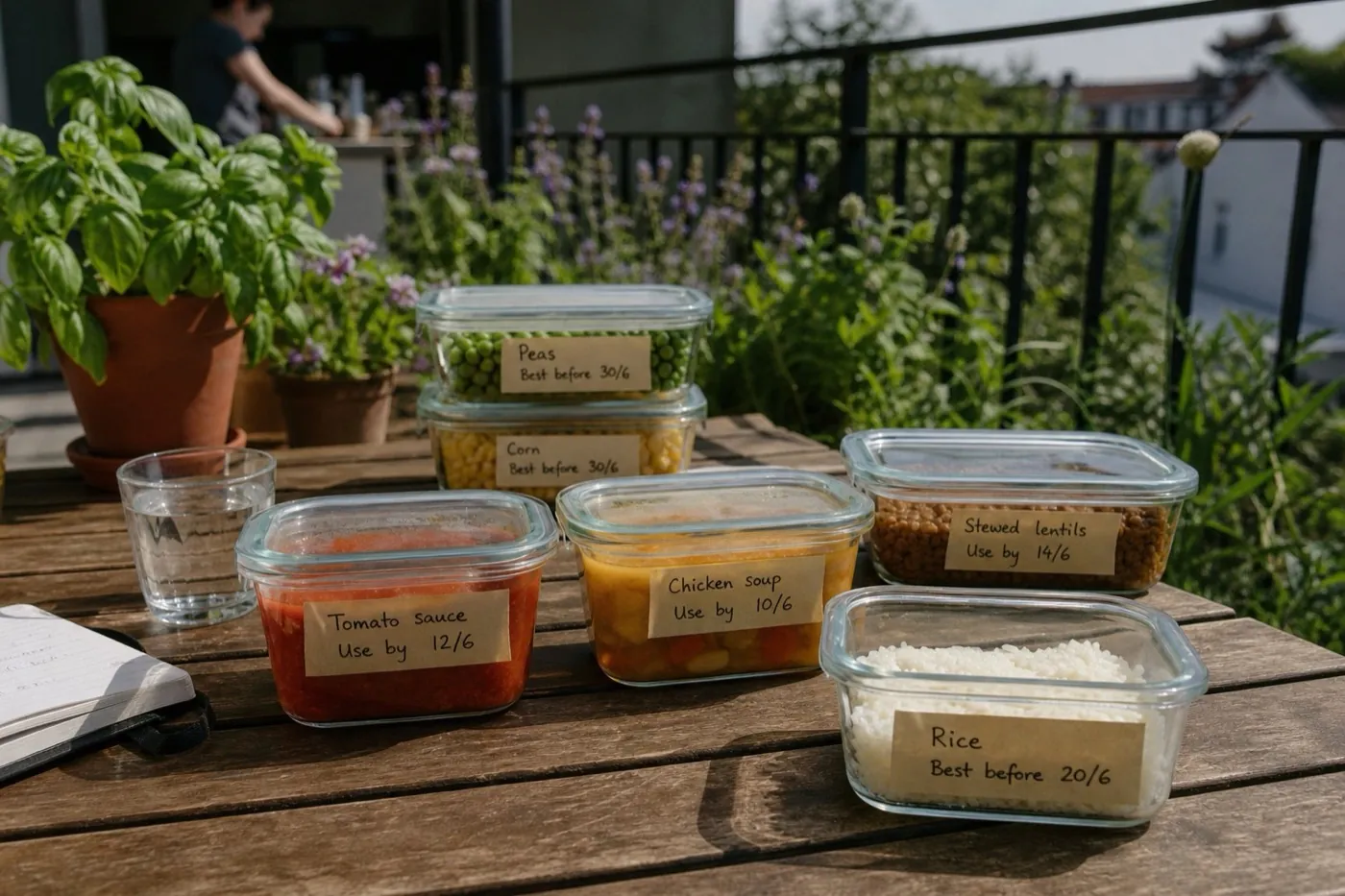
Use-by vs best-before is a difference between safety and quality. A use-by date is about safety: after it, the food is treated as unsafe. A best-before date is about quality: after it the food may be less tasty, but it is usually still safe if it has been stored properly.
The split comes from Article 24 of EU Regulation 1169/2011. Foods that spoil quickly in a microbiological sense and could pose an immediate danger after a short time get a use-by date. Everything else gets a date of minimum durability, which is the best-before date.
The European Commission notes that consumers misreading these labels contributes to food waste at home. A study run between June 2024 and March 2025, with replies from more than 25,000 people across the EU, found a low level of understanding of date marking. You are not alone in finding it confusing.
Rozporządzenie (UE) nr 1169/2011 / Regulation (EU) No 1169/2011, art. 24, 25 i zał. XEuropean Commission: Date marking and food waste preventionWhat does best before actually mean?
The date of minimum durability tells you how long the producer stands behind taste, smell, texture and value, as long as you store the food as the pack says. The rules require the date to be followed by storage conditions where they are needed, for example “store in a dry place”.
How the date is written depends on shelf life. Annex X of the Regulation says that for foods that will keep no more than three months, day and month are enough. For three to eighteen months, month and year will do, and beyond eighteen months, the year alone. When the date includes a day, the wording is “best before”, and in other cases “best before end”.
Some foods carry no date at all. Annex X exempts, among others, fresh fruit and vegetables including potatoes that have not been peeled or cut, wines and drinks with 10% alcohol or more, vinegar, cooking salt, solid sugar and chewing gum. Bakers’ and pastry cooks’ wares normally eaten within 24 hours of manufacture are exempt too.
Rozporządzenie (UE) nr 1169/2011 / Regulation (EU) No 1169/2011, art. 24, 25 i zał. XWhat does use by mean, and why must you respect it?
A use-by date appears on foods that spoil fast and can cause food poisoning, such as raw meat, fish, sliced cooked meats and ready-made salads. The Regulation states that after this date a food shall be deemed unsafe under Article 14 of Regulation 178/2002.
Do not gamble after the date, even when the food looks and smells normal. The FDA points out that the bacteria that make people ill differ from the ones that make food go off. Food can cause serious illness without any change in appearance, smell or taste.
Each individually pre-packed portion must carry its own use-by date. The date is followed by a description of the storage conditions, for example “keep refrigerated”. That description is part of the information: without the cold chain the date no longer holds, because it assumes certain conditions.
Rozporządzenie (UE) nr 1169/2011 / Regulation (EU) No 1169/2011, art. 24, 25 i zał. XFDA: Are You Storing Food Safely?Which product carries which date?
The table below shows the typical split in the shop. Always read the pack, because the producer chooses the date type under the rules, not the category of product.
A simple rule of thumb: the fresher, damper and more ready to eat without cooking a food is, the more likely it carries a use-by date. Dry foods, tins and jars usually carry best before.
| Product | Most common date | What to do after it |
|---|---|---|
| Minced meat, salmon fillets, raw poultry | use by | bin it, do not eat |
| Sliced ham and cooked meats | use by | bin it, do not eat |
| Fresh milk, yoghurt, curd cheese | depends on the product, check the pack | with best before judge by look and smell, with use by throw it away |
| Pasta, rice, buckwheat, oats | best before | check the pack is dry and the food smells normal |
| Tins and jars, unopened | best before | inspect the tin: with no dents, leaks or swelling it is usually fine to use |
Remember that once opened, the clock restarts. Article 25 of the Regulation requires, where appropriate, storage conditions and a time limit for eating after opening, so look for “once opened, use within…”. We look at one case in our guide to finding storage instructions for opened yoghurt.
Rozporządzenie (UE) nr 1169/2011 / Regulation (EU) No 1169/2011, art. 24, 25 i zał. XCan you eat food after the best-before date?
Often you can, but use your head. After a best-before date a food no longer has guaranteed quality, yet the rules do not treat it as dangerous. The decision is yours: inspect the pack, then check appearance, smell and texture.
The FDA gives a general rule: anything that looks or smells suspicious should be thrown out. Mould is a sign of spoilage and can grow even in the fridge, so the safest course is to discard mouldy food. For ready-to-eat chilled foods, the Listeria warning applies too: the longer something sits in the fridge, the more time bacteria have to grow.
There are exceptions where a date is final whatever the type. The FDA singles out infant formula and some baby foods, which must be used by the date on the pack. In those cases, do not experiment or stretch it.
FDA: Are You Storing Food Safely?What does “frozen on” mean on a pack?
On some frozen products you will see a third date: “frozen on”. Annex X of the Regulation requires it for the products listed in Annex III that have been frozen, including meat and unprocessed fishery products. The date must show day, month and year.
The freezing date is not a shelf-life date. It tells you when the producer put the product in the freezer, so you can judge how long it has already been stored. The time limit after thawing and the storage conditions appear separately on the pack, usually next to the defrosting instructions.
The idea works in reverse too: if you freeze meat or fish at home, it helps to mark the box with your own freezing date. We show how to do it clearly and durably in our guide to labelling freezer containers.
Rozporządzenie (UE) nr 1169/2011 / Regulation (EU) No 1169/2011, art. 24, 25 i zał. XWhat about dates on US products and recipes?
Take care with foreign recipes and products. In FDA material, “use by” means a date the manufacturer recommends for best flavour or quality, not a safety date. In the EU, “use by” is the safety date.
So the same English words mean different things on either side of the Atlantic. When you shop in a UK or EU supermarket, follow the EU-style label on the pack. Read an American blog recipe as guidance on quality, not as permission to eat food past its date.
FDA: Are You Storing Food Safely?Rozporządzenie (UE) nr 1169/2011 / Regulation (EU) No 1169/2011, art. 24, 25 i zał. XHow do you arrange shopping and the fridge by date?
The simplest habit is to sort groceries by date while you unpack the bags. It takes a few minutes and saves throwing food away later. Do it in a few steps.
- Unpack chilled items with a use-by date first and put them in the fridge within two hours of buying.
- Place the items with the nearest date at the front of the shelf and new ones behind.
- Write the opening date on opened items with masking tape.
- Plan meals for the week around whatever has the shortest date.
- If you will not manage to eat something, freeze it before the date, unless the producer says not to.
The FDA recommends keeping the fridge at 4°C or below and not leaving food that needs refrigeration at room temperature for more than two hours. Shelf layout is covered in our guide to organising groceries in the fridge.
FDA: Are You Storing Food Safely?GOV.UK: Best before and use by datesHow can BuyNest help you shop by date?
The ready list for shopping by date holds short-date items such as minced meat, salmon, ham and milk, drier foods with longer dates, a fridge thermometer and tape for labels. Import it with the QR code and adjust it to your own week.
Before you go to the shop, check the food supplies you already have. That way you will not buy a second pack of something already in the cupboard, or add to the pile of dates you have to watch.
Shopping by date
- Short date: use by
- Beef mince eat by Tuesday500 g
- Salmon fillets eat within 1–2 days2 pcs
- Sliced ham150 g
- Fresh milk2 l
- Plain yoghurt400 g
- Quark250 g
- Long date: best before
- Pasta500 g
- Rice1 kg
- Rolled oats500 g
- Chopped tomatoes 400 g tins2 pcs
- Buckwheat groats400 g
- For the fridge
- Fridge thermometer1 pcs
- Masking tape for labels opening date1 pcs
Frequently asked questions
Can you eat food after the best-before date?
Usually yes, if it was stored well and looks and smells normal. The date refers to quality, not safety. Throw out anything mouldy or with an odd smell.
Can you eat food after the use-by date?
No. Under EU Regulation 1169/2011 food is deemed unsafe after that date. Do not rely on looking or sniffing, because harmful bacteria do not always change the appearance or smell.
Can I freeze food just before its date?
Yes, if the producer does not forbid freezing and the food is still in good condition. Do it before the date passes and write the freezing day on the container. The FDA says food at −18°C stays safe, although quality drops over time.
Why do some foods have no date?
Annex X of Regulation 1169/2011 exempts, among others, fresh unpeeled fruit and vegetables, vinegar, salt, solid sugar and chewing gum. Bread and pastries eaten within 24 hours of making are exempt too.
How long can I keep food once the pack is open?
Check the pack, because Article 25 requires a time limit after opening to be given where appropriate. With no such line, be cautious and use the food quickly, in a fridge at 4°C or below.
Use-by vs best-before comes down to safety versus quality: obey the first, judge the second. Open the ready list in BuyNest, buy short-date food only for the next few days and keep the oldest at the front.
Open the ready list in BuyNestSources
Take the shopping into BuyNest
BuyNest is on iPhone and Android. The app has no ads, including on the free plan.