
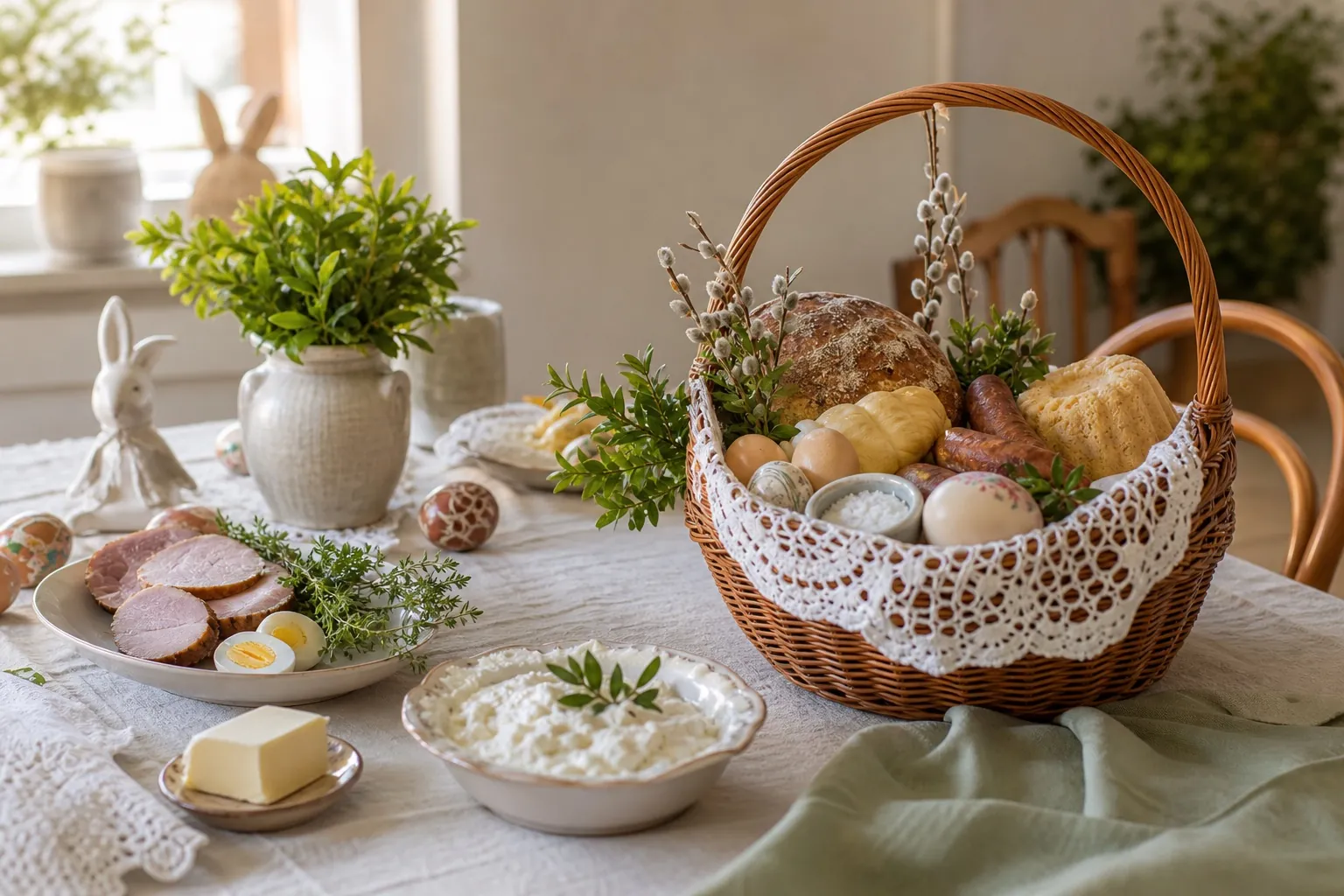
A traditional Polish Easter basket usually holds bread, eggs, salt, cold meat, horseradish, cake and an Easter lamb. Customs differ between families and regions, so no two baskets look exactly alike. What matters is packing small portions to be blessed, not carrying the whole Easter breakfast. The list below helps you check the contents and understand what each food traditionally means.
What goes in an Easter basket? A ready list
What goes in an Easter basket? A ready list
- Bread
- Eggs
- Salt
- Cold meat or another family-tradition food
- Horseradish
- Slice of cake
- Easter lamb
- Napkin to line and cover the basket
- Small decoration, e.g. a box sprig, if you like
Before you pack, check the custom in your parish and family. The traditional list is not a rulebook, and your basket can be more modest.
1. Bread: a symbol of daily food
Put in a small piece of bread or a little roll. It does not have to be a whole loaf. Place it so it does not touch any moist foods.
Bread stands for basic nourishment, plenty and life. After the blessing you can serve it at the Easter breakfast, cut into small portions.
2. Eggs: a symbol of new life
Pack one or several hard-boiled eggs. They can be plain, dyed or decorated as pisanki (Polish Easter eggs). If you use paints and decorations, make sure the egg is still safe to eat, or keep decorative eggs apart from the ones you will eat.
The egg stands for life, rebirth and new beginnings. In many families everyone shares a blessed egg before the breakfast begins.
3. Salt: a symbol of lasting protection
Tip the salt into a small container with a lid, so it does not spill onto the napkin and other foods. You do not need a full salt cellar or a large packet.
In tradition, salt stands for purification, durability and protection from spoiling. After the blessing you can use it to season the festive meal.
4. Cold meat: a symbol of plenty
A small portion of sausage, ham or whatever your family uses is enough. Keep it in a separate container or on a small plate, especially if the walk to church and back will take a while.
Meat is traditionally linked with plenty and the end of Lent. Families who do not eat meat can agree their own way of keeping the tradition, in line with their beliefs.
5. Horseradish: a symbol of strength
Put a piece of root or a portion of grated horseradish in a small container. Make sure it seals tightly, because the strong smell can spread to the bread and cake.
Horseradish is linked with strength, health and the hardships of life. At breakfast you can serve it with eggs or other dishes.
6. Cake: a symbol of celebration and skill
Choose a small slice of babka, mazurek (a flat Easter cake) or another home bake. Wrap it separately so it does not crumble onto the other foods. Creamy desserts that spoil quickly are a poor choice if you will be waiting a long time.
Cake stands for celebration, joy and the fruits of people's work. The kind of bake depends on your family's tradition.
7. Easter lamb: a symbol of Christ
The lamb can be made of sugar, dough, butter or another food-safe material. Set it firmly in place so it does not tip over while you carry the basket.
In the Christian tradition, the lamb represents Christ. It is also the most recognisable part of the Easter basket.
What to put in a child's Easter basket
A child can carry a small, light basket with one small portion of each basic food. Skip glass dishes, heavy decorations and sharp pins. Check that the handle is steady and the containers do not come open.
What to put in a child's Easter basket
- Small roll or slice of bread
- One egg
- Closed container of salt
- Small slice of cake
- Light lamb
How to prepare and decorate an Easter basket
- Line the basket with a clean napkin.
- Stand the heavier, steadier containers at the bottom.
- Keep bread and cake away from moist foods.
- Arrange the eggs so they do not slide about as you carry the basket.
- Add a light decoration that does not touch the food, unless it is food-safe.
- Cover everything with a second napkin.
You should be able to carry the basket comfortably in one hand. Large decorations should not hide the contents or shed bits in church.
Plan the food for the whole festive menu separately, using the guide Easter shopping list. The article Easter preparations: plan and checklist organises the remaining tasks and deadlines.
What you do not need to put in the basket
There is no need to pack whole packets, large portions or every Easter dish. Sweets, alcohol, toys and random decorations are not part of the basic traditional list. If your family has an extra custom, treat it as a local tradition, not a rule for everyone.
How to carry food safely to the blessing
Take foods that need chilling out of the fridge as late as you can. Put meat, horseradish and other moist items in small, tightly sealed containers. Do not set them directly on bread or cake. When you get home, take the food out of the basket and store it according to the label and the needs of each product.
If the journey and the wait will be long, consider a cool bag for perishable foods and move them into the basket only when you arrive. Never leave the basket in a hot car.
What to do with the blessed food when you get home
Unpack the basket straight away. Put chilled foods in the fridge and protect bread and cake from drying out. At breakfast, divide the food into small portions so everyone can taste it. Do not leave blessed food on the table through the whole holiday just because of its symbolic meaning.
If something is no longer fit to eat, do not eat it. Respecting tradition does not mean risking your health.
How to prepare your Easter basket list in BuyNest
First check which parts of the basket you already have at home. Add the missing items to a shared shopping list in BuyNest and, if you need to, split it by shop. When one person marks an item as bought, everyone else sees the change on their phones. Jobs such as boiling the eggs or making the decorations are best saved separately as tasks, since they are not shopping list items.
In BuyNest Premium, save your Easter basket checklist as a template. Next year you can reuse the same base and change only the items that come from your family's tradition.
Frequently asked questions about the Easter basket
How many eggs should I put in the basket?
As many as you need to share symbolically at breakfast. There is no single required number.
Does everything have to be homemade?
No. Food can be bought or made at home. What matters is that it is symbolically there and fits your family's tradition.
Can I prepare the basket the day before?
You can prepare the napkins, decorations and dry foods. Add anything that needs chilling as late as possible and store it according to the label.
Does the lamb have to be edible?
Not in every tradition, but it should be safe and set firmly in place. If it touches food, use a food-safe material.
Sources
Take the shopping into BuyNest
BuyNest is on iPhone and Android. The app has no ads, including on the free plan.

