
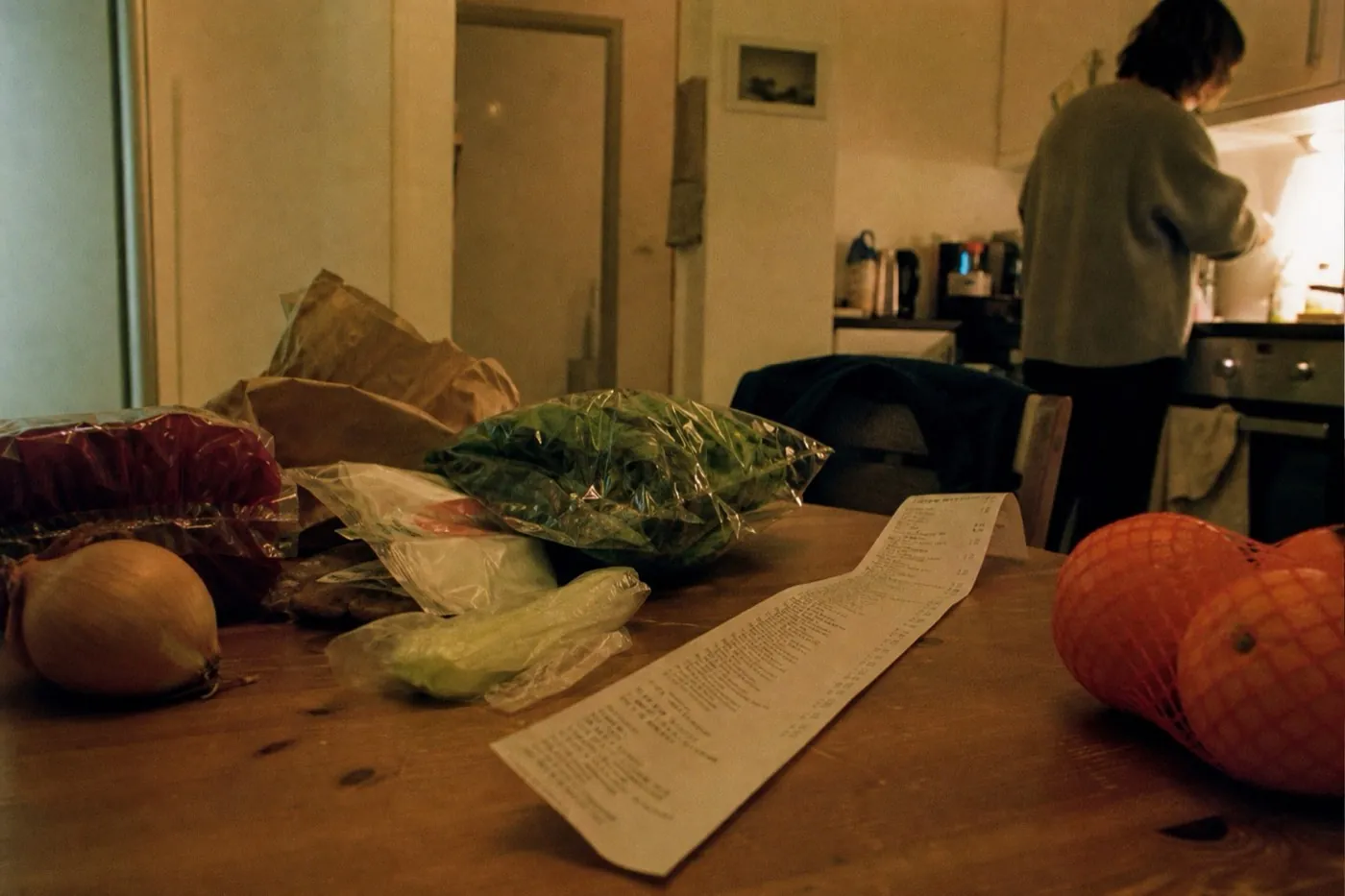
Multibuy offers: does the price per item really drop?
A multibuy offer lowers the price of one item only if you buy the whole quantity in the deal and actually use it. Divide what you pay for the bundle by the number of items you will eat or use, then compare the result with the normal price of a single item. It takes a few seconds in the aisle.
Deal wording is written to sound like a bigger discount than it is. “Second item half price” does not mean half price for both. Below you will find the formulas, a conversion table and a list of things to check before a multipack goes in your basket.
How do we calculate the discount, and where do the numbers come from?
One method runs through the whole guide: the price of the bundle divided by the number of items you will use, compared with the price of one regular item. The background is EU price-display and unfair-practice law: Directive 98/6/EC, Directive (EU) 2019/2161 and Directive 2005/29/EC.
Every price in the examples is invented. None comes from a leaflet, a retailer app or a price survey. The period the sum applies to is the one you choose yourself: the number of weeks over which you will really use the stock. That way the result describes your kitchen, not an average nobody measured.
The limit is plain. The sum tells you the price per item, not whether a brand suits you. If you are comparing different brands or pack sizes, start with the price per kilogram.
Dyrektywa 98/6/WE w sprawie ochrony konsumenta przez podawanie cen produktówDyrektywa (UE) 2019/2161 w sprawie lepszego egzekwowania i unowocześnienia unijnych przepisów dotyczących ochrony konsumentówDyrektywa 2005/29/WE dotycząca nieuczciwych praktyk handlowychHow do you work out the price per item you will use?
The formula is the price you pay for the bundle ÷ the number of items you will really use. You compare the answer with the price of one item bought without the offer. If it is lower, the deal works. If not, you are paying for something that ends up in the bin or sits in a cupboard.
An example with invented numbers, not a shop offer: a yoghurt costs £1.00, and a “3 for 2” deal means you pay £2.00 for three. If you eat all three, each costs about 67p, a third less. If the third goes out of date, £2.00 bought two yoghurts you ate, so £1.00 each. The saving is gone.
For products with different pack weights, keep working in kilograms or litres. A price per item only makes sense when you are comparing identical packs.
How do you turn “2 for £3” and “3 for 2” into a discount percentage?
Converting helps you compare two different offers on the same product. The table assumes an invented regular price of £2.00 per item. The discount is the gap between the regular price and the price per item in the bundle, shown as a percentage of the regular price.
| Wording on the shelf | You pay for the bundle | Price per item | Discount |
|---|---|---|---|
| 2 for £3 | £3.00 for 2 items | £1.50 | 25% |
| Second item half price | £3.00 for 2 items | £1.50 | 25% |
| 3 for 2 | £4.00 for 3 items | £1.33 | 33% |
| Buy one, get one free | £2.00 for 2 items | £1.00 | 50% |
| From 3 items, £1.70 each | £5.10 for 3 items | £1.70 | 15% |
The general formula for the discount is 1 − (bundle price ÷ (regular price × number of items)). For “3 for 2” you get 1 − 4 ÷ 6 = 0.33. Look at the first two rows: “second item half price” gives exactly the same discount as “2 for £3”, although the wording hints at half price. Half applies only to the second item.
The last row shows a threshold trap. If you buy two items you pay the regular price, so the discount only starts with the third. Do not take a third item just to trigger the price unless you have a plan for it.
What should you check on the label and in the terms of the offer?
The shelf label shows the offer in its best light, and the conditions sit in smaller print. Before you decide a multipack pays off, go through four points. The first two come from EU rules, the other two from how the deal is built.
- Unit price. Directive 98/6/EC requires a price per kilogram or litre next to the selling price. Check whether the unit price on the label is for the regular or the promotional price. With a multibuy the label often shows the price of one item, and you have to work out the bundle price yourself.
- Previous price. Directive (EU) 2019/2161 added a rule that when a price reduction is announced, the trader states the prior price, meaning the lowest price applied during a period of at least 30 days before the reduction. This lets you check that the discount starts from a real price. Whether a particular multibuy falls under that rule depends on how it is worded.
- Conditions. See whether the offer needs a loyalty card or an app, whether there is a limit on items and on which days it runs.
- Variants. Check whether the discount covers any flavour and size or only one. A second item in a flavour nobody at home eats is not a saving.
Directive 2005/29/EC prohibits misleading commercial practices, including about the price and the way it is calculated. If the terms of an offer are hidden or unclear, you can report it to the consumer authority in your country. In Poland that is UOKiK; in the UK you can start with Trading Standards.
Dyrektywa 98/6/WE w sprawie ochrony konsumenta przez podawanie cen produktówDyrektywa (UE) 2019/2161 w sprawie lepszego egzekwowania i unowocześnienia unijnych przepisów dotyczących ochrony konsumentówDyrektywa 2005/29/WE dotycząca nieuczciwych praktyk handlowychWhen does a multipack not pay off?
A multipack rarely loses on price. It loses on everyday life: short dates, no space, or the cheaper item simply getting eaten faster. Five situations where a single item is the better buy, whatever the poster says.
- Short-dated products. Dairy, bread, fresh meat and some vegetables go off faster than you can eat them. Count the price on the items you will finish before the date on the pack.
- Faster eating. When there are more snacks at home, more of them get eaten. A cheaper item will not lower the bill and may raise it.
- No room. Six bottles of water or a large bag of flour need cupboard space. Stock stored in odd places is easy to forget and buy again.
- A tight weekly budget. A deal moves spending forward. If this week you are short for basics, three months of stock is not the right choice, even at 33% off.
- A cheaper alternative. A multipack of a well-known brand can cost more per item than a single item of the shop’s own brand. A discount only means something once you compare the final price per kilogram.
The safest bets are dry and tinned goods you buy anyway: pasta, rice, tinned tomatoes, coffee, tea and cleaning products.
How many items from the offer make sense for your household?
The answer depends on how much you use in a month, not on the number on the poster. Five steps are enough to decide in a couple of minutes at the shelf.
- Recall how many items of the product you use in a month. If you are not sure, look back at your earlier shopping lists.
- Multiply that by the number of months your cupboard space and the shelf life allow. For tins it may be several months, for yoghurt a few days.
- Compare the result with the quantity in the offer. If the offer needs six and you use two a month, the stock lasts three months.
- Work out the price per item for the bundle and compare it with the regular item. Count any items left over at the end of the period as a loss.
- Decide: take the whole offer, take fewer if the shop allows it, or skip it.
An example with invented numbers: you use six tins of tomatoes a month, so a “3 for 2” deal on six tins fits perfectly. If you use two, the third waits on the shelf, and a three-month stock freezes money you could spend on something else.
How do you plan multipacks in BuyNest?
Enter on the list the number of items you plan to use, not the number from the poster. In the note on the product, write the regular price, because in the shop it is then easier to see what the offer really gives you.
Assigning products to shops shows where you usually buy a given staple cheapest, and a shared list stops housemates buying the same stock twice. A list of staples where multi-buys can pay focuses on long-life items. The quantities fit an example month for two or three people.
You can also keep a longer price history. The guide to tracking your own shopping basket shows how, step by step.
What does this calculation leave out?
The price per item from a bundle does not tell the whole story. It ignores the cost of tying up money, the time spent hunting for the cheapest shop, and the fact that with a large stock it is easy to lose track of what you have at home.
It also does not show whether the same deal will turn up next week in another shop. If you shop in several places, compare the price per kilogram in each. The same goes for a smaller pack at the same price, which we cover in the guide to shrinking packs.
One last detail: a percentage discount is the same size for a cheap and an expensive product, but in pounds it differs a lot. Sometimes the amount you actually leave at the till matters more than the percentage.
Staples where multi-buys can pay
- Dry goods
- Pasta 4 packs of 500 g2 kg
- Rice2 kg
- Pearl barley1 kg
- Rolled oats1 kg
- Plain flour2 kg
- Tins and jars
- Chopped tomatoes 400 g tins6 pcs
- Passata 500 g bottles2 pcs
- Chickpeas 400 g tins4 pcs
- Red kidney beans 400 g tins4 pcs
- Tuna tins4 pcs
- Drinks
- Ground coffee check the date1 kg
- Tea2 pack
- Mineral water12 l
- Household
- Toilet paper price per roll1 pack
- Washing-up liquid1 l
Frequently asked questions
Is “second item half price” the same as “2 for £3” when the price is £2?
Yes. At a regular price of £2.00, both offers give £3.00 for two items, so £1.50 each and a 25% discount. You pay half price only for the second item. Always convert the wording on the shelf into a price for the whole bundle.
Does a “3 for 2” offer always give 33% off?
Yes, if you buy all three at the same regular price. The discount is then one third of the bundle price. The real saving is smaller if the third item is wasted or replaces something cheaper.
Do I have to buy the full quantity in the offer?
It depends on the terms. With a deal like “2 for £3” a single item usually costs the regular price, but some shops apply the discount at the till automatically. The shelf label or the promotion terms will tell you.
Where can I report a misleading promotion?
If you think the price or the terms are misleading, you can report it to the consumer authority in your country. In Poland it is UOKiK. Take a photo of the shelf label and keep the receipt as evidence first.
How can I tell whether the price before the reduction was genuine?
Directive (EU) 2019/2161 requires that when a reduction is announced, the trader states the prior price, which is the lowest price in the 30 days or more before it. Compare that with the shelf label and with your own earlier receipts.
Before you reach for a multipack, work out the price per item you will use and compare it with the regular price of a single item. If the multibuy offers come out ahead, put the quantities on your list and mark the shop where you will buy them. You can tick everything off in the app.
Open the ready list in BuyNestMethod and criteria
Method: the offer price divided by the number of items that will be eaten. The 6 zloty figure is an example, not a leaflet price.
Sources
- Dyrektywa 98/6/WE w sprawie ochrony konsumenta przez podawanie cen produktów
- Dyrektywa (UE) 2019/2161 w sprawie lepszego egzekwowania i unowocześnienia unijnych przepisów dotyczących ochrony konsumentów
- Dyrektywa 2005/29/WE dotycząca nieuczciwych praktyk handlowych
- UOKiK: Pomoc dla konsumentów
- GOV.UK: Find your local Trading Standards office
Take the shopping into BuyNest
BuyNest is on iPhone and Android. The app has no ads, including on the free plan.

